
Difference Between Hafs and Warsh Quran Explained
Difference Between Hafs and Warsh Quran is one of the most searched topics among Muslims who want to understand why Quran recitations sometimes sound different while the Quran itself remains perfectly preserved. Many learners hear Hafs in one country and Warsh in another, leading them to wonder whether these are different versions of the Quran or simply different methods of recitation.
In reality, both Hafs and Warsh are authentic narrations transmitted through reliable chains back to Prophet Muhammad ﷺ, preserving the same divine revelation with slight variations in pronunciation, Tajweed, and linguistic style.
In this comprehensive guide, you will discover the history, key differences, authentic examples, and practical benefits of both recitations, making it easy to understand the Difference Between Hafs and Warsh Quran with confidence. Whether you are a beginner or an advanced student, Muslim Online Quran Academy provides qualified teachers who help learners master authentic Quran recitation according to the correct rules of Tajweed and recognized Qira’at.
What Is Hafs and Warsh in Quran Recitation?
Before exploring the Difference Between Hafs and Warsh Quran, it is helpful to understand what Hafs and Warsh actually mean, because many Muslims wonder whether they represent different versions of the Quran, while in reality they are authentic methods of recitation transmitted through reliable chains that preserve the exact revelation of Allah without any alteration, making the Difference Between Hafs and Warsh Quran an important topic for every student of Quranic studies.
Neither Hafs nor Warsh wrote a different Quran. They were famous transmitters (Riwayat) who carefully preserved and conveyed specific methods of Quran recitation exactly as they learned them from their teachers, ensuring that every pronunciation, pause, and recitation rule remained authentic and accurately transmitted across generations of scholars.
- Hafs ibn Sulayman transmitted the recitation of Imam Asim.
- Warsh ibn Sa’id transmitted the recitation of Imam Nafi’.
Both narrations ultimately trace back through authentic and uninterrupted chains of transmission to Prophet Muhammad ﷺ, demonstrating that every accepted recitation originated from the same divine revelation and remains part of the authentic Quran preserved throughout Islamic history without any contradiction or distortion.
The Quran itself remains the same in both narrations. The differences appear only in specific aspects of pronunciation, elongation, pauses, and a limited number of authentic linguistic variations that enrich the meanings without changing beliefs, rulings, or the divine message, which explains the true Difference Between Hafs and Warsh Quran.
Islamic scholars have preserved these recitations with extraordinary precision for more than fourteen centuries through continuous oral transmission, written documentation, and qualified teachers, making Quranic recitation one of the most accurately preserved traditions in human history and reinforcing confidence in every authentic narration.
Start Your Arabic Learning Journey Today
If you are serious about achieving fluency, choosing a structured program is the most effective step forward. Muslim Academy offers a comprehensive learning experience that combines expert teaching, flexible scheduling, and a clear progression path tailored to your goals.
By joining a structured program, you eliminate confusion and focus on consistent improvement instead of trial-and-error learning. Consequently, you reach your Aims faster and with greater confidence.

Understanding the Science of Qira’at
To fully appreciate the Difference Between Hafs and Warsh Quran, every student should first understand the science of Qira’at, which represents the authentic methods of reciting the Quran that have been preserved through continuous scholarly transmission since the time of the Prophet Muhammad ﷺ.
Qira’at refers to the authentic methods of Quran recitation transmitted through uninterrupted chains of trustworthy scholars, where every reciter learned directly from qualified teachers who themselves studied under earlier generations until the chain reached the Messenger of Allah ﷺ with complete accuracy.
There are ten accepted Qira’at recognized by leading Islamic scholars, and every accepted recitation fulfills strict conditions that guarantee its authenticity and preservation while protecting the Quran from unauthorized changes or unsupported personal interpretations. Each accepted Qira’ah fulfills three essential conditions:
- Authentic and uninterrupted chain of narration.
- Agreement with the Uthmanic Mushaf.
- Conformity with classical Arabic grammar.
Among these ten accepted Qira’at, Hafs ‘an Asim became the most widespread recitation across the Muslim world, while Warsh ‘an Nafi’ remained especially popular throughout North Africa and West Africa, illustrating another important aspect of the Difference Between Hafs and Warsh Quran in terms of geographical distribution.
These recitations are not personal opinions, regional customs, or independent interpretations. Instead, every pronunciation, elongation, pause, and phonetic variation has been preserved carefully through generations of qualified Quran teachers who memorized every detail exactly as they received it from their own teachers.
The Historical Origins of Hafs and Warsh
Understanding the historical background helps explain why both narrations remain highly respected and widely practiced today, while also helping students appreciate the rich scholarly tradition behind the Difference Between Hafs and Warsh Quran.
Hafs ibn Sulayman
Hafs was among the closest and most trusted students of Imam Asim in Kufa. His exceptional precision, remarkable memory, and unwavering commitment to accurate transmission made his narration one of the most reliable and widely accepted throughout Islamic history.
Over the centuries, the Hafs narration spread throughout:
- Saudi Arabia
- Egypt
- Syria
- Iraq
- Jordan
- Turkey
- Pakistan
- India
- Bangladesh
- Indonesia
- Malaysia
- Most Muslim communities worldwide
Today, most printed Mushafs, Quran applications, online learning platforms, and international Quran competitions primarily use the Hafs narration because of its widespread acceptance and historical transmission across many Muslim societies.
Warsh ibn Sa’id
Warsh traveled from Egypt to Madinah specifically to study under Imam Nafi’, dedicating himself to mastering every aspect of Quran recitation until he became one of Imam Nafi’s most distinguished and trusted students recognized by scholars of his era.His narration later spread across:
- Morocco
- Algeria
- Tunisia
- Libya
- Mauritania
- Mali
- Senegal
- Niger
- Parts of West Africa
Millions of Muslims continue to memorize, teach, and recite the Holy Quran using the Warsh narration today, demonstrating that both authentic recitations remain alive and carefully preserved, which further highlights the historical significance of the Difference Between Hafs and Warsh Quran.
Why Do Hafs and Warsh Sound Different?
Many people hearing both recitations for the first time mistakenly assume that the different sounds indicate different Qurans, but this assumption is incorrect because the Difference Between Hafs and Warsh Quran exists only in authentic methods of recitation approved and taught by Prophet Muhammad ﷺ. These authentic differences include:
- Pronunciation of certain vowels.
- Length of some Madd letters.
- Rules related to Hamzah.
- Certain stopping rules.
- Minor grammatical variations.
- Different styles of Imalah and Naql.
Despite these carefully preserved variations, every verse, chapter, and word remains part of the same Quran revealed by Allah سبحانه وتعالى, proving that the Difference Between Hafs and Warsh Quran never affects the integrity or authenticity of the divine revelation.
- No verse has been added.
- No verse has been removed.
- No Islamic belief changes because of these recitations.
Instead, these authentic recitations demonstrate the remarkable flexibility, linguistic richness, and divine preservation of Quranic revelation while allowing Muslims from different regions to preserve the prophetic traditions exactly as they were transmitted.
Main Areas of Difference Between Hafs and Warsh
Students frequently ask where the two recitations actually differ, and understanding these categories helps clarify the genuine Difference Between Hafs and Warsh Quran without creating confusion about the preservation of the Holy Quran.
1. Pronunciation
Certain Arabic letters receive slightly different pronunciation according to established rules that were transmitted directly through qualified Quran teachers, ensuring every variation remains authentic and connected to the prophetic tradition rather than individual preference.
For example, Warsh sometimes applies Imalah, producing a vowel sound that falls between the sounds of “A” and “E,” whereas Hafs generally avoids using this pronunciation and instead follows a different authentic recitation method transmitted through Imam Asim.
These pronunciation differences are always taught through direct oral transmission from qualified teachers rather than personal interpretation, preserving the authenticity and precision that characterize every accepted Qira’ah throughout Islamic history.
2. Madd (Lengthening)
One noticeable distinction between the two narrations involves the length of vowel elongation during recitation, making Madd one of the easiest differences for experienced listeners to recognize while studying the Difference Between Hafs and Warsh Quran.
In many situations:
- Hafs reads with shorter Madd.
- Warsh often extends the same Madd longer.
Both methods are authentic.
Neither is more correct than the other.
3. Hamzah Rules
Warsh includes several distinctive rules involving the pronunciation and treatment of Hamzah, requiring students to practice these details repeatedly under qualified instructors until they become natural during fluent Quran recitation.
Examples include:
- Easier pronunciation.
- Naql.
- Tashil.
- Deletion in specific contexts.
Meanwhile, Hafs generally preserves the Hamzah more clearly according to its own authentic transmission, and students studying advanced Tajweed often dedicate considerable time to mastering these subtle yet important pronunciation distinctions.
Qualified instructors at Muslim Online Quran Academy guide learners step by step through these recitation rules using practical exercises, helping students develop confidence, accurate pronunciation, and a deeper understanding of both authentic narrations while mastering the Difference Between Hafs and Warsh Quran naturally through continuous practice.
Detailed Difference Between Hafs and Warsh Quran in Tajweed Rules
To understand the Difference Between Hafs and Warsh Quran, students should know that these differences follow precise Tajweed rules preserved through authentic chains of narration. Every variation was transmitted by qualified scholars, making the Difference Between Hafs and Warsh Quran a reflection of the remarkable preservation of the Holy Quran.
Every authentic variation has been taught orally for centuries, ensuring that each generation recites the Quran exactly as it was taught by Prophet Muhammad ﷺ. This careful transmission highlights the authenticity of the Difference Between Hafs and Warsh Quran and its respected place within the science of Qira’at.
Although both narrations share the same principles of Tajweed, they differ in certain applications that are documented in classical Qira’at literature. Studying these rules with qualified teachers helps learners understand the Difference Between Hafs and Warsh Quran, improve their recitation, and appreciate the linguistic richness of the Quran while preserving its original message.
Imalah
One of the most recognizable features when studying the Difference Between Hafs and Warsh Quran is the application of Imalah, a distinctive pronunciation rule that appears in the Warsh narration according to authentic transmission and established recitation principles.
Imalah refers to pronouncing the vowel sound somewhere between the Arabic fathah and kasrah, creating a gentle sound similar to the letter “e,” while Hafs generally does not apply Imalah in the same locations because it follows a different authentic chain of narration.
For students hearing Warsh recitation for the first time, this pronunciation often sounds softer, smoother, and more melodic, yet it follows precise scholarly rules and is never applied according to personal choice or individual interpretation.
Learning Imalah requires direct listening, careful observation, and continuous correction from an experienced Quran teacher because written explanations alone cannot fully communicate the subtle pronunciation and precise articulation required for authentic recitation.
Madd (Lengthening)
Another major aspect of the Difference Between Hafs and Warsh Quran involves the rules of Madd, which refer to extending the sound of certain letters according to established Tajweed principles transmitted through reliable chains of narration.
Madd refers to extending the pronunciation of specific letters during Quran recitation while maintaining precise timing that has been preserved by generations of qualified reciters and scholars throughout Islamic history.
In many situations:
- Hafs shortens the separate Madd to approximately two counts.
- Warsh often extends the same Madd to four or five counts.
Neither method is easier, superior, or more authentic than the other because each one faithfully follows the transmission received from its respective Imam through uninterrupted chains of trustworthy scholars.
Since proper timing is essential for beautiful and accurate Quran recitation, students should practice repeatedly under the supervision of qualified instructors until the rhythm becomes natural, consistent, and fully aligned with authentic Tajweed rules.
Hamzah Treatment
Hamzah pronunciation represents another important area in the Difference Between Hafs and Warsh Quran, where both narrations apply authentic but slightly different pronunciation techniques while preserving the exact words of the Quran.
Warsh includes several additional rules involving Hamzah, making its pronunciation distinct in certain verses while remaining completely authentic and fully accepted by Islamic scholars across generations.
These include:
- Tashil (making the Hamzah easier to pronounce).
- Naql (transferring a vowel from one letter to another).
- Deleting certain Hamzah sounds in specific situations.
Hafs usually preserves the Hamzah more clearly and consistently according to its own authentic transmission, allowing students to recognize another practical example of the Difference Between Hafs and Warsh Quran during Quran recitation.
Although these rules may initially seem technical for beginners, they become much easier through regular listening, guided practice, and continuous correction from experienced Quran teachers who specialize in teaching authentic Qira’at.
Tafkhim and Tarqiq
Both narrations apply detailed rules concerning heavy and light pronunciation of specific Arabic letters, particularly the letter Ra (ر), ensuring that every sound follows authentic Tajweed principles transmitted from the Prophet Muhammad ﷺ.
However, Warsh sometimes differs in situations involving emphasis or light pronunciation depending on surrounding vowels, connected reading, and stopping positions, creating a unique recitation style while preserving complete authenticity and demonstrating another subtle aspect of the Difference Between Hafs and Warsh Quran.
Examples of Quranic Words That Differ
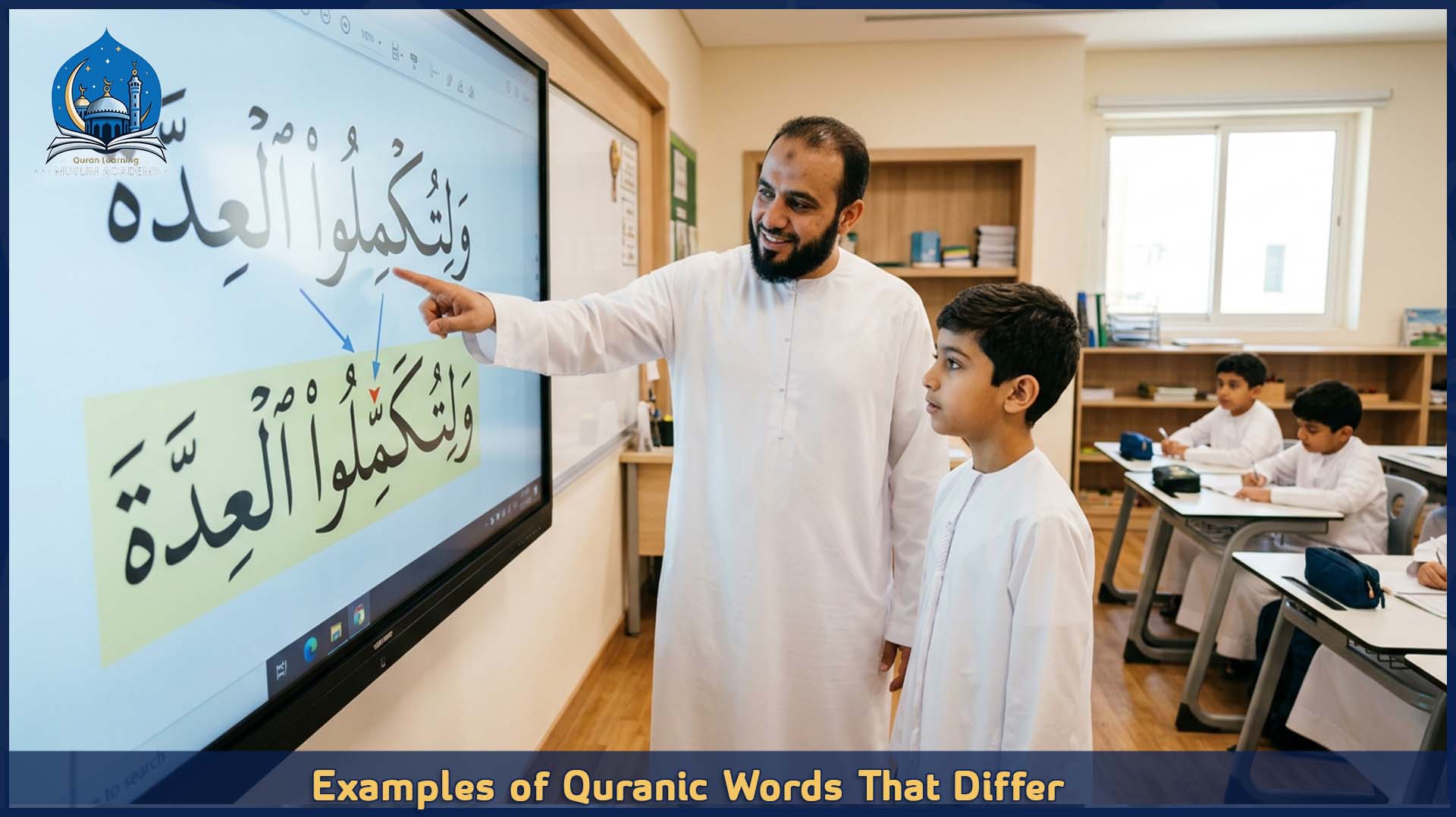
Many people searching for the Difference Between Hafs and Warsh Quran prefer practical examples because they clearly demonstrate that the differences relate only to authentic recitation methods rather than changes in the Quran itself.
Example One
Surah Al-Fatihah
Hafs:
Maliki Yawmid-Deen
Warsh:
Maaliki Yawmid-Deen
Meaning:
Both are correct.
Allah is both:
- The King.
- The Owner.
The two meanings complement one another beautifully rather than conflicting, enriching the understanding of the verse while preserving the same divine message revealed in the Holy Quran.
Example Two
Certain words involving Hamzah receive different pronunciation according to each authentic narration while maintaining the exact wording and intended meaning preserved throughout Islamic history.
In Warsh, some Hamzah sounds become lighter or are merged according to established Tajweed rules transmitted through reliable scholars, whereas Hafs generally preserves the pronunciation more explicitly and consistently.
Again, the written Quran remains completely unchanged despite these authentic pronunciation differences.
Example Three
Some words differ slightly in vowelization according to the transmitted narration, illustrating another authentic example of the Difference Between Hafs and Warsh Quran without affecting the meaning or message of the Quran.
For example, a dhammah may become a fathah according to the accepted narration transmitted by qualified scholars through authentic chains reaching back to Prophet Muhammad ﷺ.
These differences remain extremely limited and never affect Islamic beliefs, acts of worship, legal rulings, or the fundamental teachings of Islam.
Geographic Distribution of Hafs and Warsh
One interesting aspect of the Difference Between Hafs and Warsh Quran is the geographical spread of both narrations, as each became dominant in different parts of the Muslim world while remaining equally authentic and respected.
Although both narrations originated during the early generations of Islam, historical scholarship and educational traditions led each recitation to become more common in specific regions across the globe.
Countries That Commonly Use Hafs
Today, Hafs remains the most widespread Quran narration throughout the world and serves as the standard recitation for millions of Muslims across numerous countries.
It is commonly recited in:
- Saudi Arabia
- Egypt
- Jordan
- Syria
- Iraq
- Turkey
- Pakistan
- India
- Bangladesh
- Indonesia
- Malaysia
- Most European Islamic centers
- North America
- Australia
Nearly all popular Quran applications, printed Mushafs, digital learning platforms, and online recordings use the Hafs narration, making it the preferred starting point for many beginners studying Quran recitation.
Countries That Commonly Use Warsh
Warsh remains the preferred narration throughout many African countries, where generations of Muslims have memorized and recited the Quran according to this authentic transmission.

These include:
- Morocco
- Algeria
- Tunisia
- Mauritania
- Libya
- Senegal
- Mali
- Niger
- Chad
In these countries, children commonly memorize the entire Quran using Warsh from an early age, while mosques regularly lead daily prayers according to this authentic narration preserved by generations of qualified scholars.
This widespread practice demonstrates that Warsh is neither rare nor unusual, but rather another authentic and carefully preserved method of Quran recitation transmitted from the Prophet Muhammad ﷺ.
Why Were Multiple Authentic Recitations Revealed?
Some people mistakenly assume that the existence of multiple authentic recitations indicates uncertainty in the preservation of the Quran, but the opposite is true because the Difference Between Hafs and Warsh Quran actually reflects the perfection of Quranic preservation.
The existence of authentic Qira’at demonstrates the remarkable mercy, wisdom, and flexibility granted by Allah سبحانه وتعالى to facilitate Quran recitation for different Arab tribes while preserving the exact revelation. Students who wish to strengthen their recitation skills can also benefit from tajweed lessons online in Austria, where qualified teachers help learners apply authentic pronunciation rules correctly.
During the lifetime of Prophet Muhammad ﷺ, Arab tribes spoke with different dialects and pronunciation styles, so Allah permitted multiple authentic forms of recitation that accommodated these linguistic differences without changing the Quran itself.
Every accepted narration traces directly back to Prophet Muhammad ﷺ through reliable and uninterrupted chains of qualified teachers, providing one of the strongest historical evidences for the preservation of the Holy Quran.
Which Narration Is Better?
After learning about the Difference Between Hafs and Warsh Quran, many students naturally ask whether one narration is superior to the other, but Islamic scholars have provided a clear and consistent answer throughout history.
- The answer is simple.
- Neither narration is better.
- Both are authentic.
- Both are accepted.
- Both were transmitted from the Prophet ﷺ.
The best narration for each student often depends on several practical factors, including educational background, local tradition, and available qualified teachers. Enrolling in an Islamic Online Quran Academy can help students receive personalized guidance and choose the narration that best matches their background and learning objectives.
- Your country.
- Your local teachers.
- The Mushaf you use.
- Your educational background.
- Your long-term learning goals.
Someone living in Morocco may naturally begin learning through Warsh because it matches the local educational tradition, while someone living in Egypt or Saudi Arabia will usually start with Hafs, and both choices remain equally authentic and completely valid.
Which Recitation Should Beginners Learn First?
For most international students, Hafs is usually the easiest starting point because it is the narration most commonly taught, published, and used in educational resources around the world.
- Most Quran teachers teach Hafs.
- Most printed Mushafs follow Hafs.
- Most online recordings use Hafs.
- Most Quran applications default to Hafs.
However, students from North Africa and West Africa often feel more comfortable beginning with Warsh because it aligns with their local tradition, community practices, and educational background. Families looking for quran memorization for kids UK often start with Hafs because of its widespread use in printed Mushafs and structured online programs.
Qualified teachers at Muslim Online Quran Academy carefully assess every student’s experience, goals, and previous learning before recommending the most suitable recitation path, helping learners master the Difference Between Hafs and Warsh Quran with confidence and accurate Tajweed.
Learning Hafs and Warsh Correctly
Reading detailed explanations about the Difference Between Hafs and Warsh Quran is extremely valuable, but true mastery requires continuous oral practice under qualified Quran teachers who can correct mistakes immediately and guide students toward authentic pronunciation.
Students should never rely only on articles, books, or videos because correct Quran recitation depends upon direct listening, repeated practice, and personal correction from experienced instructors who have received authentic Ijazah and scholarly training. This is especially important for learners who want to learn quran online USA, where one-to-one virtual classes provide consistent feedback and personalized instruction.
An experienced Quran teacher can quickly identify pronunciation mistakes, timing errors, articulation problems, and Tajweed inaccuracies that students often fail to recognize on their own, allowing them to improve steadily without developing incorrect habits.
Regular correction, patient guidance, and consistent practice help prevent small mistakes from becoming permanent habits, enabling students to recite the Quran beautifully, confidently, and according to authentic Tajweed principles preserved throughout Islamic history.
At Muslim Online Quran Academy, students receive personalized one-on-one instruction from qualified Quran teachers who carefully listen to every recitation, provide immediate corrections, strengthen confidence, and gradually develop accurate recitation according to authentic Tajweed principles and the accepted methods of both Hafs and Warsh.
Can You Learn Both Hafs and Warsh?
Many students become interested in studying more than one narration after understanding the Difference Between Hafs and Warsh Quran, as this represents a natural step for learners who wish to deepen their knowledge of the Holy Quran, strengthen their Tajweed skills, and appreciate the richness and wisdom of the authentic Qira’at preserved throughout Islamic history.
The answer is yes. Every Muslim may learn both Hafs and Warsh, provided that each narration is studied separately, systematically, and under the supervision of a qualified Quran teacher who understands the authentic rules governing each method of recitation.
Islamic scholars have consistently emphasized that students should first master one narration before moving to another because this approach prevents confusion, avoids mixing recitation rules, and allows learners to establish a strong and accurate foundation in Tajweed before advancing further.
Studying multiple narrations is common among advanced Quran students, qualified teachers, and learners pursuing Ijazah because it strengthens their understanding of the science of Qira’at while deepening their appreciation of the authentic Difference Between Hafs and Warsh Quran and the remarkable preservation of the Quran. Students interested in arabic quran courses online Ottawa can also benefit from structured programs that combine Arabic language learning with authentic Quran recitation.
Qualified instructors at Muslim Online Quran Academy guide students through structured learning plans that ensure every narration is mastered accurately before progressing to more advanced levels of Quranic recitation and Tajweed.
Common Misconceptions About Hafs and Warsh
Despite the abundance of authentic Islamic scholarship available today, many misconceptions continue to circulate regarding the Difference Between Hafs and Warsh Quran, making it important to clarify these misunderstandings so Muslims can better appreciate the unity and preservation of the Holy Quran.
Myth 1: Hafs and Warsh Are Different Qurans
This remains the most widespread misunderstanding among people unfamiliar with the science of Qira’at and the authentic transmission of Quran recitation through qualified scholars.
The Quran is one divine revelation. Hafs and Warsh are not different books or separate versions of the Quran but rather authentic methods of reciting the very same revelation that Allah سبحانه وتعالى revealed to Prophet Muhammad ﷺ.
Every accepted Qira’ah follows the same Uthmanic script, preserves the same divine message, and maintains the complete authenticity of the Holy Quran without changing its meaning, teachings, or guidance.
Myth 2: One Recitation Is More Authentic Than the Other
Both Hafs and Warsh are equally authentic according to the unanimous agreement of recognized Islamic scholars who carefully preserved both narrations through reliable and uninterrupted chains of transmission.
Each narration was transmitted by trustworthy scholars whose chains of narration reach directly back to Prophet Muhammad ﷺ, and both have been taught in mosques, Islamic universities, and Quran institutes throughout Islamic history.
Authenticity depends upon the reliability of the chain of narration rather than the geographical popularity of a particular recitation, making both narrations equally accepted within authentic Islamic tradition.
Myth 3: The Differences Change Islamic Beliefs
Another common misconception is that the Difference Between Hafs and Warsh Quran results in different Islamic beliefs, legal rulings, or religious teachings, but this assumption is completely incorrect.
The foundations of Islam remain the same regardless of whether someone recites Hafs or Warsh because both narrations preserve the same divine revelation in every essential aspect. The Quran teaches the same:
- Belief in Allah.
- Prophethood.
- Worship.
- Morality.
- Stories of previous prophets.
- Guidance for humanity.
Some verses include complementary shades of meaning that enrich reflection and understanding, but they never contradict one another or introduce conflicting beliefs or rulings.
Myth 4: Only Scholars Can Learn Warsh
Although Warsh contains several additional pronunciation rules compared with Hafs, it is certainly not limited to scholars or advanced students with specialized Islamic education.
Anyone can successfully learn Warsh through dedication, patience, regular practice, and guidance from qualified Quran teachers who understand the authentic principles of Tajweed and Qira’at.
Children throughout Morocco, Algeria, and many other North African countries memorize the entire Quran using Warsh from an early age, proving that consistent practice makes this narration accessible to learners of all ages and backgrounds.
Benefits of Understanding Different Qira’at
Learning about authentic Quran recitations offers numerous educational and spiritual benefits that extend far beyond improving pronunciation or memorization skills alone.
Understanding the Difference Between Hafs and Warsh Quran helps students appreciate the extraordinary preservation of the Holy Quran across generations while strengthening their confidence in authentic Islamic scholarship and the careful methods early Muslims used to transmit every word of Allah with complete accuracy. Other important benefits include:
- Improving Tajweed accuracy.
- Developing better listening skills.
- Appreciating linguistic richness in the Quran.
- Understanding classical Arabic more deeply.
- Building respect for the diversity within authentic Islamic tradition.
- Preparing students for advanced Quranic studies and Ijazah programs.
These valuable benefits make the study of authentic Qira’at rewarding for beginners, intermediate learners, advanced students, Quran teachers, and anyone seeking a deeper connection with the words of Allah.
How to Learn Hafs and Warsh with the Right Teacher?
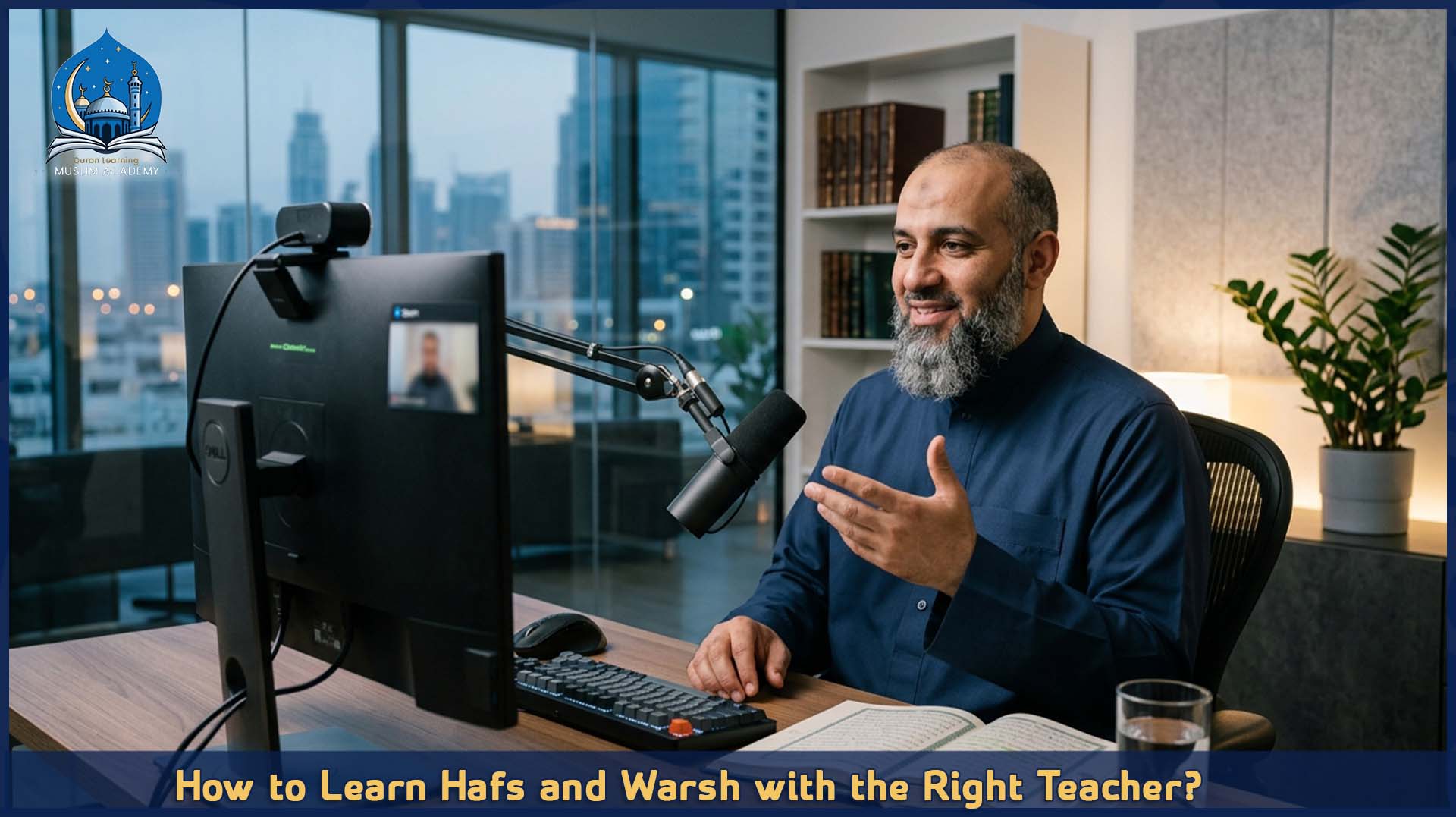
Selecting a qualified Quran teacher is one of the most important decisions a student can make because proper instruction ensures accurate pronunciation, correct Tajweed application, and a solid understanding of the authentic Difference Between Hafs and Warsh Quran. A qualified Quran teacher should possess the following qualities:
- Authentic Quran certification (Ijazah or recognized Sanad).
- Strong knowledge of Tajweed.
- Experience teaching students of different ages.
- Clear pronunciation.
- Patience and effective communication skills.
- The ability to provide regular correction and encouragement.
Modern online learning has made access to experienced Quran teachers easier than ever before, allowing students worldwide to benefit from personalized instruction regardless of their location or previous educational background.
Through personalized classes at Muslim Online Quran Academy, students learn from certified instructors who focus on accurate pronunciation, proper Tajweed application, gradual progress, and individualized guidance according to each learner’s experience and long-term Quranic goals.
Frequently Asked Questions (FAQs)
Below are answers to the most common questions about the Difference Between Hafs and Warsh Quran, helping learners better understand these authentic Quran recitations and choose the right path for their Quran learning journey.
1. Can I switch from Hafs to Warsh after memorizing the Quran?
Yes. Many students begin studying Warsh after completing their Quran memorization in Hafs. Learning the second narration under a qualified teacher is strongly recommended to avoid mixing recitation rules and to master each narration correctly.
2. Is Warsh more difficult than Hafs?
Not necessarily. Although Warsh includes additional pronunciation and Tajweed rules, students who begin learning it from the start often find it just as natural and manageable as Hafs through regular practice and qualified instruction.
3. Why is Hafs more common around the world?
Hafs became the most widespread narration because of historical educational efforts, the extensive publication of Mushafs using Hafs, and its adoption by many Quran institutes, Islamic schools, and online learning platforms across the Muslim world.
4. Do I need to learn Arabic before studying Hafs or Warsh?
No. Many non-Arabic speakers successfully learn Quran recitation with proper Tajweed through qualified teachers while gradually improving their understanding of Arabic alongside their recitation and Quran studies.
5. Can children learn either Hafs or Warsh online?
Yes. With experienced instructors, structured lessons, and consistent practice, children can successfully learn either Hafs or Warsh through organized online Quran classes that develop accurate pronunciation, strong Tajweed skills, and confidence in authentic Quran recitation.
In Conclusion Understanding the Difference Between Hafs and Warsh Quran enables Muslims to appreciate one of the greatest examples of Quranic preservation in human history while recognizing the extraordinary efforts made by generations of scholars to preserve every authentic recitation with complete precision and care.
Although Hafs and Warsh differ in certain aspects of pronunciation, Madd, Hamzah treatment, and a limited number of linguistic variations, both remain authentic recitations transmitted directly from Prophet Muhammad ﷺ through reliable and uninterrupted chains of narration accepted by Islamic scholars.
These authentic differences never alter the message, beliefs, laws, or guidance of the Holy Quran. Instead, they demonstrate the mercy of Allah, the flexibility granted to the early Muslim community, and the meticulous methods scholars used to preserve every authentic aspect of Quranic recitation throughout the centuries.
Whether you choose to study Hafs because it is the most widespread narration or Warsh because it is the traditional recitation in your region, both paths lead to the same noble objective of reciting the words of Allah accurately, beautifully, confidently, and with proper understanding according to authentic Islamic tradition.
If you wish to improve your Quran recitation under qualified teachers, Muslim Online Quran Academy offers structured online classes that help students of every age and experience level master Tajweed, strengthen recitation skills, understand the Difference Between Hafs and Warsh Quran, and progress confidently through authentic Quranic education.