Understand the Rulings of Islam with Clarity
The Fiqh Course at Muslim Academy is built for one simple reason: belief needs to turn into correct practice. Fiqh is the part of Islamic knowledge that answers the questions every practicing Muslim runs into sooner or later — how do I pray if I’m traveling, what actually breaks my fast, how do I work out my Zakah, is this business deal halal or not. Our Fiqh Course walks students through these rulings using the Qur’an and Sunnah as the foundation, explained in plain language rather than dense classical terminology.
Whether you grew up around Islamic knowledge or you’re rebuilding your understanding from scratch as an adult, this course meets you where you are. Lessons are one-on-one, paced to the student, and taught by scholars who are used to answering the “why” behind a ruling, not just the “what.”
Why Fiqh Matters More Than Most People Realize?

A lot of Muslims can recite Qur’an beautifully but freeze up the moment a real-life question comes up: can I combine two prayers because of work, what’s the ruling on a loan with interest disguised as a “fee,” how do I perform ghusl correctly. Fiqh is what closes that gap. It’s not a dry set of legal technicalities — it’s the practical layer of Islam that makes worship valid and daily dealings lawful.
The Prophet Muhammad ﷺ said, “Whoever Allah wants good for, He grants him understanding of the religion” (Bukhari and Muslim), and that understanding — fiqh, in the literal sense of the word — is exactly what this course aims to build. Students who complete it stop guessing and start knowing, which changes how confidently they worship and how they handle everyday decisions.
How the Fiqh Course Is Structured?
Rather than throwing every ruling at students at once, the course is organized into three progressive stages. Each stage builds on the last, and teachers adjust the pace depending on how quickly a student is absorbing the material.
Stage 1 — Foundations of Fiqh
Students start with the sources of Islamic law (Qur’an, Sunnah, Ijma, and Qiyas), the concept of the five legal rulings (wajib, mustahabb, mubah, makruh, haram), and the rules of Taharah — purification, wudu, and ghusl — since almost every other ruling depends on getting this stage right.
Stage 2 — Worship and Daily Rulings
This is where Salah, Sawm (fasting), Zakah, and Hajj are covered in real depth: conditions that make each act of worship valid, common mistakes people make without realizing it, and the exceptions that apply to travelers, the sick, and other special cases.
Stage 3 — Applied Fiqh and Comparative Views
The final stage moves into halal and haram in daily transactions, family and marriage rulings, and a respectful introduction to how the four major schools of thought (Hanafi, Maliki, Shafi’i, and Hanbali) approach questions differently — so students understand there’s room for scholarly difference without feeling lost in it.
Fiqh in Everyday Decisions: A Few Real Examples
Fiqh sounds abstract until you see how often it actually shows up in an ordinary week. A student who travels for work asks whether they can shorten and combine Dhuhr and Asr prayers — the answer depends on distance and intention, and Stage 2 covers exactly how to work that out instead of guessing. A parent calculating Zakah for the first time needs to know which assets count, which don’t, and what the nisab threshold actually is this year, not a vague “give some money to charity.” Someone offered a job with a commission structure wants to know whether that income is halal before they accept it, and that question sits squarely in Stage 3’s coverage of transactions.
None of these are hypothetical — they’re the kind of message our teachers get from students mid-course, which is exactly why the syllabus is built around real situations rather than only theory. By the time a student finishes the program, these aren’t guessing games anymore; they’re rulings the student can explain and apply with confidence, including knowing when to ask a scholar for a more nuanced case.
What You Will Learn in This Fiqh Course?
- The sources of Fiqh and how scholars derive rulings from the Qur’an and Sunnah
- Correct purification (Taharah) and the conditions that make Salah valid
- Fasting, Zakah, and Hajj rulings, including exceptions for travel and illness
- How to tell halal from haram in food, income, and everyday transactions
- Family and social rulings — marriage, inheritance basics, and dealing with others fairly
- A clear, non-confusing introduction to the major schools of Islamic jurisprudence
Who Should Enroll in This Fiqh Course?
This course was built with a few different learners in mind, and the pace adjusts depending on which one you are:
- Beginners who want to learn Islamic rulings step by step, without being overwhelmed
- Students already studying Islamic sciences who want a structured Fiqh foundation
- Adults returning to their faith who want practical answers, not just theory
- Parents who want to be able to answer their children’s questions about Islamic rulings correctly
How Classes Work?

Every student gets one-on-one live sessions with a qualified teacher — no crowded group calls where you’re too shy to ask a question. Classes are scheduled around your timezone and routine, so whether you’re free at 6am before work or 10pm after the kids are asleep, there’s a slot that fits.
Each session builds on short notes and reference points from the last one, so nothing gets covered once and forgotten. If a ruling needs more practice — say, the conditions for a valid Zakah calculation — the teacher will revisit it with a fresh example before moving on rather than rushing to the next topic to “finish the syllabus.” Between sessions, students usually get a short list of questions or scenarios to think through, which keeps the material active rather than something reviewed once a week and forgotten. Progress is tracked stage by stage, and you’ll receive a certificate once you complete each one.
Why Learn Fiqh with Muslim Academy?
Plenty of platforms teach Qur’an recitation; far fewer teach Fiqh properly. Our teachers are trained specifically to explain rulings the way a student actually needs to hear them — with real-life examples, not just definitions memorized from a textbook. Classes stay authentic to the Qur’an and Sunnah, but they’re delivered without the intimidation factor that stops a lot of adults from ever starting this kind of study in the first place.
A lot of adults put off studying Fiqh because they worry it will feel like sitting through a university lecture, or they’re embarrassed to ask “basic” questions at their age. One-on-one classes remove both problems: there’s no one else on the call to feel judged by, and the teacher sets the pace around what you actually know rather than assuming a fixed starting point. That’s often the difference between a student who quits after two sessions and one who finishes all three stages.
Frequently Asked Questions About the Fiqh Course
Do I need any prior Islamic studies background to join?
No. Most students start at Stage 1 with zero formal background, and the course is designed to build your understanding from the ground up.
Is this course only about worship, or does it cover daily life too?
Both. The first stages focus on worship — prayer, fasting, Zakah — and the later stage moves into practical daily-life rulings like halal income, contracts, and family matters.
Will I learn about the different schools of thought (Madhahib)?
Yes, in Stage 3. The goal isn’t to push one school over another, but to help you understand why scholars sometimes differ and how to navigate that with confidence instead of confusion.
How long does it take to complete the Fiqh Course?
It depends entirely on your pace and how many sessions per week you take. Since classes are one-on-one, teachers can move faster or slower depending on how quickly you’re absorbing each stage.
Do I get a certificate after finishing?
Yes, Muslim Academy issues a certificate of completion once you finish each stage of the program.
Is this course suitable for children as well as adults?
The core Fiqh Course is designed for teens and adults. Younger children usually start with our Quran for Kids or Islam Manners courses, which introduce rulings in a simpler, age-appropriate way before moving into full Fiqh study.
What happens if I disagree with a ruling my teacher explains, since scholars sometimes differ?
That’s completely normal, and it’s actually part of what Stage 3 is designed to address. Teachers explain the reasoning behind a ruling and where the four schools agree or differ, rather than presenting one opinion as the only valid answer. You’re encouraged to ask “why” as often as you need to — the goal is understanding, not memorized compliance.
Live by Knowledge, Worship with Understanding
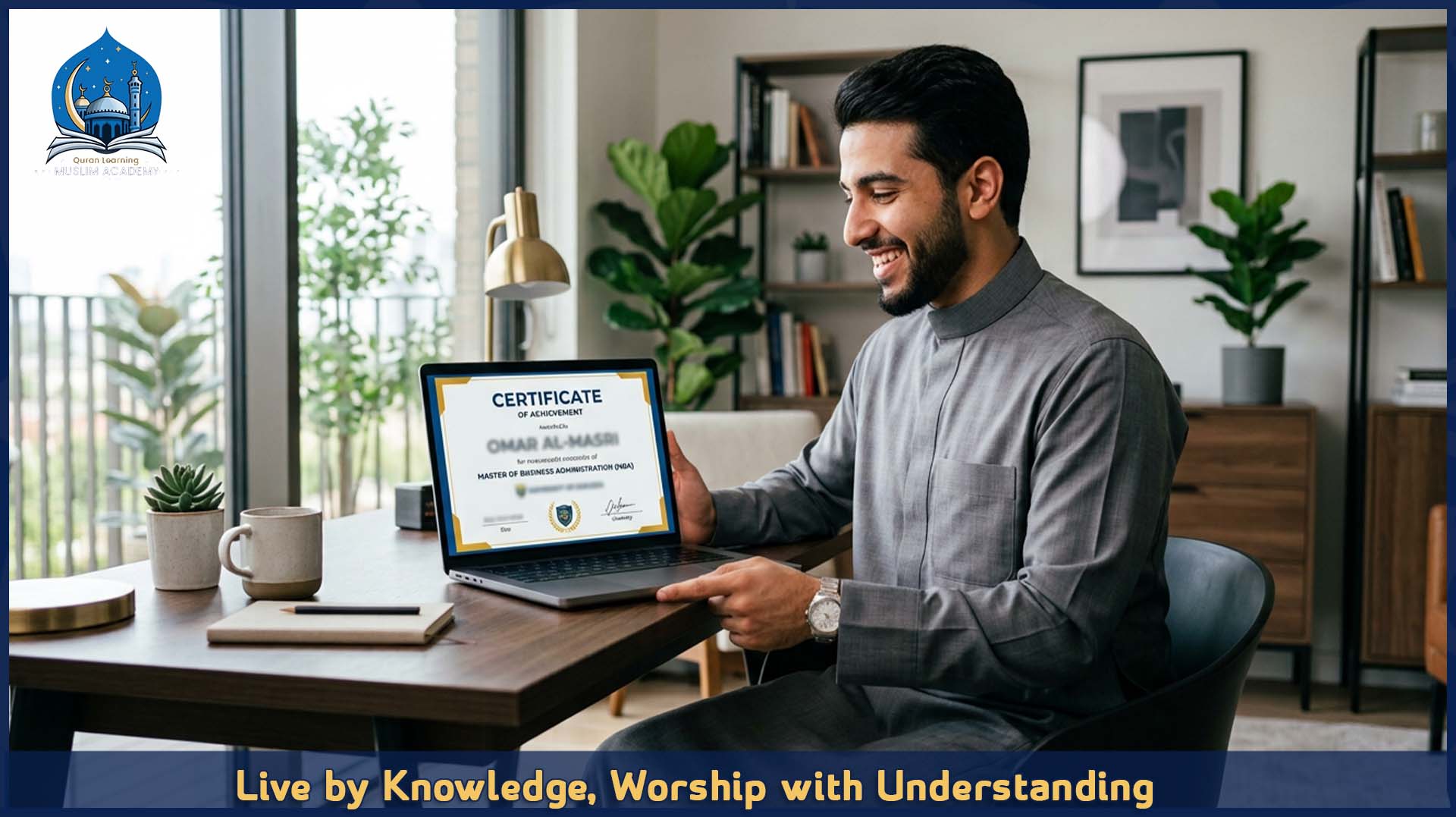
Islam is not just a faith to believe in — it’s a way of life to practice with knowledge and sincerity. Join Muslim Academy’s Fiqh Course and learn how to worship Allah correctly and handle daily life according to His guidance.
Learn Fiqh. Live Islam.
Related courses: Islam Manners · Online Hifz Program · Online Tajweed Course · All Courses
Join Us Today:
Email: info@muslim-academyy.com
Whatsapp: +201022713803