Learn the Beautiful Manners of Islam
Good manners are the essence of faith. Our Islam Manners course at Muslim Academy teaches the character, behavior, and everyday etiquette Islam calls its followers toward — not as a list of dos and don’ts, but as habits rooted in the Qur’an and the life of the Prophet Muhammad ﷺ.
This course helps Muslims of all ages put those teachings into practice at home, at school, at work, and in the community — the places where character actually gets tested, not just talked about.
Why Manners Sit at the Center of Islam, Not the Edge of It?
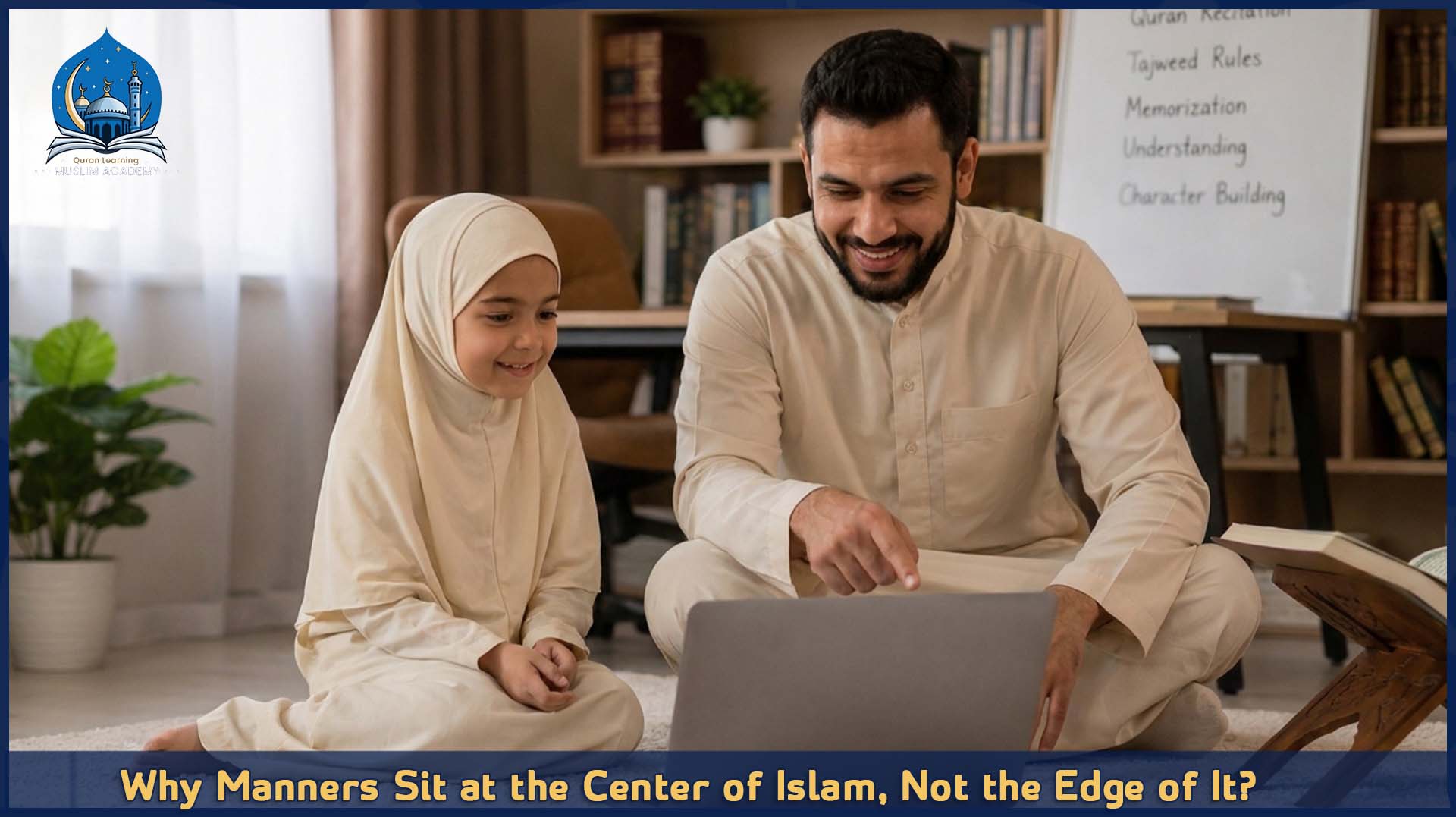
The Prophet Muhammad ﷺ said, “The best among you are those who have the best manners” (Bukhari). That single hadith reframes something a lot of people get backwards: good character in Islam isn’t a nice bonus on top of correct worship — it’s part of the worship itself. Someone can pray five times a day and still struggle with a short temper, gossip, or impatience with their parents. Adab (Islamic etiquette) is what closes that gap between ritual and reality.
Students in this course learn that manners are acts of worship in their own right: speaking truthfully because Allah is always watching, being patient with a difficult sibling because that patience is rewarded, greeting people warmly because it softens hearts. None of it is abstract — every lesson ties back to something the student will actually do that same week.
How the Course Is Organized?
Manners are taught in layers, moving from the personal to the social, so younger students and adults alike build habits gradually instead of being handed a long list all at once.
Foundations — Adab with Allah and with Yourself
The starting point is sincerity (ikhlas), gratitude, honesty, and self-control — the internal habits that everything else is built on. Without this layer, good manners toward others tend to feel performative rather than genuine.
Family and Household Manners
This stage covers respecting parents and elders, kindness between siblings, the manners of eating, dressing, entering a home, and asking permission — the small, repeated interactions that shape a household’s atmosphere.
Manners in Society
The final stage moves outward: speaking kindly, keeping promises, dealing justly in disputes, controlling anger, and treating neighbors, classmates, and colleagues with the mercy the Prophet ﷺ modeled throughout his life.
Manners of the Prophet ﷺ Students Start Practicing Right Away
One thing that makes this course different from a general “character education” class is that every lesson traces back to something specific the Prophet ﷺ actually said or did, not a generic value statement. Students learn, for example, that he ﷺ never raised his voice in the marketplace, that he greeted children the same way he greeted adults, and that he forgave people who had wronged him even when he had the power to punish them. These aren’t just historical facts — each one becomes a small, doable habit: greeting the youngest person in the room first, lowering your voice when you’re frustrated, letting go of a grudge before Maghrib.
Because the habits are broken down this small, students — especially children — don’t feel like they’re being asked to become perfect overnight. They’re asked to work on one specific, concrete habit at a time, which is also why the improvement tends to actually stick rather than fade after a single lesson.
What You Will Learn?
- Islamic etiquette (Adab) for daily situations — eating, greeting, visiting, and speaking
- Respecting parents, elders, and teachers in ways that go beyond just being polite
- Speaking truthfully and kindly, even when it’s inconvenient
- Dealing with others through mercy, fairness, and patience rather than reacting first
- Managing anger and disagreements the way the Prophet ﷺ handled conflict
- The character of the Prophet Muhammad ﷺ and practical ways to emulate it day to day
A Few Everyday Situations This Course Actually Prepares Students For

A teenager gets frustrated with a younger sibling and wants to know whether snapping back is really as harmless as it feels — this course walks through what the Sunnah says about anger and how to actually apply it in the moment, not just in theory. A parent wants their child to greet guests properly and understand why it matters, not just perform it mechanically. An adult dealing with a difficult coworker wants a Qur’an-and-Sunnah-based way to stay fair without being walked over. These are the actual questions students bring to class, and the course is built around answering them, not around reciting a list of virtues.
Who Should Enroll in This Course?
- Children and youth building Islamic character habits from an early age
- Adults who want to refine specific areas of their character with honest self-reflection
- Families who want a shared standard of Adab at home rather than everyone learning it differently
- Teachers and homeschooling parents looking for structured material to guide Muslim students
How Classes Work?
Classes run one-on-one or in small family groups, using real stories from the Seerah and everyday scenarios rather than abstract lectures. Teachers adjust examples to the student’s age — a lesson on patience looks different for a seven-year-old than for an adult managing a stressful job — and sessions are scheduled around your routine and timezone. Parents receive periodic updates on which areas of character their child is working on, so home and class reinforce each other instead of working separately.
Sessions are kept conversational rather than lecture-style — teachers ask students what happened in their week, and the lesson usually connects directly to something that actually came up, whether that’s a disagreement with a sibling or a moment they weren’t sure how to handle. That back-and-forth is part of why the material tends to stick better than reading the same points in a book.
Why Learn Manners with Muslim Academy?
A lot of Islamic character education either stays too abstract (“be kind,” “be patient”) or turns into a rulebook that doesn’t stick. Our teachers are trained to connect every point of Adab to a real hadith or Seerah story and then to a situation the student will actually face that week. That combination — authentic source material plus real application — is what makes the habits actually last instead of fading after the lesson ends.
There’s also a practical reason this matters more than parents sometimes expect: children pick up manners from whatever environment surrounds them, Islamic or not. Without a deliberate, structured framework, a lot of good character ends up learned by accident, unevenly, and sometimes from the wrong sources entirely. This course gives families a consistent standard to fall back on, so “why do we do it this way” always has a clear, source-based answer instead of just “because I said so.”
Frequently Asked Questions About the Islam Manners Course
Is this course only for children, or can adults join too?
Both. Children usually start with simple, story-based lessons, while adults work through the same principles applied to work, marriage, and daily social life. The material adjusts to the student, not the other way around.
How is this different from just reading about Islamic manners online?
A live teacher can ask you what’s actually going on in your week and connect the lesson to it directly — something a static article can’t do. Students also get to ask real questions about situations they’re unsure how to handle Islamically.
Will my child actually enjoy this, or will it feel like a lecture?
Lessons for children lean heavily on stories — from the Seerah and from relatable daily-life scenarios — rather than lists of rules. Most children respond much better to a story about how the Prophet ﷺ treated a rude stranger than to being told “be nice.”
Can this course help with a specific behavior issue, like anger or lying?
Yes. Teachers can focus more time on a particular area a student or parent flags as a concern, using the relevant Qur’an and Sunnah guidance alongside practical strategies.
Do you offer a certificate for this course?
Yes, students receive a certificate of completion after finishing the program’s stages.
How long does it take to see a real change in behavior?
It varies by child and by habit — some things click within a few weeks, others take longer, especially for older students unlearning habits that took years to form. Teachers focus on one or two habits at a time rather than everything at once, which tends to produce steadier, longer-lasting change than trying to overhaul everything immediately.
What age should a child start learning Islamic manners formally?
There’s no strict minimum — many parents start as early as four or five with very simple lessons (greeting, sharing, saying “please” the Islamic way), and the material grows in depth as the child does. Older children and teens jump in at whatever stage matches where they currently are.
Build a Character Loved by Allah
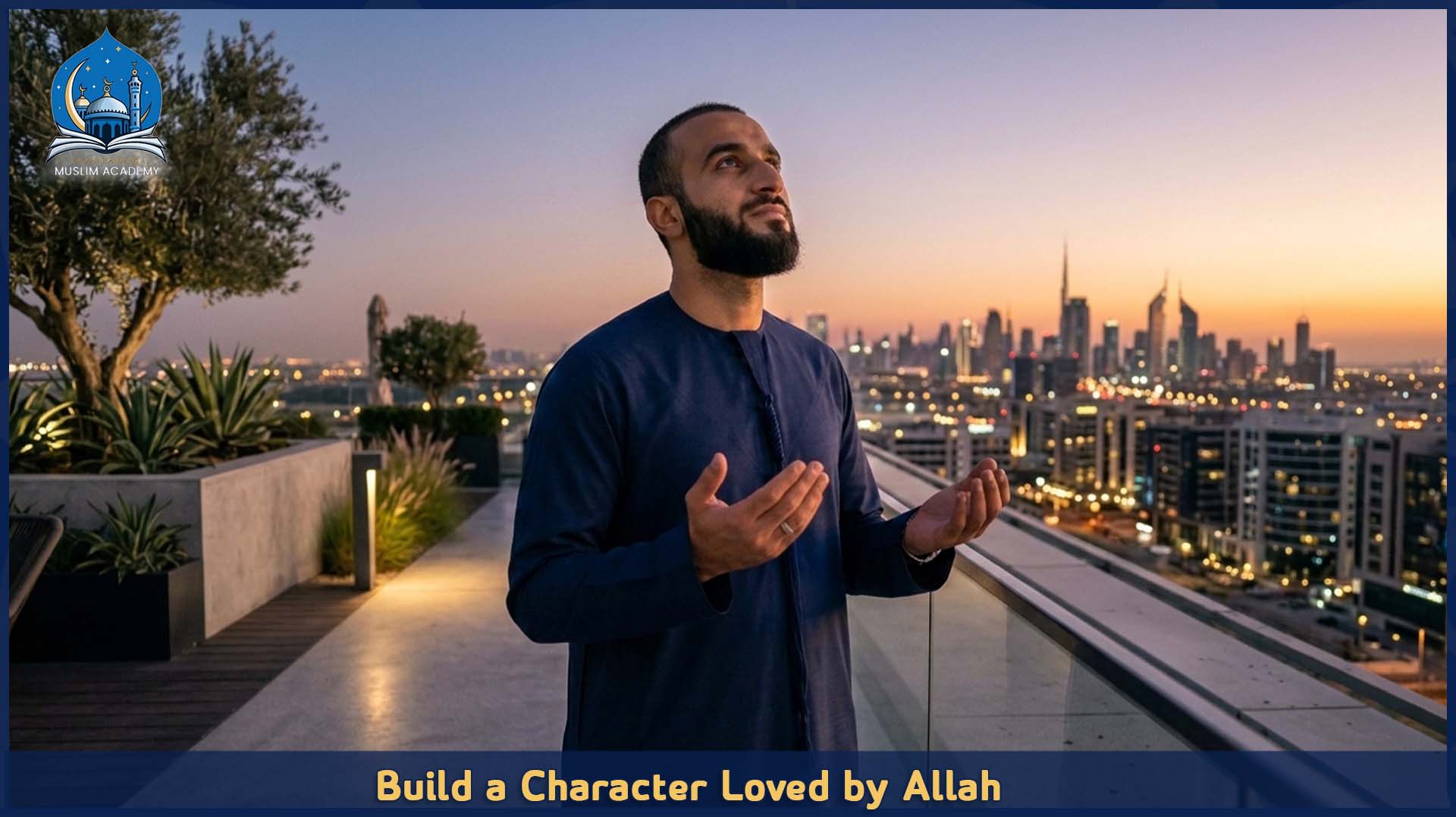
True success isn’t found in wealth or status, but in good character. Join Muslim Academy’s Islam Manners course and learn to live by the morals the Prophet ﷺ modeled for us.
Learn. Reflect. Live Islam.
Related courses: Fiqh Course · Quran For Kids · Online Tajweed Course · All Courses
Join Us Today:
Email: info@muslim-academyy.com
Whatsapp: +201022713803