
Tajweed Rules for Beginners: Complete Guide
Tajweed Rules for Beginners is the essential starting point for anyone who wants to recite the Qur’an correctly, beautifully, and with confidence.
Learning the Qur’an is not only about reading Arabic words; it is about preserving the exact pronunciation and rhythm that were revealed. This is where Tajweed becomes important. It transforms ordinary reading into a meaningful act of worship, where every letter is given its full right in sound and articulation. Whether you are a complete beginner, a parent teaching your child, or an adult returning to Quranic learning after years, understanding this science is the first step toward accurate recitation. If this is an area you’d like to explore in more depth, check out our the power of Tajweed. For related guidance, take a look at our Quran competition.
In today’s digital era, learning has become easier through structured platforms such as Muslim Online Quran Academy, which provides step-by-step guidance for learners of all ages. With proper instruction and consistent practice, even complex rules become simple and easy to apply.
Understanding Tajweed Rules for Beginners
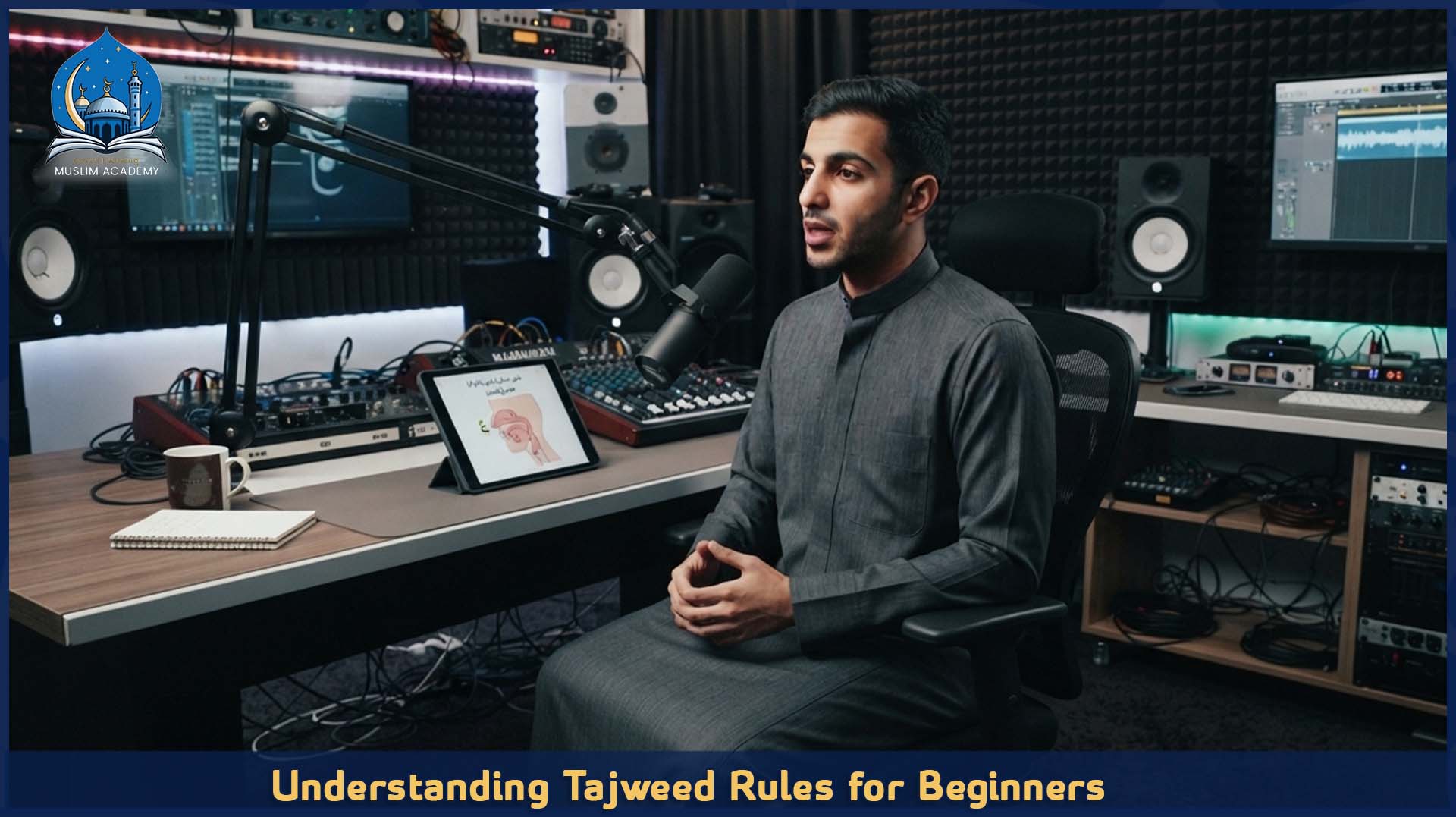
To truly understand the Qur’an, a learner must first understand how it should be read. Tajweed Rules for Beginners refers to a set of structured guidelines that ensure every Arabic letter is pronounced correctly from its correct point of articulation.
Tajweed is not optional—it is a discipline that preserves the meaning of Qur’anic words. A slight change in pronunciation can sometimes change meanings entirely, which is why scholars have emphasized learning it from the very beginning.
Beginners usually start with basic pronunciation exercises, learning how each Arabic letter sounds individually before combining them into words. This stage builds confidence and prevents mistakes later when reading full verses.
At this stage, many learners rely on guided lessons from Muslim Online Quran Academy, where teachers break down complex rules into simple, repeatable steps that anyone can follow, regardless of age or background.
Start Learning Quran Recitation With Tajweed Today
If you want to master Quran Recitation with Tajweed and improve your pronunciation with confidence, this is the perfect time to start. Muslim Academy offers structured online lessons that help you learn step by step with qualified teachers and clear guidance.
In addition, you will practice regularly, receive real corrections, and build strong Quran reading skills from the comfort of your home. Therefore, don’t wait and take action today to improve your recitation, strengthen your understanding, and connect deeply with the Holy Quran through professional and flexible learning.

Why is Learning Tajweed Essential for Every Muslim?
The importance of Tajweed goes beyond technical correctness. It is deeply connected to respect for the Qur’an and connection with its message.
When a learner begins studying Tajweed Rules for Beginners, they quickly realize that proper recitation brings clarity, beauty, and emotional impact to the words of Allah. Without Tajweed, recitation may feel rushed or unclear, but with it, every verse flows naturally and meaningfully.
One of the key benefits is accuracy. Arabic is a precise language, and even a small mispronunciation can change the meaning of a word. Tajweed protects the reader from such errors.
Another benefit is spiritual connection. Proper recitation softens the heart and increases focus during prayer and reading. This is why structured learning programs such as those offered by Muslim Online Quran Academy are designed not just to teach rules, but also to build consistency and spiritual discipline.
Core Foundations of Tajweed Every Beginner Must Know
Before diving into advanced rules, beginners must understand the building blocks of recitation. The Arabic alphabet is the first step. Each letter has a specific exit point from the throat, tongue, lips, or mouth. This is called “Makharij.” Learning these correctly ensures clarity in pronunciation.
Another foundational element is recognizing short vowels, known as Harakat. These include Fatha, Kasra, and Damma. They guide how each letter is pronounced in different contexts. Beginners also learn basic stopping rules, which teach where to pause during recitation without changing the meaning of the verse.
At this stage, learners often practice with short Surahs repeatedly until pronunciation becomes natural and smooth. Guidance from a Muslim online quran academy Tajweed helps students avoid common mistakes early, ensuring a strong foundation.
The Role of Harakat in Proper Recitation
Harakat are small but powerful symbols that completely change how a word is pronounced. They are essential in understanding Qur’anic Arabic.
Fatha gives a short “a” sound, Kasra produces a short “i” sound, and Damma produces a short “u” sound. These simple marks guide the entire structure of pronunciation.
When learners study Tajweed Rules for Beginners, they discover how these vowel marks interact with other tajweed online classes like elongation (Madd) and nasal sounds (Ghunna).
With practice, learners begin to recognize patterns naturally. This helps them read fluently without stopping to think about every letter.
Online platforms such as Muslim Online Quran Academy use visual aids and repetition techniques to help students master Harakat quickly and effectively.
Step-by-Step Path for Complete Mastery
Learning Tajweed Rules for Beginners is a gradual journey that develops accuracy, confidence, and a deeper connection with the Quran. Rather than trying to memorize every rule at once, successful learners progress through carefully structured stages.
Each stage builds on the previous one, allowing students to strengthen their pronunciation before moving to more advanced concepts. By following a clear learning path, beginners avoid confusion and establish the correct habits from the very beginning.
Step 1: Develop Strong Arabic Reading Fluency
The first step in mastering Tajweed Rules for Beginners is becoming comfortable with reading Arabic. Before focusing on pronunciation rules, students should confidently recognize every Arabic letter in its different forms, understand how letters connect within words, and read Quranic vocabulary smoothly.
This stage also includes practicing short vowels (Harakat), distinguishing similar-looking letters, and reading simple Quranic verses without frequent pauses. Building this strong foundation makes it much easier to apply tajweed naturally instead of struggling with basic reading skills. Students who invest enough time in reading fluency usually progress through tajweed much faster and with greater confidence.
Step 2: Learn Noon Sakinah and Tanween Rules
Among all Tajweed Rules for Beginners, the rules of Noon Sakinah and Tanween are introduced early because they appear repeatedly throughout the Quran. Mastering these rules has an immediate impact on the accuracy and beauty of quran tajweed online classes recitation. There are four primary rulings:
- Izhar: Pronouncing the noon sound clearly without nasal blending.
- Idgham: Merging the noon sound into the following letter under specific conditions.
- Iqlab: Changing the noon sound into a light meem sound before particular letters while maintaining proper nasalization.
- Ikhfa: Producing a soft, partially hidden noon sound accompanied by an appropriate nasal tone.
The correct rule depends entirely on the letter that follows the Noon Sakinah or Tanween. Through consistent practice and repeated recitation, beginners gradually recognize these patterns automatically while reading the Quran.
Step 3: Master the Rules of Meem Sakinah
After understanding Noon Sakinah, students continue with the rules governing Meem Sakinah. Although these rules are generally easier to understand, they remain essential for clear and accurate Quranic pronunciation. The three main rulings are:
- Izhar Shafawi: Pronouncing the meem clearly.
- Idgham Shafawi: Merging one meem into another when two consecutive meem letters meet.
- Ikhfa Shafawi: Applying a light concealment with nasalization when the silent meem is followed by the appropriate letter.
Learning these rules helps eliminate common pronunciation mistakes while improving the smoothness and consistency of Quran recitation. With regular listening and guided practice, students quickly become comfortable applying them during daily reading.
Step 4: Understand Madd (Vowel Lengthening)
Madd, or vowel lengthening, is one of the most recognizable aspects of beautiful Quran recitation. It determines how long certain vowel sounds should be extended while maintaining the correct rhythm and melody of the Quran. Beginners normally learn quran online with tajweed Madd in stages:
- Starting with the natural two-count extension.
- Progressing to longer four- and five-count stretches in specific situations.
- Finally learning the fixed six-count extensions that occur under particular tajweed conditions.
Understanding Madd prevents rushed recitation and ensures that every verse is read with balance, precision, and respect for the Quranic text. As students gain experience, they become more confident in identifying the different types of Madd without interrupting their reading flow. Learn more through our Learn Quran with Tajweed mastering Quran recitation.
Step 5: Practice Qalqalah (The Echo Sound)
Qalqalah is another essential topic included in Tajweed Rules for Beginners. It produces a controlled echoing sound when certain letters carry a sukoon or occur at the end of a word in a stopped recitation. The five Qalqalah letters are:
ق، ط، ب، ج، د
When these letters are pronounced correctly, they create a brief bouncing effect that enhances the clarity of recitation without introducing an extra vowel. One of the most common beginner mistakes is exaggerating the bounce, so careful guidance and repeated listening to qualified reciters are extremely helpful during this stage.
By practicing Qalqalah regularly in Quranic verses rather than isolated words, students develop greater control and produce a natural, balanced pronunciation that reflects proper tajweed.
Why Tajweed Matters for Every Quran Reader?
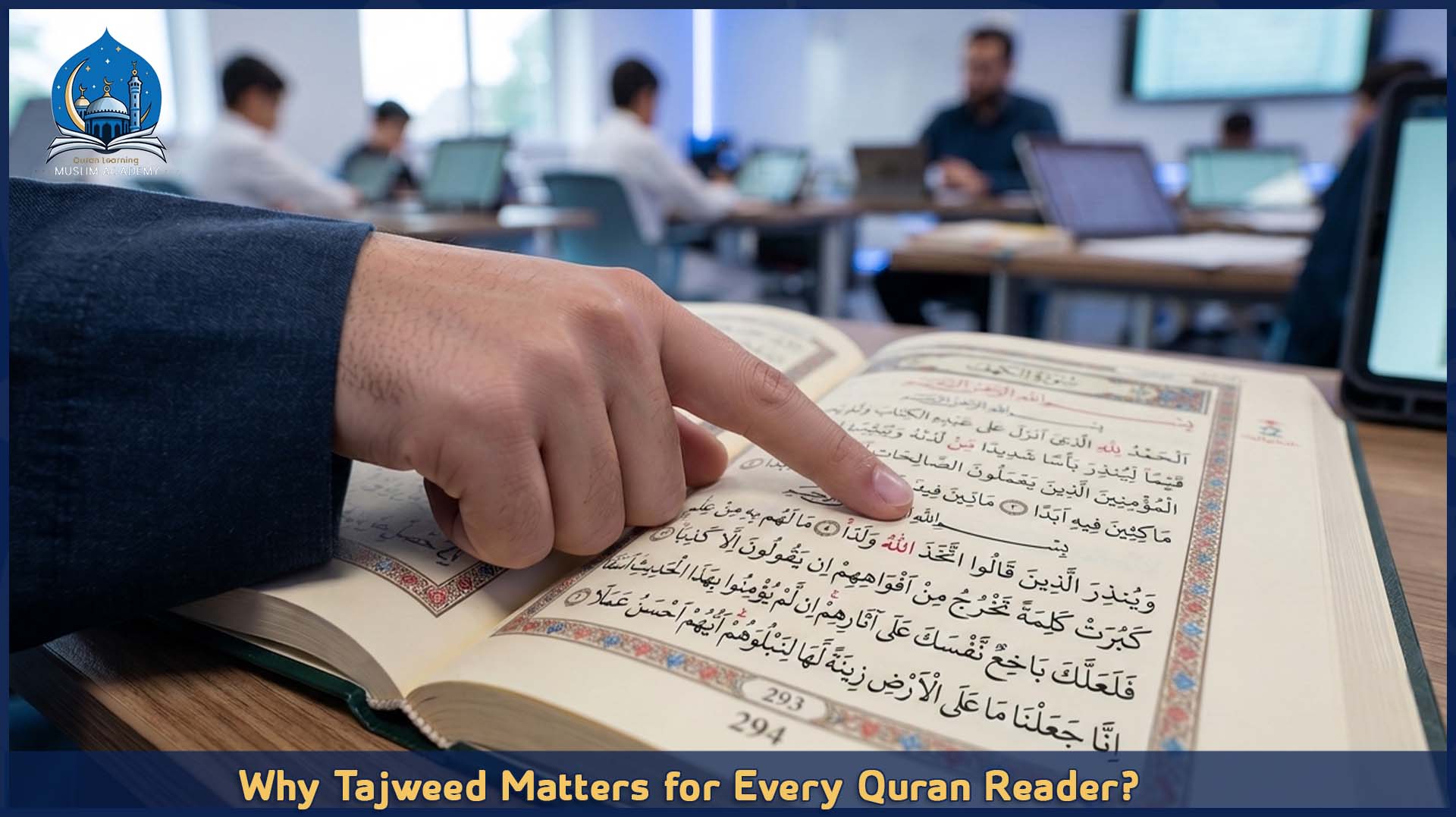
One of the most important reasons to study Tajweed Rules for Beginners is that small pronunciation changes can completely alter meanings. Arabic is a precise language, and even a slight shift in tongue placement can transform a word into something entirely different.
This is why scholars emphasized careful recitation. The Quran is not meant to be rushed. It is meant to be recited slowly, thoughtfully, and with full attention to each letter.
At this stage, learners often realize that self-study alone is not enough. Guidance from a qualified teacher becomes necessary to hear mistakes that the ear may not detect.
That is why many students choose structured programs such as Muslim Online Quran Academy, where learning is based on correction, repetition, and gradual improvement rather than memorization alone.
Learning Tajweed for Kids and Adults
Tajweed is not limited to any age group. Children, teenagers, and adults can all learn quran and Tajweed effectively with the right approach. For children, learning is usually visual and interactive. Color-coded Mushaf editions, repetition games, and short lessons make learning engaging.
For adults, the focus is more on understanding meaning and pronunciation deeply. Adults often prefer structured explanations and one-on-one guidance.No matter the age, the goal remains the same: mastering Tajweed Rules for Beginners in a way that builds both skill and spiritual connection.
Programs at Muslim Online Quran Academy are designed specifically to adapt to different learning needs, making it easier for every student to progress at their own pace.
Common Mistakes Beginners Should Avoid
Every beginner learning Tajweed makes some common mistakes, and this is a natural part of the learning process. What matters is recognizing these issues early and working on correcting them gradually with patience and practice.
1. Confusing Similar Sounds
Many Arabic letters look or sound very similar, which causes beginners to mix them up. This mistake can change meanings and reduce clarity in recitation, so careful listening and repetition are very important.
2. Wrong Madd Length
Beginners often fail to apply elongation rules correctly by either shortening long vowels or stretching short ones too much. This affects the rhythm of recitation and makes reading sound unnatural or inconsistent.
3. Weak Ghunnah (Nasal Sound)
The nasal sound is sometimes ignored or not fully pronounced by learners, especially in connected recitation. This weakens Tajweed quality and reduces the beauty and flow of Quranic reading significantly over time.
4. Ignoring Heavy and Light Letters
Some learners pronounce all Arabic letters with the same tone and strength, which is incorrect. Arabic requires a distinction between heavy and light letters to preserve meaning and maintain proper pronunciation accuracy.
5. Rushing Recitation
Speeding through verses is one of the most common mistakes among beginners, leading to missed rules and incorrect pronunciation. Slow, mindful reading improves accuracy, understanding, and long-term fluency in recitation.
With consistent practice and guided learning through Muslim Online Quran Academy, these mistakes can be corrected effectively, helping learners develop clear, accurate, and confident recitation skills over time.
Best Way to Learn Tajweed Online

Learning Tajweed online has become one of the most convenient and effective ways to improve Quran recitation. Students can now access qualified teachers from anywhere in the world without being limited by location or schedules.
The best online programs combine live instruction, interactive practice, and regular feedback to help learners build confidence and correct mistakes as they progress. Muslim Online Quran Academy offers structured lessons designed for beginners, making each concept easy to understand through step-by-step guidance and practical recitation exercises.
Students receive personalized support that allows them to practice at their own pace while improving pronunciation, fluency, and application of the rules. By following a consistent learning plan and practicing regularly, anyone can develop strong recitation skills and gain the confidence to read the Qur’an accurately, beautifully, and with a deeper understanding of its proper pronunciation.
Frequently Asked Questions (FAQs)
Find clear answers to the most common questions beginners ask about learning Tajweed, improving Quran recitation, and building correct pronunciation skills.
1. How long does it take to learn Tajweed as a beginner?
With regular practice, most beginners notice improvement within a few weeks. Developing confidence and applying Tajweed rules correctly may take several months of consistent learning.
2. Do I need to know Arabic before learning Tajweed?
No. You can start learning Tajweed without being fluent in Arabic. Many beginners learn the Arabic alphabet and Tajweed rules together.
3. Can children learn Tajweed easily?
Yes. Children often learn Tajweed quickly through interactive lessons, regular practice, and guidance from a qualified teacher.
4. Is online Tajweed learning effective?
Yes. Online classes provide structured lessons, personalized feedback, and flexible schedules, making them an excellent option for beginners.
In conclusion, learning Tajweed Rules for Beginners is an essential step toward reciting the Quran with accuracy, confidence, and respect for its proper pronunciation. By progressing through each rule gradually and practicing consistently, beginners can build a strong foundation that leads to steady improvement over time.
Remember that mastering Tajweed is a lifelong journey, and every lesson brings you closer to more beautiful and correct Quran recitation. Stay committed, seek guidance from qualified teachers, and enjoy the rewarding experience of strengthening your connection with the words of Allah. This pairs well with our Best online Quran classes.