Online Hifz Program for Adults: Memorize Quran Easily
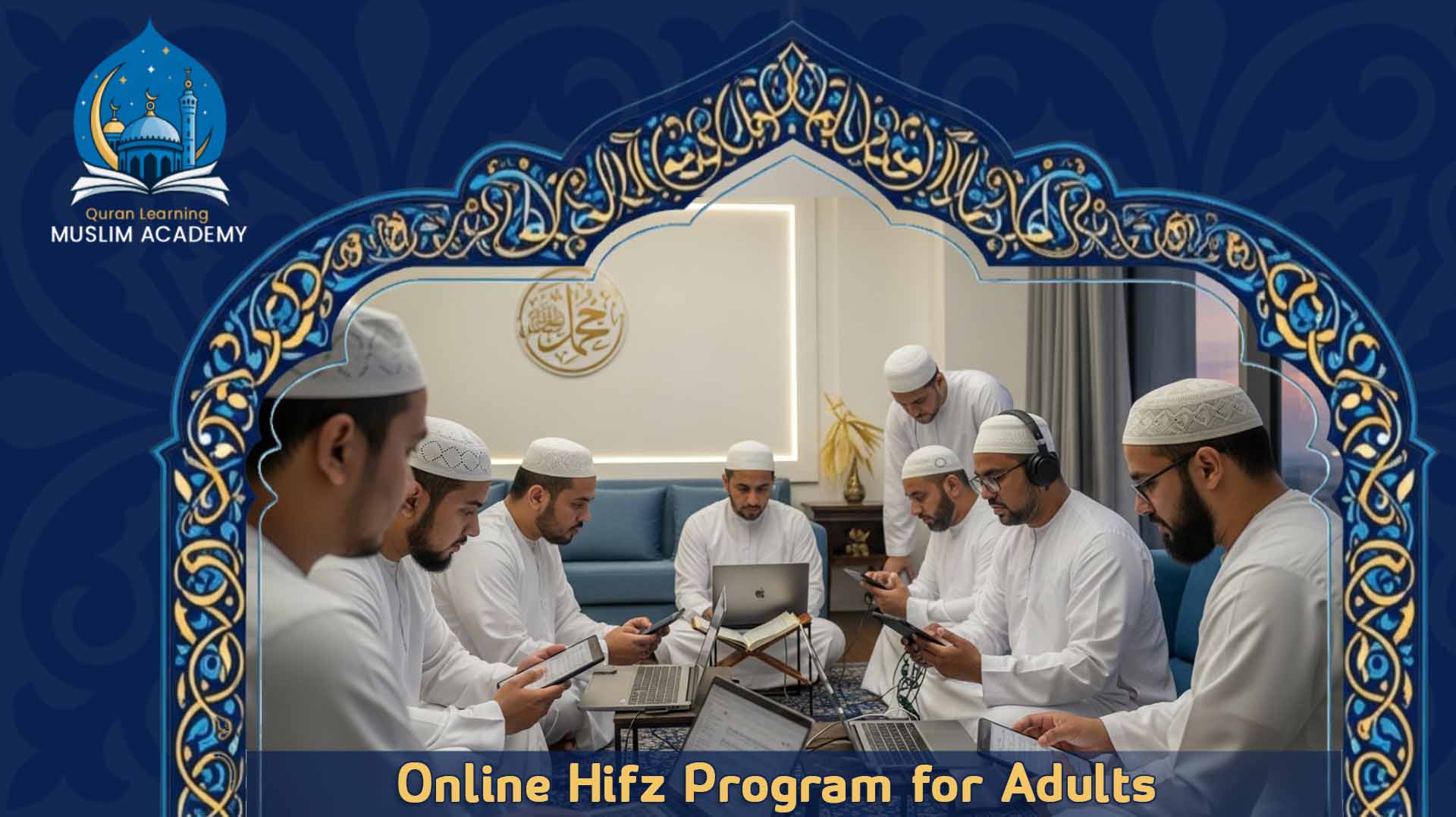
Online Hifz Program For Adults – Muslim Academy Online Hifz Program For Adults has become an inspiring opportunity for individuals who wish to memorize the Qur’an while managing work, family, and personal responsibilities. Our Quran on Ramadan can be a good complement for anyone following this path.
Muslim Academy offers a structured and supportive environment designed specifically for adult learners at different levels. Through personalized memorization plans, qualified teachers, and consistent revision schedules, students can progress steadily without feeling overwhelmed. Those who found this helpful often continue with our learn and memorize Quran. This pairs well with our Islamic online school for Quran learning USA muslim academy.
Choosing an Online Hifz Program For Adults allows learners to set realistic goals and receive one-on-one guidance tailored to their pace. With flexible class timings and focused Tajweed correction, adults can strengthen both memorization and recitation accuracy. This balanced approach helps students remain consistent, motivated, and spiritually connected throughout their Hifz journey. This connects closely with our online hifz course in the UK, which many families find useful.
Online Hifz program for adults benefits

Many adults sincerely desire to memorize the Qur’an, yet daily responsibilities often interrupt their consistency and weaken their long term goals.
Work schedules, family duties, and mental fatigue make regular attendance at local institutes difficult. As a result, memorization becomes irregular, revision declines, and motivation slowly decreases. It’s worth pairing this with our online hifz program in Sydney for a fuller picture.
This reality has led many learners to search for a structured adult Hifz program that adapts to their lifestyle rather than competing with it. Muslim Academy was established to address exactly this need by offering disciplined and accessible Quran memorization pathways.
Through Muslim Academy, students enroll in an adult Hifz program designed with realistic pacing and structured accountability. Classes are scheduled at fixed times, creating stability and reducing missed sessions.
Learners receive direct guidance from qualified Huffaz who supervise daily memorization and revision.
This system ensures that new portions remain strong while previous memorization is protected. Choosing an adult Hifz program allows adults to progress steadily without abandoning their professional or family commitments.
muslim academy focuses entirely on Quranic excellence, helping students build discipline, confidence, and spiritual consistency within a supportive environment that respects adult responsibilities.
Enroll now in an online Quran academy to join an adult Hifz program
Take the first step to complete your Qur’a memorization confidently through a structured adult Hifz program.Muslim Academy offers personalized guidance, flexible timings, and expert Huffaz to support your daily memorization journey.
Enjoy one-on-one lessons, immediate Tajweed correction, and consistent Muraja’ah that strengthen both memory and recitation skills effectively.Join today at muslim academy and transform your schedule into a disciplined, spiritually enriching Hifz experience from the comfort of your home.

Establishing a fixed memorization routine through an adult Hifz program
Consistency remains the foundation of successful memorization, especially for adults who must balance multiple obligations throughout the day. A structured adult Hifz program eliminates disruptions caused by commuting, traffic, or unpredictable schedules.
Online Quran Academy muslim academy provides fixed class timings that create a reliable daily Quran routine. When memorization occurs at the same hour each day, the mind gradually prepares itself for focus and retention.
Students enrolled at muslim academy in the adult Hifz program often save valuable time that would otherwise be spent traveling. This saved time can be redirected toward Muraja’ah or rest, both of which strengthen recall. Tutors monitor daily performance and adjust memorization targets before fatigue becomes a problem.
The stability of a fixed routine reduces procrastination and excuses. Over weeks of steady attendance, learners notice smoother recall and fewer revision gaps.
By following the disciplined structure of the adult Hifz program at Muslim Academy, students transform memorization from an occasional effort into a consistent habit rooted in accountability and spiritual commitment.
Individual supervision and precision correction in an adult Hifz program
Personal attention significantly changes the outcome of memorization because errors corrected early do not accumulate into long term weaknesses that are difficult to repair later.
The adult Hifz program at muslim academy emphasizes one to one supervision during every session. Teachers listen carefully to each verse and immediately correct mistakes in pronunciation, rhythm, or stopping rules.
This individualized system strengthens accuracy and prevents silent repetition of errors. Within the adult Hifz program, tutors focus on several critical correction areas:
-
Proper Makharij articulation to maintain clarity and preserve the meaning of each ayah.
-
Balanced recitation speed that supports memory retention rather than rushing through verses.
-
Consistent revision of older memorized portions to prevent gradual forgetting.
-
Immediate Tajweed correction before mistakes become repeated habits.
Through muslim academy, students benefit from close monitoring and constructive feedback. Adults who join the adult Hifz program often experience noticeable improvement in fluency within a short period.
This precision based approach ensures memorization remains accurate and strong from the beginning, creating a stable foundation for completing the Qur’an with confidence and correctness.
Structured muraja’ah system to strengthen retention in an adult Hifz program
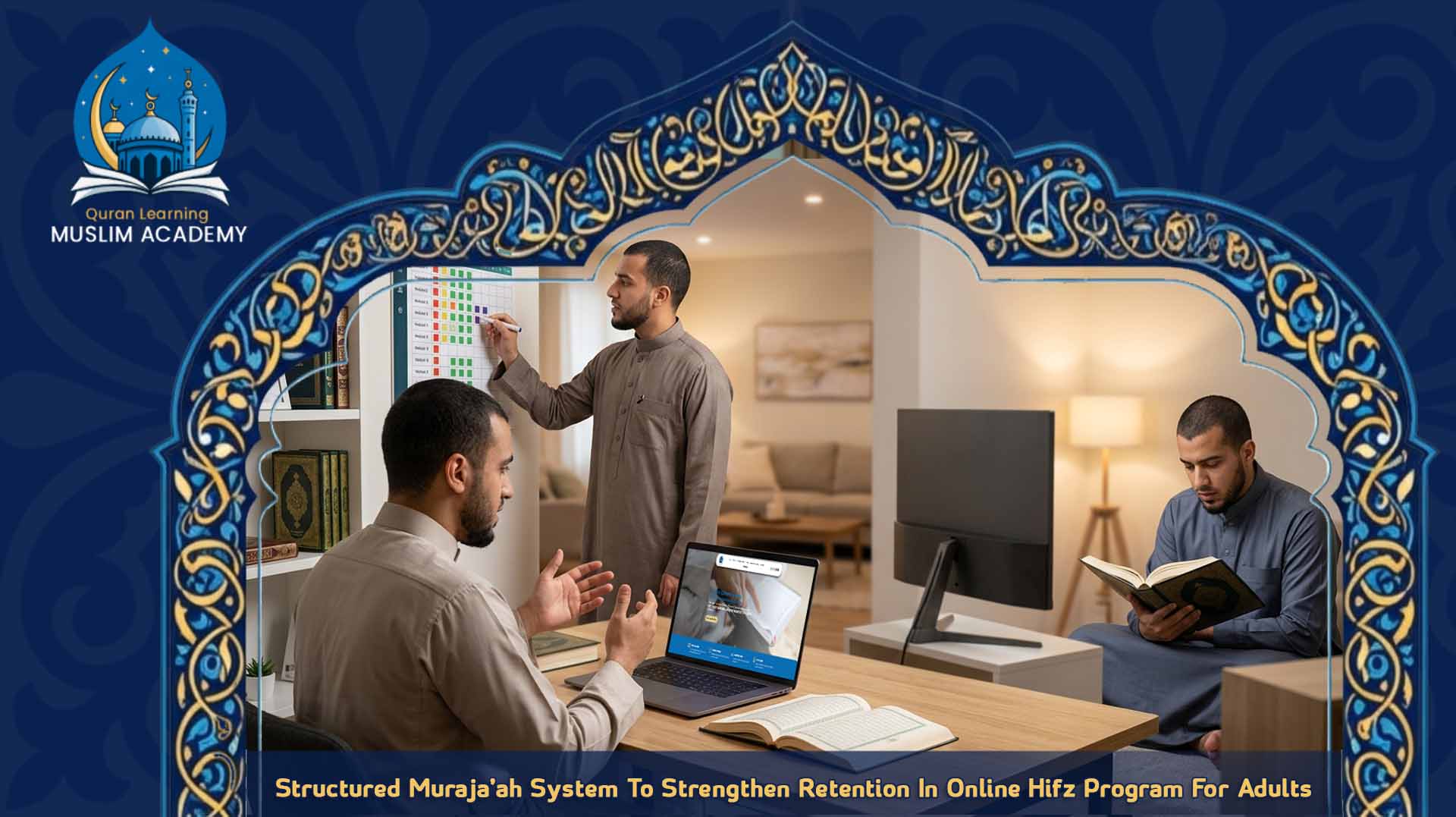
A major reason adults struggle with Hifz is irregular revision rather than poor memory. The adult Hifz program at Muslim Academy implements a structured Muraja’ah system that organizes daily revision alongside new lessons.
This ensures memorization remains consistent and strong over time. Each day, tutors assign fixed portions from previously memorized sections, recent lessons, and new sabaq. This layered system makes weak areas visible immediately, allowing tutors to adjust focus where needed.
Students following this system revise 2–3 times more efficiently than those using unstructured routines. By integrating daily review into the program, learners prevent forgetting older portions while smoothly advancing through new surahs.
Tutors track each student’s progress, highlighting repeated mistakes and customizing revision to ensure mastery. Adults who participate in the adult Hifz program at muslim academy often notice faster recall, smoother recitation, and higher confidence during daily sessions.
This approach makes memorization systematic, reduces mental fatigue, and supports long-term retention while maintaining proper Tajweed and rhythm.
Access to experienced huffaz in an adult Hifz program
Not every city or neighborhood has qualified Hifz teachers who specialize in adult learning with Tajweed expertise. The adult Hifz program at Muslim Academy solves this by connecting learners with trained Huffaz worldwide.
These instructors are experienced in guiding adult learners, understanding memory capacity, pacing, and revision techniques suitable for different learning speeds. Students gain direct access to verified teachers who can prevent common memorization errors, provide immediate correction, and tailor lessons to individual needs.
Many Huffaz at Muslim Academy have successfully guided numerous students to complete their Hifz, offering proven strategies rather than trial-and-error methods. Exposure to such expertise early in the memorization journey helps learners avoid mistakes that could require months to fix.
Adults enrolled in the adult Hifz program enjoy professional guidance, higher accuracy, and increased confidence in memorization. This global accessibility significantly improves Hifz completion rates for those who previously lacked qualified teachers locally.
Flexible class timings that adapt to adult schedules
Time constraints often prevent adults from maintaining regular Quran study. The adult Hifz program at Muslim Academy provides flexible class timings that fit around work, family responsibilities, and personal routines. For more guidance, check out our Learn Quran online from home.
Whether early morning, afternoon, or evening, learners can choose slots that match their optimal focus periods. Flexible scheduling helps maintain consistent attendance, reduces fatigue, and allows adults to engage with memorization when energy levels are high.
Tutors can adjust lesson load according to each student’s daily routine, ensuring progress continues steadily. Adults who follow this program benefit from over 90% attendance rates due to convenient timing.
Muslim Academy ensures that flexibility does not compromise structure; each session remains productive and focused. By combining adaptability with disciplined guidance, learners maintain motivation, reduce stress, and steadily achieve their Hifz goals.
Immediate Tajweed correction during an adult Hifz program

Tajweed errors, if not corrected promptly, can become ingrained and affect long-term memorization quality. The adult Hifz program at Muslim Academy provides instant correction during live recitation sessions.
Tutors listen carefully to each ayah and stop students immediately when errors appear, ensuring that mistakes are addressed at the source rather than repeated multiple times.
This system focuses on precise articulation, proper letter origin, correct elongation, and correct stopping points. Adults following this program improve clarity and recitation accuracy quickly. By reinforcing proper sound patterns from the start, memorization becomes more reliable and less prone to forgetting.
Regular Tajweed correction strengthens memory retention because the brain locks in the correct pronunciation along with the meaning. Learners enrolled in the adult Hifz program experience higher confidence, fewer mistakes, and a clear, melodious recitation that preserves the integrity of the Qur’an.
Discuss your learning goals with Muslim Academy
muslim academy provides a dedicated and structured environment for adults who want to memorize the Qur’an. Their adult Hifz program combines flexible schedules, expert Huffaz, and personalized guidance to ensure memorization is effective, consistent, and spiritually enriching. The academy focuses on proper Tajweed, accurate revision, and long-term retention.
Adults can learn from anywhere, receive one-to-one attention, track progress, and stay motivated throughout their Hifz journey. Muslim Academy ensures that every student achieves memorization goals while maintaining balance with professional and personal life commitments.
Parental and self-monitoring in an adult Hifz program
Tracking progress is essential for long-term success, even for adult learners. The adult Hifz program at Muslim Academy includes structured tracking systems that allow learners to see their achievements and areas that need improvement.
Clear daily logs, revision reports, and attendance records ensure accountability. Adults can self-monitor while also receiving guidance from their tutors. Key areas tracked include:
-
Daily memorization portion completed
-
Revision of previous lessons
-
Tajweed and recitation accuracy
-
Attendance and consistency
This transparency allows learners to adjust their pace, repeat weak sections, and remain motivated. The combination of personal accountability and tutor feedback strengthens retention, builds discipline, and ensures that memorization goals are achieved systematically and reliably.
Personalized Hifz pace tailored to memory strength

Not all adults memorize at the same rate; everyone’s memory capacity differs. The adult Hifz program at muslim academy allows tutors to adjust lesson sizes and revision frequency according to each learner’s strength.
Slow learners receive smaller portions with extra revision, while fast learners handle larger portions with structured checks. By customizing the pace, the program prevents burnout and maintains high accuracy. Personalized pacing improves retention and reduces mistakes over time.
Learners gain confidence as they consistently meet achievable goals. Adults following this approach complete memorization efficiently while maintaining strong Tajweed and correct recitation.
Frequently asked questions
Choosing the right Hifz program can raise many questions. Here are answers to the most common queries about the adult Hifz program.
1. How long does it take to complete Hifz in an online program?
The duration varies depending on pace, consistency, and previous memorization experience. muslim academy structures lessons to suit individual memory capacity, ensuring steady progress without rushing.
2. Are tutors experienced in teaching adults with busy schedules?
Yes, all Huffaz at Online Quran Academy muslim specialize in adult learners. They adapt lesson timing, load, and revision plans according to each student’s work and personal commitments.
3. How is Tajweed monitored during online memorization?
Tajweed mistakes are corrected immediately in live sessions. Tutors provide detailed feedback on pronunciation, elongation, and proper stopping rules to ensure recitation is accurate and retained.
4. Can learners track their daily memorization progress?
Yes, Muslim Academy uses structured tracking systems. Learners can see daily portions memorized, revision history, accuracy, and attendance, which supports accountability and motivation.
5. Is flexibility available for changing class timings?
Absolutely. The adult Hifz program allows schedule adjustments to suit work or family needs, while maintaining consistency and long-term memorization goals.
6. What makes Muslim Academy unique for adult Hifz?
The academy combines structured lesson plans, expert Huffaz, personalized pacing, instant Tajweed correction, and flexible schedules. This comprehensive approach ensures effective, consistent, and confident memorization.
In conclusion, enrolling in an adult Hifz program is a meaningful step toward achieving the noble goal of memorizing the Qur’an with confidence and dedication.
Ask the instructor to balance new memorization with recent and older revision. Set a workload that fits your week and reduce new material when retention weakens. Check progress by reciting reviewed passages after time has passed, rather than counting only new pages.
The convenience of online learning removes geographical barriers and makes high-quality Quran education accessible to everyone. With patience, discipline, and expert guidance, an adult Hifz program can transform your daily routine into a spiritually enriching journey of memorization and lifelong connection with the Qur’an.
Read more :
Benefit of Reading Quran Daily
How to Perform Wudu For related guidance, take a look at our Online Quran learning UK.