
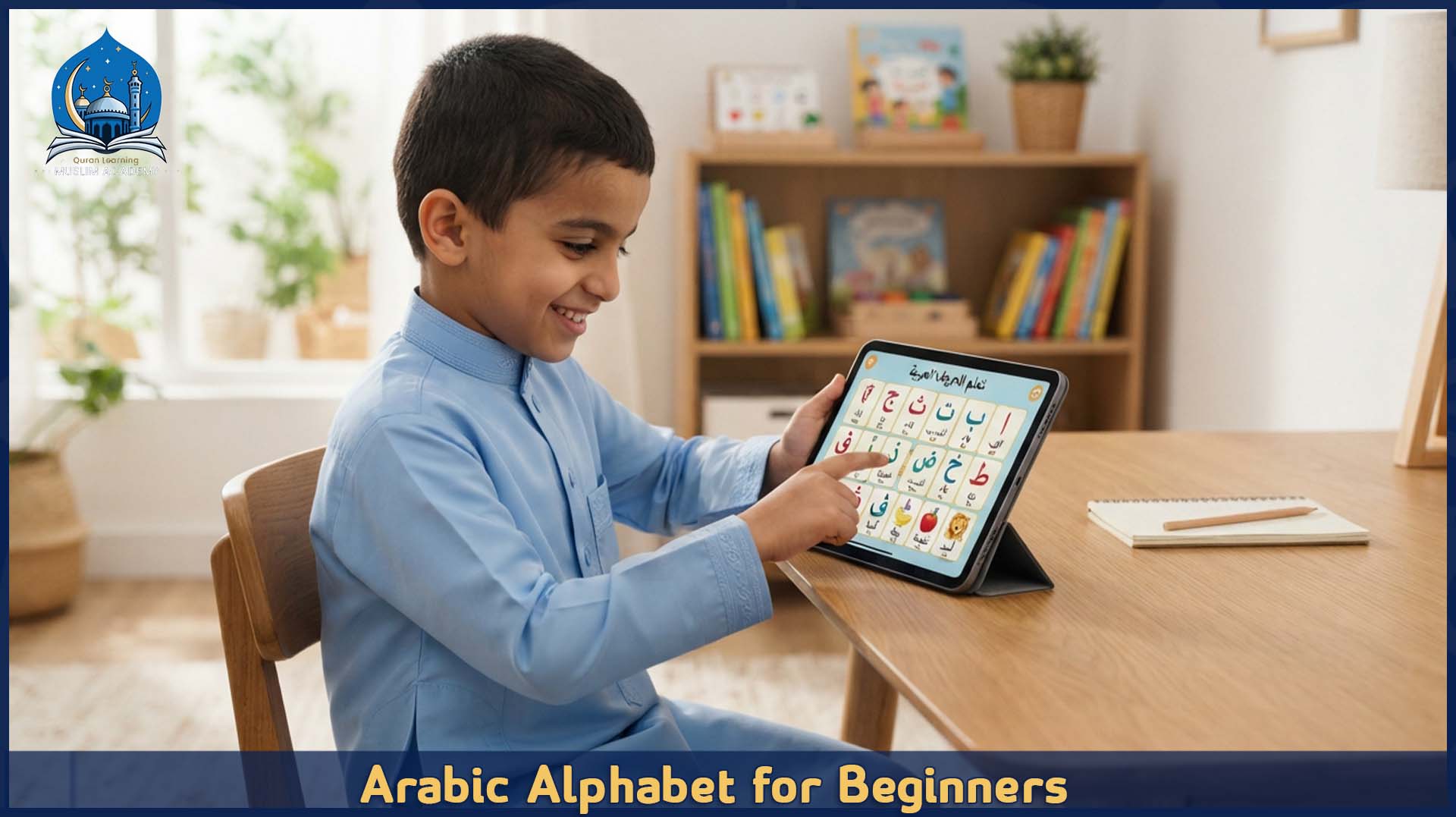
Arabic Alphabet for Beginners – Step by Step
Arabic Alphabet for Beginners is the foundation of learning the Arabic language. Whether your goal is to read Arabic books, communicate with Arabic speakers, understand the Quran, or help your child learn a new language, mastering the Arabic alphabet is the first and most important step.
Many people think learning Arabic starts with memorizing 28 letters, but the journey is much more exciting than that. Every Arabic letter has its own sound, shape, and role in forming words. Once beginners understand how the letters work together, reading Arabic becomes much easier.
At Muslim Online Quran Academy, we believe beginners learn best through simple explanations, practical examples, pronunciation practice, and interactive activities. Instead of overwhelming students with grammar from the beginning, we focus on building a strong foundation that makes future learning easier.
In this comprehensive guide, you’ll discover everything you need to know about Arabic Alphabet for Beginners, including how the Arabic alphabet works, the pronunciation of each letter, the best teaching methods for children and adults, common mistakes to avoid, fun learning activities, and practical tips that make learning Arabic enjoyable.
Why the Arabic Alphabet for Beginners Is the First Step?

Before learning Arabic grammar, vocabulary, or conversation, every learner must become familiar with the Arabic alphabet. Unlike English, Arabic has its own writing system with unique letters, sounds, and writing styles. Understanding these basics helps learners progress much faster. Learning the Arabic Alphabet for Beginners provides several long-term benefits:
- Builds reading confidence.
- Improves pronunciation.
- Makes vocabulary easier to remember.
- Creates a strong foundation for Quran reading.
- Helps learners write Arabic correctly.
- Develops listening skills.
- Makes learning grammar much simpler later.
Many students who skip this stage often struggle when reading Arabic words because they never developed a solid understanding of the letters themselves. Instead of rushing, beginners should spend enough time mastering every letter before moving to advanced lessons.
Start Learning Quran Recitation With Tajweed Today
If you want to master Quran Recitation with Tajweed and improve your pronunciation with confidence, this is the perfect time to start. Muslim Academy offers structured online lessons that help you learn step by step with qualified teachers and clear guidance.
In addition, you will practice regularly, receive real corrections, and build strong Quran reading skills from the comfort of your home. Therefore, don’t wait and take action today to improve your recitation, strengthen your understanding, and connect deeply with the Holy Quran through professional and flexible learning.

What Makes the Arabic Alphabet Unique?
One of the reasons many beginners become interested in Arabic is that its writing system is completely different from the Latin alphabet. Arabic is:
- Written from right to left.
- Made up of 28 letters.
- Based on consonants, with short vowels added through diacritical marks.
- Written in a connected script.
- Rich in unique sounds that do not exist in many other languages.
Although these differences may seem challenging at first, they actually make Arabic highly consistent once learners understand the rules. Unlike English, where one letter may have several pronunciations, Arabic letters usually represent one primary sound. This consistency makes pronunciation much easier after learners become familiar with the alphabet.
Understanding the Structure of the Arabic Alphabet
The Arabic alphabet contains exactly 28 letters, beginning with Alif (ا) and ending with Ya (ي). Each letter has:
- A name
- A sound
- Several written forms
- Different positions inside words
For example, the letter ب (Baa) changes its appearance depending on where it appears. Stand-alone:
ب
Beginning:
بـ
Middle:
ـبـ
End:
ـب
Although the shape changes, the pronunciation stays the same. Understanding these patterns is one of the most important goals when studying the Arabic Alphabet for Beginners because every Arabic word is built using connected letters.
Complete Arabic Alphabet for Beginners
| Arabic Letter | Name | Pronunciation | Example Word | Meaning |
|---|---|---|---|---|
| ا | Alif | A | أسد | Lion |
| ب | Baa | B | باب | Door |
| ت | Taa | T | تفاح | Apple |
| ث | Thaa | TH | ثعلب | Fox |
| ج | Jeem | J | جمل | Camel |
| ح | Haa | Deep H | حصان | Horse |
| خ | Khaa | KH | خبز | Bread |
| د | Daal | D | دب | Bear |
| ذ | Dhaal | TH | ذهب | Gold |
| ر | Raa | R | رجل | Man |
| ز | Zay | Z | زرافة | Giraffe |
| س | Seen | S | سمك | Fish |
| ش | Sheen | SH | شمس | Sun |
| ص | Saad | Heavy S | صندوق | Box |
| ض | Daad | Heavy D | ضفدع | Frog |
| ط | Taa | Heavy T | طائرة | Airplane |
| ظ | Zaa | Heavy Z | ظرف | Envelope |
| ع | Ayn | Throat Sound | عين | Eye |
| غ | Ghayn | GH | غزال | Deer |
| ف | Faa | F | فم | Mouth |
| ق | Qaaf | Deep Q | قلم | Pen |
| ك | Kaaf | K | كتاب | Book |
| ل | Laam | L | ليمون | Lemon |
| م | Meem | M | موز | Banana |
| ن | Noon | N | نمر | Tiger |
| هـ | Haa | H | هدية | Gift |
| و | Waaw | W | ورد | Rose |
| ي | Yaa | Y | يد | Hand |
Why Learning Arabic Alphabet with Words Is More Effective?
One of the biggest mistakes beginners make is memorizing letters without learning how they appear in real words. Instead, each new letter should be introduced with:
- A picture
- A pronunciation
- A familiar Arabic word
- A simple explanation
For example:
ب
باب
Door
The learner immediately connects:
- the letter
- its sound
- its meaning
- its spelling
This approach improves long-term memory and helps children enjoy learning. Educational research consistently shows that meaningful learning is much more effective than simple memorization. When children recognize Arabic letters inside real vocabulary, they become confident readers much faster.
Arabic Alphabet for Beginners and Correct Pronunciation
Correct pronunciation is just as important as recognizing the letters. Arabic contains several unique sounds that require careful practice. Some of the most challenging letters include:
- ع (Ayn)
Produced deep in the throat. There is no direct English equivalent.
- ح (Haa)
A soft breathy sound produced from the throat.Different from the English “H.”
- خ (Khaa)
Similar to the German “ch” sound.Produced from the upper throat.
- ق (Qaaf)
A deeper version of the English K.Pronounced from the back of the tongue.
- ض (Daad)
Known as one of the most distinctive Arabic sounds.Requires repeated listening and guided practice. Beginners should never worry if these sounds seem difficult at first. Regular listening and repetition naturally improve pronunciation over time.
Why Children Learn Arabic Faster Through Visual Activities?
Children naturally learn Arabic online through play. Instead of long lectures, they respond better to:
- colorful flashcards
- matching games
- storytelling
- songs
- picture books
- drawing activities
- letter tracing
- educational puzzles
These activities transform learning into an enjoyable experience. For example, after introducing the letter م, children can:
- color a banana (موز)
- trace the letter
- pronounce it aloud
- identify other words beginning with م
This multi-sensory approach strengthens memory and keeps young learners engaged.
The Importance of Daily Practice
Consistency is more valuable than long study sessions. Just 15–20 minutes each day can produce excellent results.A simple daily routine may include:
- Reviewing previously learned letters.
- Practicing two or three new letters.
- Reading simple words.
- Writing each letter several times.
- Listening to native pronunciation.
- Playing one educational game.
Small, regular lessons help learners build confidence without feeling overwhelmed.
How Can Parents Teach the Arabic Alphabet for Beginners at Home?
Parents play an essential role in helping children build confidence as they learn a new language. Fortunately, teaching the Arabic Alphabet for Beginners at home does not require advanced Arabic skills. What matters most is consistency, encouragement, and the use of engaging learning methods.
Children often remember lessons better when they practice with family members in a relaxed environment. Even ten to fifteen minutes of focused practice every day can lead to remarkable progress over time. Parents can support learning by:
- Reading Arabic letters together every day.
- Using flashcards with colorful pictures.
- Practicing pronunciation aloud.
- Labeling household objects with Arabic names.
- Watching educational Arabic videos.
- Reading simple Arabic storybooks.
- Rewarding progress with praise and encouragement.
Making online Arabic classes for kids part of everyday life helps children see it as a useful language rather than just another school subject.
A Step-by-Step Plan for the Arabic Alphabet for Beginners
Many beginners feel overwhelmed when they first see the Arabic alphabet. Instead of trying to memorize all the letters at once, learners should follow a structured learning plan.
Step 1: Learn Five Letters
Start with the easiest letters:
- ا
- ب
- ت
- ث
- ج
Practice:
- Their names.
- Their sounds.
- How to write them.
- One vocabulary word for each letter.
Only move forward after recognizing these letters confidently.
Step 2: Learn Five More Letters
Continue with:
- ح
- خ
- د
- ذ
- ر
Spend time listening to their pronunciation because several of these sounds are unique to Arabic.
Step 3: Practice Reading Short Words
After learning several letters, begin combining them into simple words. Examples include:
باب
بيت
كتاب
يد
قلم
Reading real words helps learners understand how letters connect in everyday Arabic.
Step 4: Begin Writing
Writing reinforces memory. Beginners should practice:
- Tracing letters.
- Copying letters.
- Writing letters independently.
- Connecting letters into words.
Writing also improves hand coordination and prepares learners for longer Arabic texts.
Arabic Letter Positions Explained
One concept that surprises many learners studying the Arabic Alphabet for Beginners is that letters change their appearance depending on where they appear in a word. Each letter may have four forms:
- Isolated
- Beginning
- Middle
- End
For example, the letter م appears as:
Standalone
م
Beginning
مـ
Middle
ـمـ
End
ـم
Although the shape changes, the pronunciation remains the same. Understanding this system makes reading Online Arabic classes much easier.
Arabic Alphabet for Beginners Through Vocabulary Building
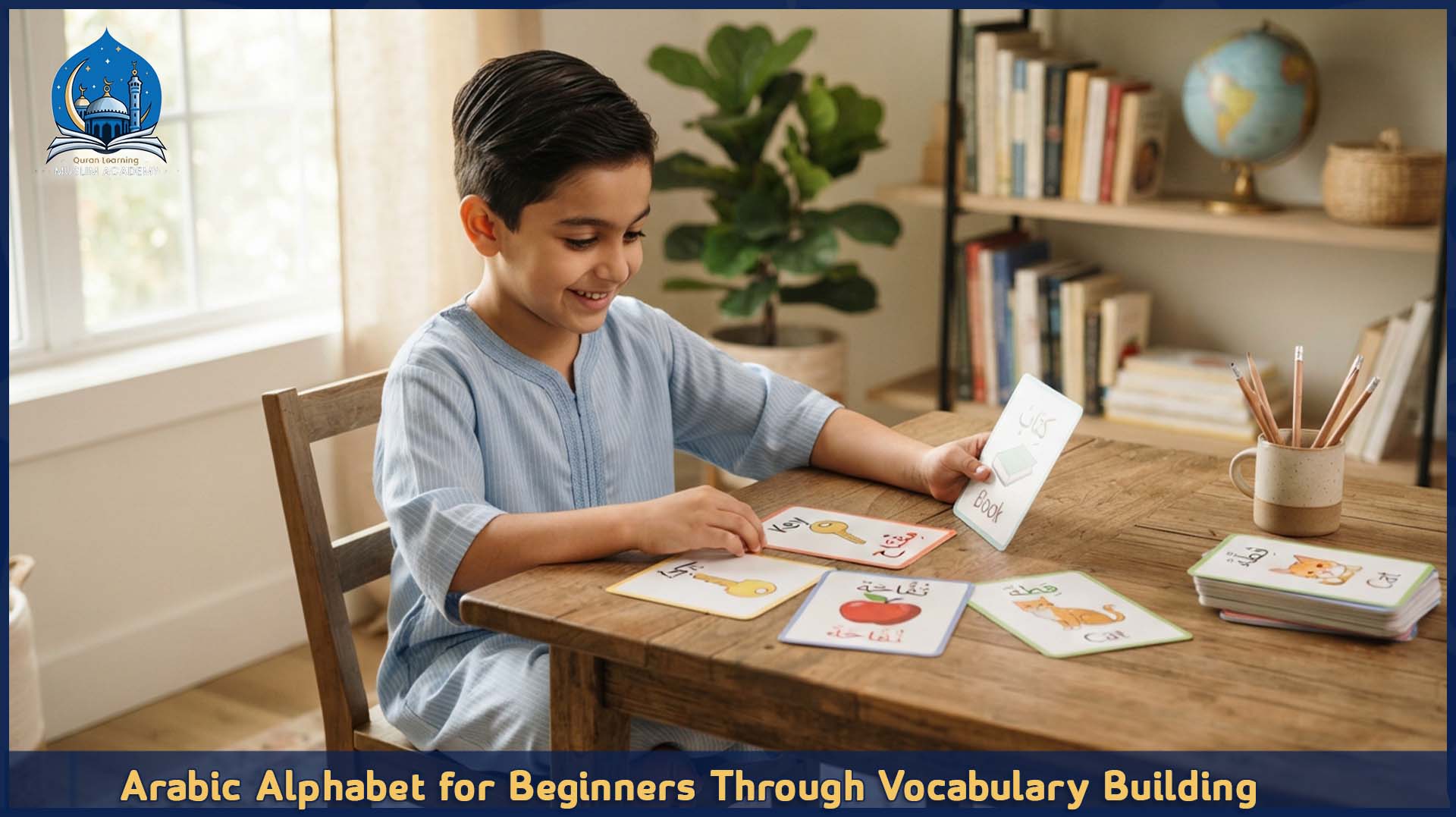
Vocabulary should grow alongside alphabet learning. Instead of memorizing isolated letters, beginners should connect every letter with useful words. Here are more examples:
| Letter | Arabic Word | Transliteration | Meaning |
|---|---|---|---|
| ا | أم | Umm | Mother |
| ب | بحر | Bahr | Sea |
| ت | تمر | Tamr | Dates |
| ج | جبل | Jabal | Mountain |
| ح | حليب | Haleeb | Milk |
| خ | خاتم | Khatam | Ring |
| د | دفتر | Daftar | Notebook |
| ر | رمان | Rumman | Pomegranate |
| س | سيارة | Sayyarah | Car |
| م | مسجد | Masjid | Mosque |
| ن | نافذة | Nafidhah | Window |
| و | ولد | Walad | Boy |
| ي | يوم | Yawm | Day |
Learning vocabulary while studying the Arabic Alphabet for Beginners keeps lessons meaningful and practical.
Common Challenges Beginners Face When Learning the Arabic Alphabet for Beginners
Learning the Arabic Alphabet for Beginners is an exciting journey, but almost every new learner faces similar obstacles during the first stages. Fortunately, these challenges are completely normal and become much easier with regular practice, patience, and the right learning approach.
Confusing Similar Letters
Many beginners struggle because several Arabic letters have nearly identical shapes. Examples include:
- ب
- ت
- ث
The only difference between these letters is the number and position of the dots. While this may seem confusing at first, practicing side-by-side comparisons every day helps learners recognize each letter much faster. Repeating these exercises consistently makes the Arabic Alphabet for Beginners easier to master over time.
Forgetting Letter Sounds
Some students can recognize Arabic letters immediately but hesitate when trying to pronounce them correctly. The simplest solution is:
- Listen.
- Repeat.
- Read aloud.
- Practice daily.
Listening to native pronunciation and repeating every letter several times helps build confidence naturally. Daily reading practice strengthens both memory and pronunciation, making the Arabic Alphabet for Beginners much easier to remember.
Difficulty Connecting Letters
Unlike English, Arabic letters change shape depending on their position inside a word. Instead of feeling overwhelmed, beginners should practice connecting only two letters before moving to three-letter combinations and complete words. This gradual method builds confidence while improving reading skills. Mastering letter connections is one of the most important parts of learning the Arabic Alphabet for Beginners successfully.
Learning Too Quickly
Many learners try to memorize all twenty-eight Arabic letters within a few days. Although this sounds efficient, rushing usually causes confusion and forgotten lessons. Learning a few letters each day allows the brain to absorb information more effectively. The goal of the Arabic Alphabet for Beginners is long-term understanding rather than finishing as quickly as possible.
Fun Games for Arabic Alphabet for Beginners
Children and beginner learners stay motivated when studying feels enjoyable instead of difficult. Interactive activities transform lessons into exciting experiences while reinforcing everything they have already learned about the Arabic Alphabet for Beginners.
Alphabet Treasure Hunt
Hide Arabic letter cards around the room. Ask children to find a specific letter. When they discover it, encourage them to pronounce the letter clearly and say a simple Arabic word that begins with the same letter. This activity improves recognition while making the Arabic Alphabet for Beginners more engaging.
Letter Bingo
Create bingo cards using Arabic letters. Call out the pronunciation instead of showing the written letter. Children listen carefully, identify the correct letter, and mark it on their cards. This enjoyable exercise strengthens listening and recognition skills while reinforcing the Arabic Alphabet for Beginners.
Flashcard Challenge
Show a flashcard for three seconds.
Hide it.
Ask:
- What letter was it?
- What sound does it make?
- Can you name a word beginning with it?
This quick memory game develops faster recall and increases confidence when learning the Arabic Alphabet for Beginners.
Alphabet Puzzle
Print large Arabic letters.
Cut them into puzzle pieces.
Children rebuild each letter while repeating its pronunciation aloud. Combining movement with repetition helps improve visual memory and makes learning the Arabic Alphabet for Beginners more enjoyable.
Memory Matching Game
Match:
- Arabic letters.
- Arabic words.
- Pictures.
Players match each letter with the correct word or picture, strengthening recognition, pronunciation, and vocabulary simultaneously. This simple activity provides an enjoyable way to review the Arabic Alphabet for Beginners while reinforcing previously learned letters and sounds.
Best Resources for Arabic Alphabet for Beginners
Many tools can support beginners. Some of the most effective include:
- Flashcards.
- Printable worksheets.
- Arabic handwriting books.
- Interactive educational apps.
- Children’s storybooks.
- Audio pronunciation lessons.
- Online tutoring.
- Alphabet posters.
Combining several resources creates a more enjoyable learning experience.
Why Online Learning Helps Arabic Alphabet for Beginners
Modern technology has made learning Arabic online much more accessible. Students can now study from anywhere with experienced teachers. At Muslim Online Arabic Academy for adults, beginners receive structured lessons designed to make learning simple and enjoyable. Benefits include:
- Qualified Arabic teachers.
- Personalized lessons.
- Live pronunciation correction.
- Interactive activities.
- Flexible schedules.
- One-on-one instruction.
- Progress tracking.
- Support for both children and adults.
Online learning also allows students to review lessons whenever necessary, helping them build confidence at their own pace.
How Long Does It Take to Learn the Arabic Alphabet?
There is no universal timeline. Learning speed depends on several factors:
- Age.
- Previous language experience.
- Practice frequency.
- Teaching method.
- Motivation.
Most beginners can recognize all 28 letters within a few weeks if they practice consistently. However, mastering pronunciation, writing, and reading simple words usually requires additional time. Patience is one of the most important keys to success when studying the Arabic Alphabet for Beginners.
Building Confidence While Learning Arabic
Confidence develops through small achievements. Celebrate milestones such as:
- Learning five new letters.
- Reading the first Arabic word.
- Writing a complete word.
- Correctly pronouncing a difficult sound.
- Reading a short sentence independently.
Every success motivates learners to continue improving. Children especially benefit from praise and encouragement throughout their learning journey.
Moving from Arabic Letters to Reading Complete Words
After learners become familiar with recognizing every letter, the next exciting stage in Arabic Alphabet for Beginners is combining those letters to read complete Arabic words. This milestone helps students realize that the symbols they memorized now form meaningful vocabulary used in everyday Arabic reading and conversation.
Instead of focusing only on individual letters, learners gradually recognize common spelling patterns and letter combinations. This natural progression makes Arabic Alphabet for Beginners more enjoyable while building confidence in reading.
For example:
- ب + ي + ت = بيت (Bayt – House)
- ق + ل + م = قلم (Qalam – Pen)
- ك + ت + ا + ب = كتاب (Kitaab – Book)
Reading these simple words helps beginners understand how Arabic letters connect naturally inside words. As vocabulary grows, reading speed and comprehension improve, making Arabic Alphabet for Beginners a strong foundation for future language learning.
Understanding Arabic Short Vowels
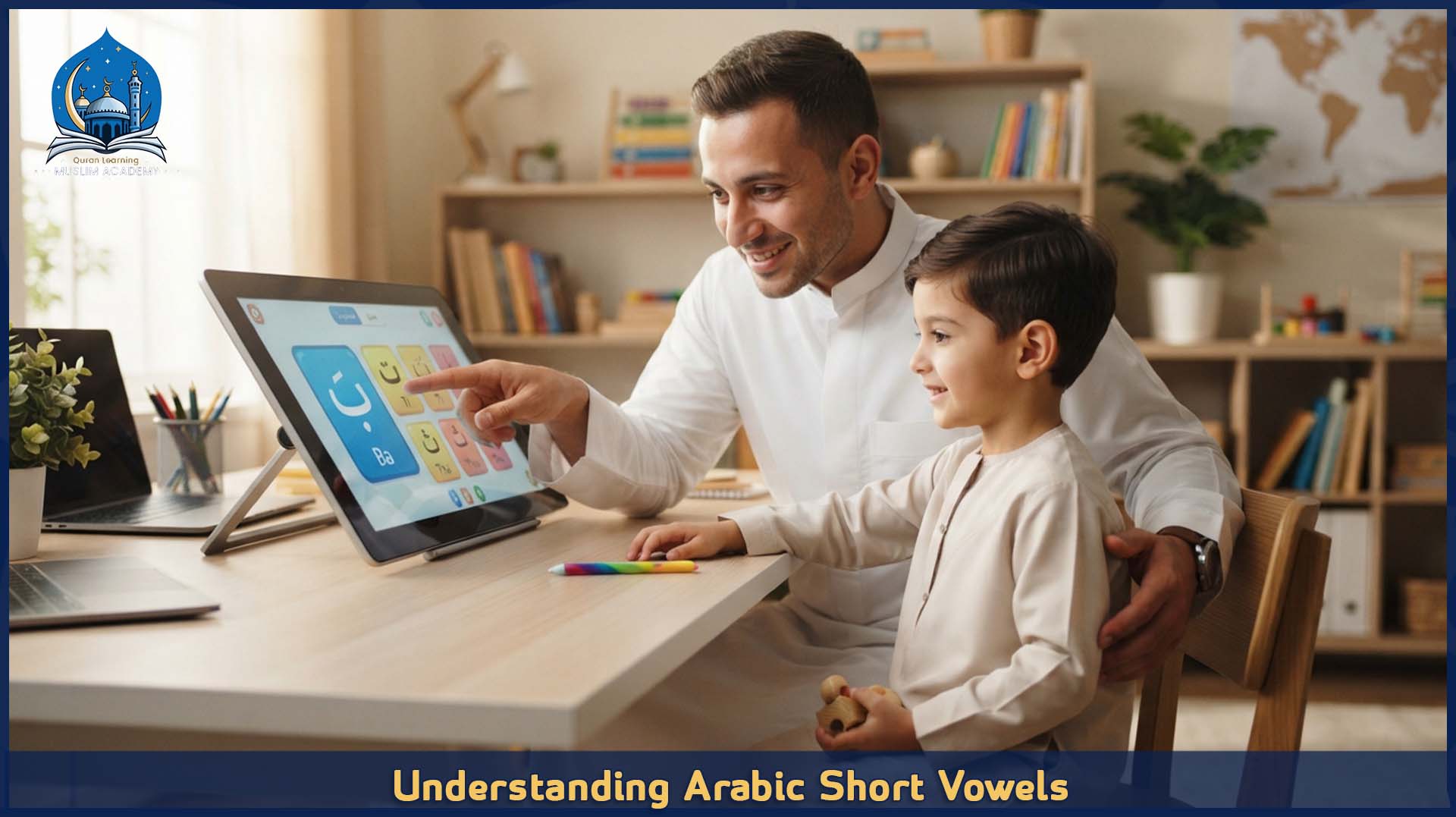
While learning the letters is the first objective, students should also become familiar with Arabic short vowels, known as Harakat. These small marks determine the correct pronunciation of every letter and play a major role in reading accuracy. The three basic short vowels are:
Fatha ( َ )
Produces a short “a” sound.
Example:
- بَ
- Ba
Kasra ( ِ )
Produces a short “i” sound.
Example:
- بِ
- Bi
Damma ( ُ )
Produces a short “u” sound.
Example:
- بُ
- Bu
Learning these vowel marks allows students to pronounce Arabic words correctly instead of simply recognizing the letters. Understanding Harakat is an essential part of mastering the Arabic Alphabet for Beginners.
Arabic Alphabet for Beginners and Writing Skills
Writing Arabic may seem challenging at first because the letters connect. However, after understanding writing direction and letter connections, handwriting becomes much easier with regular practice. To improve writing skills:
- Trace letters before writing independently.
- Practice one line of each letter daily.
- Copy simple Arabic words.
- Learn proper pencil control.
- Write slowly and neatly.
Many teachers recommend practicing the same letter several times before introducing another one. Daily handwriting strengthens recognition, improves memory, and helps learners master the Arabic Alphabet for Beginners more confidently.
The Importance of Listening Practice
Listening practice is sometimes overlooked, yet it plays a vital role in mastering the Arabic Alphabet for Beginners. Hearing native pronunciation repeatedly helps learners develop accurate speaking habits from the very beginning. Good listening practice includes:
- Listening to Arabic alphabet songs.
- Repeating after teachers.
- Hearing Quran recitation for pronunciation.
- Using audio flashcards.
- Watching beginner Arabic lessons.
Combining listening, speaking, reading, and writing creates balanced language development and makes learning the Arabic Alphabet for Beginners more effective.
Weekly Learning Schedule for Arabic Alphabet for Beginners
Following a structured weekly routine keeps beginners motivated while preventing information overload. A balanced schedule helps learners review previous lessons while steadily introducing new material in the Arabic Alphabet for Beginners course.
Monday
Introduce two new letters.
Practice:
- Names
- Sounds
- Writing
Tuesday
Review previous letters.
Practice:
- Read simple vocabulary.
- Play recognition games.
Wednesday
Writing practice.
Practice:
- Trace letters.
- Copy words.
- Practice pronunciation.
Thursday
Vocabulary day.
Learn five to ten new Arabic words connected to recently learned letters.
Friday
Reading practice.
Practice:
- Combine letters into short words.
- Listen to native pronunciation.
Saturday
Fun learning activities.
Practice:
- Coloring.
- Flashcards.
- Storytelling.
- Alphabet puzzles.
Sunday
Weekly review.
Practice every letter learned during the week. This organized schedule ensures continuous improvement while strengthening the Arabic Alphabet for Beginners learning process.
Mistakes to Avoid When Learning Arabic Alphabet for Beginners
Many beginners unknowingly slow their progress by repeating common mistakes. Avoiding these habits helps learners master the Arabic Alphabet for Beginners more efficiently.
Memorizing Without Understanding
Some students memorize letter names but cannot recognize them inside real words. Always practice letters within meaningful vocabulary.
Ignoring Pronunciation
Correct Arabic pronunciation is essential. Learning incorrect sounds early can become difficult to fix later. Listen carefully and imitate native speakers from the beginning.
Skipping Writing Practice
Reading alone is not enough. Writing reinforces memory, improves recognition, and strengthens overall learning. Even five minutes of handwriting practice every day makes noticeable progress in the Arabic Alphabet for Beginners journey.
Not Reviewing Older Lessons
Regular review is one of the most effective learning techniques. Spend a few minutes every day reviewing previous letters before introducing new ones.
Learning Too Many Letters at Once
Trying to finish all twenty-eight letters within one week often confuses. Steady progress produces stronger long-term results when studying the Arabic Alphabet for Beginners.
Tips for Adults Learning Arabic Alphabet for Beginners
Many adults worry that learning a completely new alphabet will be difficult. Fortunately, adults often learn efficiently because they understand study strategies and maintain better learning discipline. Helpful tips include:
- Practice every day.
- Focus on pronunciation.
- Learn vocabulary immediately.
- Read aloud.
- Write regularly.
- Be patient with difficult sounds.
Many adult learners master the Arabic Alphabet for Beginners within a relatively short period by staying consistent and practicing daily.
Why Choose Muslim Online Quran Academy?
Choosing the right learning environment plays an important role in mastering the Arabic Alphabet for Beginners. At Muslim Online Quran Academy, beginners receive structured lessons designed to simplify Arabic learning while building confidence step by step. Students benefit from:
- Experienced Arabic teachers.
- Interactive online classes.
- Personalized learning plans.
- Flexible scheduling.
- Beginner-friendly curriculum.
- Quran-focused Arabic instruction.
- Regular assessments.
- Individual pronunciation correction.
Whether you are a child, teenager, or adult, professional guidance helps make learning the Arabic Alphabet for Beginners faster, easier, and more enjoyable.
Why Learning Arabic Opens New Opportunities?

Mastering the Arabic Alphabet for Beginners offers benefits far beyond reading simple words. Learning Arabic opens educational, religious, cultural, and professional opportunities that continue throughout life. Learning Arabic allows students to:
- Understand Islamic texts.
- Read the Holy Quran.
- Communicate with millions of Arabic speakers.
- Explore Arab history and culture.
- Improve career opportunities.
- Travel confidently in Arabic-speaking countries.
- Access classical Arabic literature.
For many Muslims, completing the Arabic Alphabet for Beginners course strengthens their connection with the Quran by helping them understand its original language.
Frequently Asked Questions (FAQ)
Below are the answers to the most common questions about Arabic Alphabet for Beginners, helping parents, children, and new learners better understand the basics of learning the Arabic alphabet, pronunciation, reading, and writing effectively.
1. What is the best way to learn the Arabic alphabet for beginners?
The best approach is to learn a few letters at a time, practice pronunciation daily, connect each letter with real Arabic vocabulary, review consistently, and use interactive activities like flashcards, tracing worksheets, and reading exercises. This method makes the Arabic Alphabet for Beginners easier and more enjoyable.
2. How many letters are in the Arabic alphabet?
The Arabic alphabet contains 28 letters, beginning with Alif (ا) and ending with Ya (ي). Every letter has a unique sound and may change its shape depending on its position within a word.
3. How long does it take to learn the Arabic alphabet?
Most beginners recognize all the letters within several weeks of daily practice. Developing confidence in reading, writing, and pronunciation usually requires a few additional months of consistent study.
4. Can adults learn the Arabic alphabet easily?
Yes. Adults can successfully master the Arabic Alphabet for Beginners by practicing consistently, focusing on pronunciation, writing daily, and following structured lessons designed specifically for beginners.
5. Why is learning the Arabic alphabet important for reading the Quran?
The Holy Quran is written entirely in Arabic, making the Arabic Alphabet for Beginners the essential first step toward reading Quranic verses correctly. Once learners master the letters and their sounds, they can continue learning Tajweed, improve fluency, and understand the Quran more deeply.
In conclusion, learning the Arabic Alphabet for Beginners is the gateway to mastering one of the world’s richest and most beautiful languages. Every learner starts with the same twenty-eight letters, yet consistent practice transforms those letters into words, sentences, and meaningful communication.
Rather than rushing to memorize everything, focus on understanding each letter’s shape, pronunciation, and usage. Connect every letter with real vocabulary, practice writing every day, listen carefully to native pronunciation, and review previous lessons regularly. This steady approach makes the Arabic Alphabet for Beginners much easier to master.
Parents can support children by creating a positive learning environment filled with encouragement, educational games, and daily practice, while adult learners should remain patient and celebrate every achievement along the way. Success comes through consistency, not speed.
With dedication, regular practice, and guidance from experienced teachers, every student can confidently complete the Arabic Alphabet for Beginners journey and continue toward fluent Arabic reading and understanding the Holy Quran.