The Five Pillars of Islam: Foundations of Faith & Spiritual Growth
The Five Pillars of Islam: A Divine Framework for a Meaningful Life
Islam is a religion of balance, purpose, and spiritual depth. At its heart lie the Five Pillars of Islam, which form the foundation of a Muslim’s faith and practice. These pillars are not mere rituals—they are transformative acts that shape the believer’s relationship with Allah, with themselves, and with society. Those who found this helpful often continue with our the six pillars of Iman.
Understanding and living these pillars is essential for every Muslim. And in today’s fast-paced world, platforms like Muslim Academy make it easier than ever to learn, apply, and grow in faith—anytime, anywhere. This connects closely with our Zakat in Islam, which many families find useful. We also cover this in our Islamic courses online.
- The Five Pillars of Islam Explained | Muslim Academy
- What Are the Five Pillars of Islam?
- Shahada: The Declaration of Faith in Islam
- Salah: How Muslims Pray and Why It Matters
- Zakat: The Power of Charity in Islam
- Sawm: The Spiritual Benefits of Fasting in Ramadan
- Hajj: Preparing for the Pilgrimage to Mecca
- How Muslim Academy Helps You Learn the Pillars of Islam
- Why the Five Pillars Are the Foundation of a Muslim’s Life
- Meaning of Shahada in Islam
- How to Perform Salah Step by Step
- Who Must Pay Zakat and How to Calculate It
- Tips for a Successful Ramadan Fast
- Hajj Rituals and Spiritual Preparation
- Online Islamic Courses for Families and New Muslims
- Benefits of Learning Islam Online with Muslim Academy
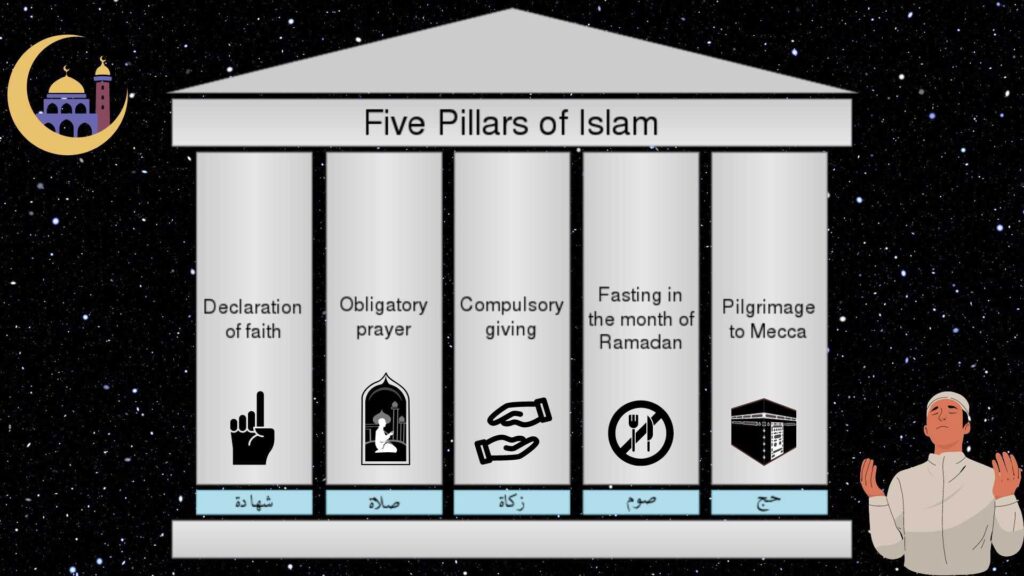
1. Shahada (Declaration of Faith)
“There is no god but Allah, and Muhammad is the Messenger of Allah.”
This simple yet profound statement is the gateway to Islam. It affirms Tawheed (the Oneness of God) and acknowledges the finality of the Prophethood of Muhammad ﷺ.
Allah says in the Qur’an:
“So know, [O Muhammad], that there is no deity except Allah…”
— Surah Muhammad (47:19)
The Prophet ﷺ said:
“Whoever says ‘La ilaha illallah’ sincerely from his heart will enter Paradise.”
— Sahih al-Bukhari
At Muslim Academy, new Muslims and those seeking to renew their faith can access beginner-friendly courses that explain the meaning, implications, and spiritual depth of the Shahada. Through interactive lessons, real-life examples, and mentorship, learners are guided to live by this declaration in every aspect of life.
2. Salah (Prayer)
“Establish prayer for My remembrance.”
— Surah Taha (20:14)
Prayer is the daily connection between the servant and the Creator. It is performed five times a day, offering moments of reflection, gratitude, and spiritual cleansing.
The Prophet ﷺ said:
“The first matter that the slave will be brought to account for on the Day of Judgment is the prayer. If it is sound, then the rest of his deeds will be sound.”
— Sunan al-Tirmidhi
Yet many Muslims struggle with learning how to pray correctly, especially children or those living in non-Muslim environments. Muslim Academy solves this by offering:
- Step-by-step video guides
- Audio recitations with translation
- Visual aids for movements and postures
- Courses for kids and adults alike
These resources help learners perform Salah with understanding and khushu‘ (humility), turning routine into a spiritual experience.
3. Zakat (Charity)
“Take from their wealth a charity by which you purify them and cause them increase…”
— Surah At-Tawbah (9:103)
Zakat is a financial obligation and a spiritual purification. It reminds Muslims that wealth is a trust from Allah and must be shared with those in need.
The Prophet ﷺ said:
“Protect your wealth by giving Zakat, heal your sick by giving charity, and prepare for calamities with supplication.”
— Reported by al-Bayhaqi
Calculating Zakat can be confusing, especially with modern financial systems. Muslim Academy offers:
- Zakat calculators
- Lessons on types of wealth subject to Zakat
- Guidance on distribution and eligible recipients
- Real-life case studies
This makes fulfilling this pillar easy, accurate, and spiritually rewarding. This pairs well with our How to teach kids Islam.
4. Sawm (Fasting in Ramadan)
“O you who have believed, decreed upon you is fasting as it was decreed upon those before you that you may become righteous.”
— Surah Al-Baqarah (2:183)
Fasting is not just abstaining from food and drink—it’s a holistic spiritual detox. It teaches patience, empathy, and self-control.
The Prophet ﷺ said:
“Fasting is a shield. So when one of you is fasting, he should not indulge in foul language or raise his voice in anger.”
— Sahih al-Bukhari
Muslim Academy provides a full Ramadan experience:
- Daily spiritual reminders
- Quranic reflections
- Nutrition and wellness tips
- Family-friendly activities
- Ramadan planners and checklists
This helps Muslims of all ages make the most of this blessed month and deepen their connection with Allah.
5. Hajj (Pilgrimage to Mecca)
“And [due] to Allah from the people is a pilgrimage to the House – for whoever is able to find thereto a way.”
— Surah Al-Imran (3:97)
Hajj is a once-in-a-lifetime journey that symbolizes submission, unity, and renewal. It is a physical and spiritual experience that leaves a lasting impact.
The Prophet ﷺ said:
“Whoever performs Hajj and does not engage in sexual relations or commit sin, will return as pure as the day he was born.”
— Sahih al-Bukhari
Preparing for Hajj can be overwhelming. Muslim Academy offers:
- Virtual walkthroughs of Hajj rituals
- Maps and guides of sacred sites
- Checklists and packing tips
- Spiritual preparation courses
- Testimonials from past pilgrims
This ensures that learners are fully equipped—mentally, physically, and spiritually—for this sacred journey.
Why Muslim Academy?
In a world filled with distractions, Muslim Academy brings Islamic learning to your fingertips. Whether you’re a beginner or a lifelong learner, our platform offers:
- 100% online access
- Courses for all ages and levels
- Interactive content with videos, quizzes, and live support
- Practical application of Islamic teachings
- A supportive community of learners and mentors
From understanding the basics to mastering the details, Muslim Academy is your trusted companion in your journey of faith.
Final Thoughts: Living the Pillars, Living Islam
The Five Pillars of Islam are divine tools for personal growth, spiritual fulfillment, and societal harmony. They are not burdens—they are blessings.
As Allah says:
“Indeed, this religion of yours is one religion, and I am your Lord, so worship Me.”
— Surah Al-Anbiya (21:92)
And the Prophet ﷺ said:
“Islam is built upon five: the testimony that there is no god but Allah and Muhammad is His Messenger, the establishment of prayer, the giving of Zakat, the fasting of Ramadan, and the pilgrimage to the House.”
— Sahih al-Bukhari
With Muslim Academy, you can learn, live, and love these pillars—at your own pace, in your own space. You may also find our Online islamic studies for kids helpful.
Keeping the Pillars Part of Daily Life
Learning about the Five Pillars is only the first step. The real value comes from weaving them into everyday life so they become steady habits rather than occasional obligations. Small practices, like setting a consistent time for the five daily prayers, budgeting a portion of income for Zakat throughout the year rather than scrambling at the last moment, or gradually building up fasting endurance before Ramadan begins, all help make these pillars feel natural and sustainable rather than overwhelming.
For families, involving children early, even in simple ways like practicing short prayers together or explaining why charity matters, helps the next generation grow up seeing the pillars as a normal, meaningful part of life rather than a set of rules to memorize later. Whatever stage of the journey a person is at, consistent, guided learning makes each pillar easier to understand and easier to live out fully.