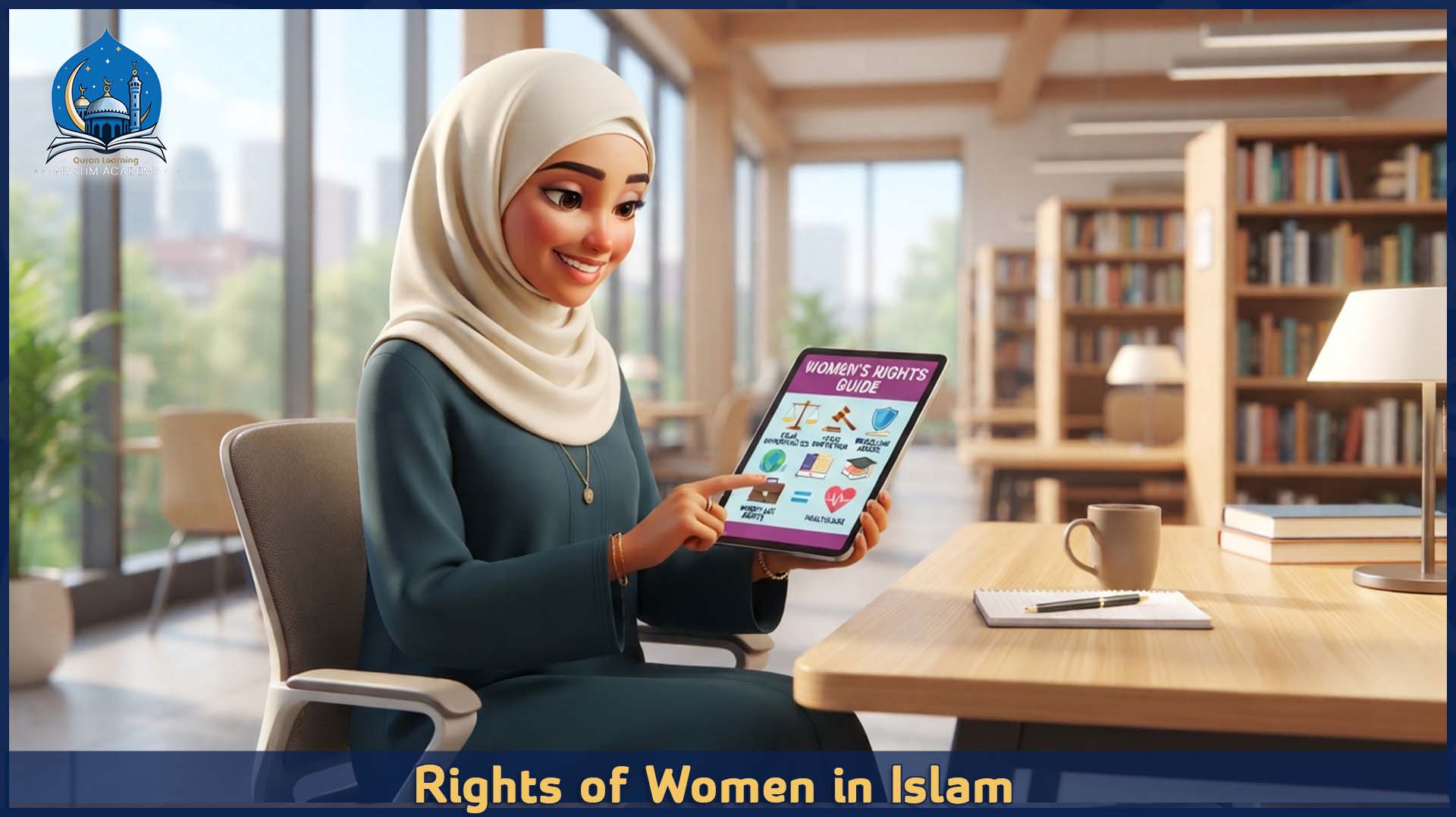
Rights of Women in Islam: A Complete Guide to Their Rights
Rights of women in Islam are an essential part of understanding how Islamic teachings approach dignity, family, education, financial independence, marriage, inheritance, and social responsibility. Rather than viewing women only through the role of wife or mother, Islam recognizes women as individuals with religious, legal, financial, educational, and social rights.
The subject deserves careful attention because discussions about Muslim women are often influenced by cultural practices, personal experiences, or stereotypes that do not necessarily represent Islamic teachings. Therefore, anyone seeking to understand women’s position in Islam should distinguish between the principles established by the Quran and Sunnah and the behavior of particular individuals or societies.
The Quran states that believing men and women are responsible for their deeds and that their efforts are not ignored by Allah. In Surah Al-Ahzab, Allah describes believing men and women together and promises forgiveness and a great reward for those who obey Him. This spiritual recognition establishes an important foundation for understanding the position of women in Islam.
At the same time, Islamic teachings recognize that men and women may have different responsibilities within certain areas of family and social life. Equality in Islam does not necessarily mean that every responsibility, legal ruling, or biological role is identical. Instead, Islamic justice emphasizes dignity, accountability, rights, responsibilities, and protection from oppression.
For Muslims and anyone interested in Islamic civilization, learning about this subject provides a more balanced picture of the role women have played throughout Islamic history.
What Are the Rights of Women in Islam?
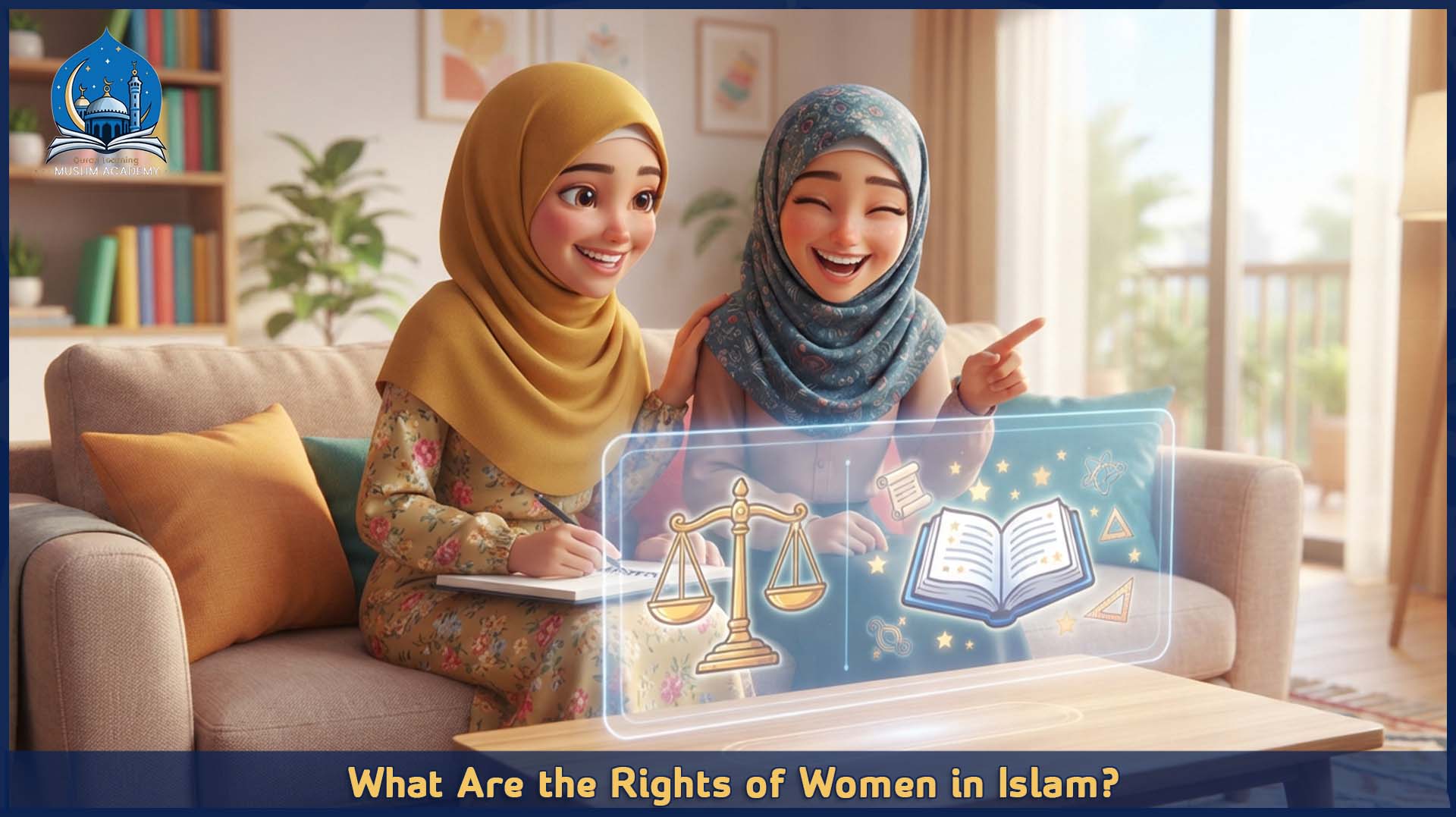
The rights of women in Islam encompass several areas of life, including spiritual responsibility, education, property ownership, inheritance, marriage, financial security, family life, and participation in society. These principles developed within a religious framework that treats women as morally responsible individuals rather than possessions.
The Quran addresses women directly in numerous passages. Surah An-Nisa, for example, discusses family relationships, inheritance, marriage, and financial matters. The Quran also condemns practices that harm women and repeatedly commands believers to act with justice and kindness.
One important principle is that a Muslim woman possesses her own legal and moral identity. She is not simply transferred from the authority of her father to that of her husband. Marriage creates a relationship based on rights and responsibilities rather than ownership.
Furthermore, Islamic teachings emphasize good treatment within families. The Prophet Muhammad ﷺ instructed Muslims to treat women well and demonstrated kindness and consideration in his own household.
For this reason, understanding Islam’s position requires looking at the complete framework rather than focusing on one isolated cultural practice or legal issue.
Start Learning Quran Recitation With Tajweed Today
If you want to master Quran Recitation with Tajweed and improve your pronunciation with confidence, this is the perfect time to start. Muslim Academy offers structured online lessons that help you learn step by step with qualified teachers and clear guidance. In addition, you will practice regularly, receive real corrections, and build strong Quran reading skills from the comfort of your home. Therefore, don’t wait and take action today to improve your recitation, strengthen your understanding, and connect deeply with the Holy Quran through professional and flexible learning.
Rights of Women in Islam and Spiritual Equality
One of the most important foundations of the rights of women in Islam is spiritual accountability. Islam teaches that men and women are equally accountable before Allah. A woman’s spiritual status is not determined by whether she is married, wealthy, educated, or from a particular family. Her relationship with Allah is connected to faith and righteous actions.
The Quran states in Surah An-Nahl 16:97 that whoever does righteous deeds, whether male or female, while believing, will receive a good life and reward from Allah.
Similarly, Surah Al-Ahzab 33:35 lists believing men and women together while mentioning qualities such as patience, charity, fasting, chastity, remembrance of Allah, and obedience.
This spiritual framework is significant because it establishes that women are not secondary participants in religious life. They pray, fast, give charity, learn, teach, worship, and seek closeness to Allah as responsible believers.
Women also have the right to religious knowledge. Throughout Islamic history, women studied the Quran, Hadith, jurisprudence, Arabic, and other disciplines. Some became respected teachers and scholars whose knowledge was transmitted to later generations.
Aisha رضي الله عنها is one of the clearest historical examples. She became an important authority in Hadith and Islamic knowledge, and numerous companions and later scholars benefited from her learning.
Rights of Women in Islam and the Right to Education
Education is another major dimension of the rights of women in Islam. Islam encourages Muslims to seek beneficial knowledge. Although commonly quoted statements about seeking knowledge are sometimes presented without discussing their scholarly grading or context, the broader Islamic tradition clearly demonstrates the importance of learning for both men and women.
Muslim women historically participated in educational circles, transmitted Hadith, studied Islamic law, and taught others. Their contribution was not limited to informal family instruction.
Aisha رضي الله عنها, for example, was consulted on religious and legal matters. Her narrations became an important part of the Hadith tradition. Other women also contributed to the preservation and transmission of Islamic knowledge.
Modern Muslim women can therefore pursue education while maintaining their religious values. Learning can include Quranic studies, Arabic, professional fields, science, medicine, teaching, technology, and other beneficial disciplines.
Parents also have a responsibility to encourage girls to develop their intellectual abilities. A daughter should not be treated as though education is unnecessary simply because she may eventually marry.
At Muslim islamic online quran academy, structured Quran learning can help women and girls develop their understanding of the Quran and Islamic teachings from home. A flexible learning environment may be particularly useful for students balancing family responsibilities, school, university, or professional work.
Rights of Women in Islam and Financial Independence
Financial rights represent another important aspect of the rights of women in islam.
Islam recognizes a woman’s independent ownership of property and wealth. A woman may own assets, receive gifts, inherit property, conduct lawful financial transactions, and manage her own wealth.
Marriage does not automatically transfer a woman’s property to her husband. Likewise, money belonging to a wife remains hers unless she voluntarily chooses to contribute to household expenses.
The concept of mahr is particularly important. During marriage, the husband gives the bride a mandatory marital gift. The Quran instructs Muslim men to give women their bridal gifts graciously.
Mahr belongs to the woman. Her father, brother, husband, or another relative does not have the right to take it without her consent.
Islam also establishes financial responsibilities for husbands and protects women from being forced to carry responsibilities that Islamic law assigns to the husband.
However, this does not mean that women are prohibited from working or engaging in business. Islamic history includes women who participated in commerce and economic activity.
Khadijah رضي الله عنها, the first wife of Prophet Muhammad ﷺ, is widely known for her successful commercial activity before her marriage to the Prophet. Her example demonstrates that women’s economic participation is not foreign to Islamic history.
Rights of Women in Islam and Inheritance
Inheritance is one of the areas in which the rights of women in Islam are explicitly addressed in the Quran.
Before Islam, women in some societies could be excluded from inheritance or even treated as part of an inheritance. Islamic law established defined shares for eligible female relatives, including daughters, wives, mothers, and sisters under particular circumstances.
Surah An-Nisa provides detailed inheritance regulations. These rules are part of a broader legal system that also assigns financial responsibilities to different family members.
A common misunderstanding is to reduce Islamic inheritance to the statement that women always receive half of what men receive. That is not an accurate description of every inheritance situation.
The shares depend on factors such as the relationship to the deceased, the surviving relatives, and the specific circumstances of the estate. In some cases, a woman may receive half the share of a corresponding male heir; in other cases, women and men may receive equal shares, and in some circumstances a woman may receive a greater share or inherit when a comparable male relative does not.
The reason behind different shares should also be understood within the complete Islamic financial framework. Men may have obligatory financial responsibilities toward wives, children, and certain relatives, while a woman’s wealth remains her own.
Because inheritance law can become complicated, families should not attempt to divide estates based on simplified social assumptions. Qualified Islamic legal guidance and the applicable civil law should both be considered.
Rights of Women in Islam and Consent in Marriage
Marriage is another central area when discussing the rights of women in Islam. Islam does not present marriage as a transaction in which a woman becomes the property of a man. Instead, marriage is a lawful relationship involving mutual rights and responsibilities.
The Quran describes marriage through concepts such as tranquility, affection, and mercy. Surah Ar-Rum 30:21 explains that Allah created spouses so that people may find tranquility with one another and that He placed affection and mercy between them.
Consent is therefore important. A woman should not be forced into marriage against her will.
The Prophet Muhammad ﷺ taught that a woman’s permission should be sought regarding marriage. Islamic jurisprudence also discusses the role of the guardian, witnesses, mahr, and other requirements of a valid marriage contract, although details differ among schools of Islamic law.
Parents can advise their daughters and help them make wise decisions. Nevertheless, family involvement should not be confused with coercion.
A healthy Islamic marriage requires communication, respect, responsibility, and consideration of the rights of both spouses.
Rights of Women in Islam and the Right to Mahr
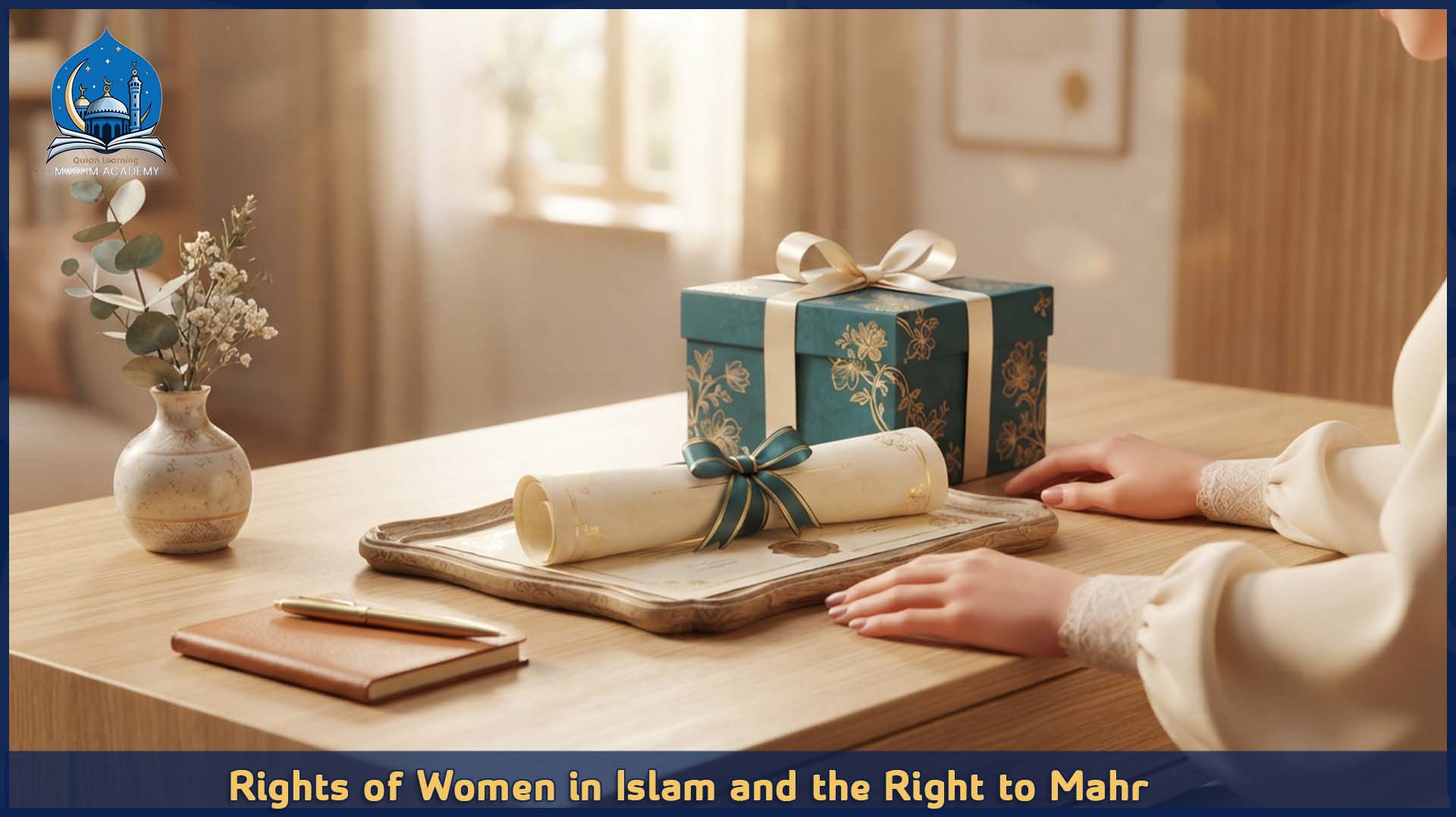
Mahr deserves separate attention because it is sometimes misunderstood. The mahr is a financial gift given by the husband to the wife as part of the marriage. It is not a payment for purchasing a woman or buying her family.
The Quran instructs husbands to give women their bridal gifts willingly. The wife has ownership over her mahr, and she can decide how to use it.
A woman’s family should not automatically claim the mahr. Similarly, a husband should not demand that his wife return it simply because the marriage has taken place.
The amount and form of mahr can vary according to circumstances and agreement, provided that the arrangement complies with Islamic principles. Understanding this right helps clarify the financial protection built into Islamic marriage.
Rights of Women in Islam and Divorce
The rights of women in Islam also include protections during marital conflict and separation. Islam does not regard divorce as desirable simply because disagreement occurs, but it recognizes that some marriages become impossible to sustain. Consequently, Islamic law provides procedures for ending a marriage while addressing financial and family responsibilities.
A husband may initiate talaq according to Islamic rules. A wife may also have avenues for separation, including khula and judicial dissolution, depending on circumstances and the applicable school of jurisprudence.
Khula is discussed in the Quran in Surah Al-Baqarah 2:229, which addresses a situation in which a couple fears that they cannot maintain Allah’s limits and mentions the possibility of the wife giving compensation for release.
Islamic divorce also involves waiting periods, financial obligations, and rules intended to prevent injustice.
During divorce, neither spouse should use the process to humiliate or financially destroy the other. The Quran repeatedly emphasizes fairness and good treatment.
Children’s welfare should remain an important consideration as well. Decisions about custody, financial support, and visitation can involve detailed legal questions, so families facing divorce should seek qualified advice rather than relying on social media claims.
Rights of Women in Islam and Protection From Abuse
Protection from harm is fundamental to Islamic ethics. The rights of women in Islam cannot be separated from the prohibition of oppression. A Muslim man does not gain permission to abuse his wife merely because he is the head of a household.
The Prophet Muhammad ﷺ strongly emphasized good treatment of wives and described the best believers as those who are best to their families.
Abuse can take physical, emotional, financial, sexual, or psychological forms. Cultural normalization does not make harmful behavior Islamic.
At the same time, discussions about difficult Quranic passages concerning marital conflict should be approached with knowledge of Arabic, Quranic context, Prophetic practice, classical scholarship, and contemporary legal realities rather than isolated translations.
Muslims should never use religious language to justify cruelty. Justice, mercy, accountability, and preservation of human dignity are essential Islamic principles.
Anyone studying these issues should therefore distinguish between legitimate religious scholarship and interpretations used to excuse personal wrongdoing.
Rights of Women in Islam Within the Family
Family life is central to Islam, and women have significant rights within it. A wife has rights to financial maintenance, respectful treatment, appropriate housing, and marital consideration. She is also not required to surrender her identity simply because she becomes a wife.
A mother has an especially honored position in Islamic teachings. The famous Hadith in which the Prophet ﷺ repeatedly identifies the mother as deserving of good companionship before mentioning the father illustrates the importance of maternal care and sacrifice.
Daughters are also described positively in Islamic teachings. Raising daughters with kindness and responsibility is presented as a source of reward rather than a burden.
Therefore, Muslim families should avoid cultural attitudes that celebrate sons while treating daughters as less valuable.
The family should instead become an environment where girls are protected, educated, respected, and prepared to become confident Muslim women.
Rights of Women in Islam and Social Participation
Women have historically contributed to Muslim communities in many ways. They taught knowledge, transmitted Hadith, supported charitable initiatives, practiced medicine and nursing in historical contexts, participated in commerce, and contributed to community life.
This history challenges the simplistic idea that Islam requires women to disappear from public life. At the same time, Islamic teachings place ethical guidelines on both men and women. Modesty, respectful interaction, family responsibilities, and religious obligations apply within the broader Islamic studies for kids UK moral framework.
The exact boundaries of women’s participation can be discussed differently by scholars and communities. Nevertheless, the historical record demonstrates that Muslim women have never been absent from intellectual, economic, and social development. Modern Muslim women can contribute to society while remaining committed to their faith.
Rights of Women in Islam and Leadership
Leadership is another subject that requires nuance. Islamic history includes women who held influence within families, educational circles, commerce, scholarship, and community affairs. Their influence was not necessarily expressed through one modern political model.
For example, Al-Shifa bint Abdullah is mentioned in historical sources as a literate woman who held a public administrative role during the caliphate of Umar ibn Al-Khattab, according to reports found in Islamic historical literature. Women also advised rulers, transmitted knowledge, managed businesses, and educated communities.
However, specific questions about political authority, judicial positions, or particular leadership roles have been debated among Muslim scholars. A responsible discussion should acknowledge these differences instead of pretending that every scholar has always held the same position.
What remains clear is that Islamic history provides numerous examples of women exercising knowledge, judgment, influence, and responsibility.
Rights of Women in Islam and Personal Dignity
Personal dignity forms the foundation of the rights of women in Islam. Islam rejects the idea that a person’s value is determined by gender, wealth, race, social status, or family background. The Quran teaches that the most honored people in the sight of Allah are those with the greatest consciousness of Him.
Consequently, a woman’s dignity does not depend solely on her marital status. An unmarried woman remains a complete individual. A divorced woman remains worthy of respect. A widow is not a social burden. A mother deserves care. A daughter deserves kindness. A wife deserves fair treatment.
These principles are particularly important in communities where cultural expectations can become stronger than religious teachings.
A Muslim society should therefore protect women from humiliation, exploitation, forced marriage, financial abuse, and other forms of injustice.
How Can Muslim Families Teach Women’s Rights to Children?
Children: How to Teach Kids Islam values primarily through what they observe. If parents want children to understand the rights of women in Islam, they should demonstrate respect at home rather than merely discussing the subject in theory.
Parents can teach children that sisters and brothers both deserve kindness. They can explain that daughters can learn, ask questions, make responsible choices, and contribute to their communities.
Quran education can also help children understand verses related to justice, family relationships, charity, responsibility, and human dignity.
For families seeking structured Quran education, Muslim Online Quran Academy can provide an online environment where children and adults study the Quran and Islamic subjects with regular guidance.
Parents should also encourage children to ask questions. When young people encounter conflicting information online, a patient discussion is usually more beneficial than simply telling them that a question is inappropriate.
How Muslim Women Can Learn Their Rights
Knowing one’s rights requires reliable knowledge. A woman can begin by studying the Quran with translation and trusted explanation. She can then learn Islam step by step, relevant Hadith, and introductory Islamic jurisprudence from qualified teachers.
It is also useful to distinguish between three different things:
- Islamic teachings.
- Interpretations of scholars.
- Cultural practices.
These categories sometimes overlap, but they are not identical. For example, a cultural tradition may restrict women’s choices without having a clear basis in Islamic law. Conversely, a genuine religious rule may be misunderstood because of an incomplete explanation.
Online learning can make Islamic education more accessible to women who cannot attend local classes. Muslim Online Quran Academy can be part of a structured learning routine for students who want to strengthen Quran reading, memorization, Tajweed, or general Islamic knowledge.
Nevertheless, students should choose teachers carefully and ask qualified scholars about complicated legal matters.
Common Misconceptions About Rights of Women in Islam
Several misconceptions frequently appear in discussions of women and Islam. One misconception claims that Muslim women cannot own property. Islamic sources clearly recognize women’s ownership of wealth.
Another misconception suggests that women have no say in marriage. Islamic teachings recognize the importance of consent.
A third misconception assumes that Islamic inheritance always gives women exactly half of men’s shares. In reality, inheritance calculations depend on the family structure and applicable rules.
There is also a misconception that Islam completely excludes women from education. Islamic history provides numerous examples of female scholars and students.
Finally, some people judge Islam entirely through the behavior of Muslims. This approach can create confusion because Muslim societies differ considerably in their traditions, laws, and social practices.
A fair assessment should examine primary Islamic sources alongside reputable scholarship and historical evidence.
What Role Does Quran Education Play in Understanding Women’s Rights?
The Quran provides the foundation for understanding many family and social principles. However, reading individual verses without context can lead to misunderstanding. Quranic interpretation involves Arabic language, surrounding verses, Prophetic explanations, Hadith, legal principles, and scholarly tradition.
For this reason, structured Quran education can be more beneficial than relying on short social media posts.
Muslim Online Quran Academy can help learners establish a consistent relationship with Quranic study. Students can work on correct reading while also developing a deeper appreciation of the messages contained in the Quran.
When learning about women’s rights, students should pay particular attention to Surah An-Nisa, Surah Al-Baqarah, Surah An-Nahl, Surah Al-Ahzab, and other passages dealing with family, justice, worship, and human responsibility.
Why Understanding Rights of Women in Islam Matters Today
The discussion of rights of women in Islam remains important because Muslim women face different social, educational, and family challenges. Understanding Islamic teachings helps distinguish religious principles from cultural practices that may be incorrectly presented as religion.
A clear view of the rights of women in Islam should consider both rights and responsibilities. Islamic teachings address dignity, education, marriage, property, family life, and personal accountability. These principles should be understood through reliable sources and their proper context.
In some communities, cultural traditions are confused with the rights of women in Islam, which can create misconceptions. Some women may face restrictions based on family customs rather than religious teachings, while others encounter stereotypes about Islam and women’s education or participation in society.
For Muslim families, teaching the rights of women in Islam should begin with both girls and boys. Children can learn that family relationships should be based on justice, respect, compassion, and responsibility.
Education also plays an important role in understanding the rights of women in Islam. Knowledge helps women understand their responsibilities and the rights available to them while helping families make informed decisions.
When communities learn the rights of women in Islam accurately, they can challenge harmful misconceptions and encourage healthier family relationships. This understanding can also help women ask questions and seek reliable religious knowledge.
A Practical Guide to Protecting Women’s Rights in Muslim Families
Understanding the rights of women in Islam is important, but applying these principles in daily life matters as well.
First, parents should encourage daughters to pursue appropriate education and develop useful skills. Second, families should respect a woman’s ownership of her personal wealth and property.
Marriage discussions should also involve the woman herself. Her views and consent should be taken seriously. Husbands should understand that financial maintenance is a responsibility, not a reason to control or humiliate their wives.
Family disagreements should be handled with respect and without threats or violence. Parents should also model healthy communication because children learn from what they see at home.
For complex matters involving marriage, inheritance, divorce, or custody, families should consult qualified Islamic scholars and appropriate legal professionals.
Muslim Online Quran Academy can support Quranic education and help learners develop a stronger foundation in Islamic teachings. However, serious religious or legal disputes require advice suited to the specific situation.
How Can Women Balance Faith, Family, and Personal Development?
Many Muslim women balance marriage, motherhood, education, employment, and community responsibilities. Understanding the rights of women in Islam can help women approach these responsibilities with greater awareness.
A mother may continue studying while raising her children, while a university student can focus on education alongside her religious practices. Likewise, a professional woman can contribute to her field while fulfilling her family responsibilities.
The right balance depends on each woman’s circumstances. Online Quran education can make religious learning easier for women with busy schedules. Muslim Online Quran Academy can provide flexible Quran study online without requiring daily travel.
Consistency is often more important than long study quran online. Even a short period of regular learning can become valuable when maintained over time.Frequently Asked Questions About Rights of Women in Islam
The following frequently asked questions about rights of women in Islam provide concise answers to common questions about women’s dignity, education, marriage, inheritance, financial independence, and family rights.1. Can a Muslim woman own property in her own name?
Yes. The rights of women in Islam include independent ownership of property and wealth. A woman’s assets do not automatically become the property of her husband or family after marriage.
2. Does Islam allow women to receive an inheritance?
Yes. The rights of women in Islam include established inheritance shares for eligible female relatives. The exact share depends on the circumstances of the estate and the surviving heirs.
3. Can a woman reject a marriage proposal in Islam?
Yes. The rights of women in Islam recognize the importance of consent in marriage. Islamic teachings do not support forcing someone into marriage against her will, although specific legal procedures may vary between schools of Islamic jurisprudence.
4. Can Muslim women study the Quran and Islamic sciences?
Yes. The rights of women in Islam include access to religious knowledge. Throughout Islamic history, women have studied and taught the Quran, Hadith, and other Islamic sciences, with many becoming respected scholars and teachers.5. Are cultural traditions always the same as Islamic teachings?
No. Culture and religion are not automatically identical. Some customs may be compatible with Islam, while others may conflict with Islamic principles. Each practice should therefore be evaluated through reliable Islamic sources and scholarship.
In conclusion, the rights of women in Islam form a broad framework that includes spiritual responsibility, education, property ownership, inheritance, marriage, financial security, family dignity, and protection from injustice.
Islamic teachings present women as morally responsible individuals with rights that cannot simply be taken away because of cultural expectations. The Quran addresses women directly and establishes principles concerning family relationships, wealth, inheritance, marriage, and social conduct.
At the same time, understanding these rights requires more than repeating isolated statements. Islamic law contains detailed rules, scholarly differences, and contextual considerations. Therefore, serious questions should be studied through the Quran, authentic Sunnah, qualified scholarship, and reliable educational resources.
For Muslim families, the most effective approach is to combine knowledge with practice. Children should see women treated with dignity at home. Girls should receive opportunities to learn. Wives should understand their financial and marital rights. Husbands should recognize their responsibilities. Communities should address abuse and injustice rather than hiding them behind cultural expectations.
Muslim Online Quran Academy can support this educational journey by helping students develop a stronger connection with the Quran and Islamic knowledge. With consistent learning, thoughtful teaching, and a willingness to ask questions, Muslims can gain a deeper understanding of how Islamic principles seek to establish dignity, responsibility, mercy, and justice for women.
Ultimately, learning about the rights of women in Islam is not simply an academic exercise. It is an opportunity to understand how Islamic teachings approach human dignity and family relationships while recognizing the responsibilities that accompany every right. A balanced understanding allows readers to move beyond stereotypes and cultural assumptions toward a more informed view of women in Islam.