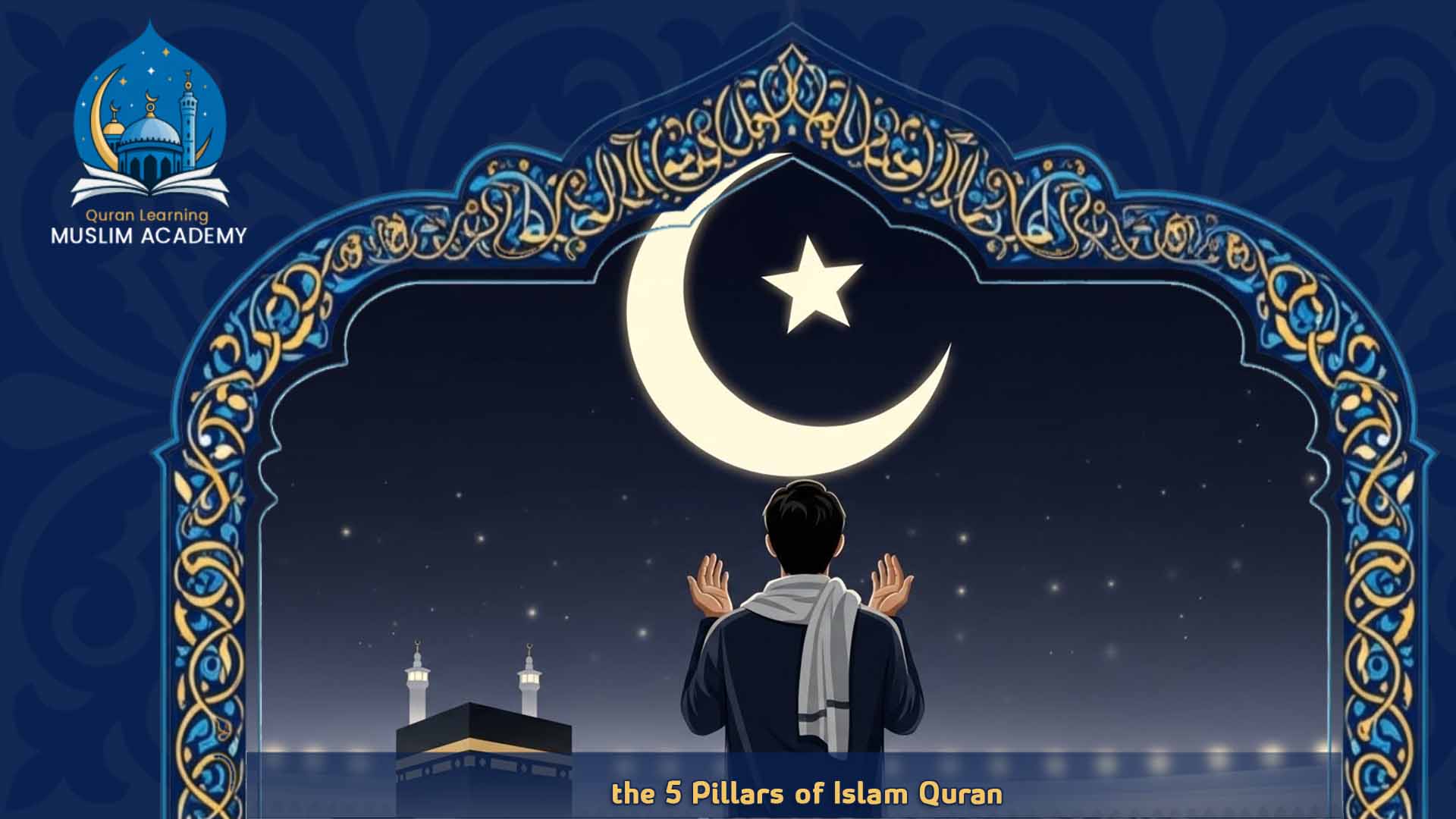
The Five Pillars of Islam: A Beginner’s Guide
The 5 pillars of islam quran form the absolute foundation of Muslim life worldwide. They are the essential acts of worship commanded by Allah and detailed throughout the Holy Quran. For learners who want to go further, take a look at our learn Islam basics online.
For the growing Muslim community in Australia, understanding these pillars is crucial for practicing Islam with integrity and devotion. These core practices embody the spirit of submission (Islam) to God. Therefore, every believer must commit to fulfilling these five foundational duties throughout their lifetime. If this is an area you’d like to explore in more depth, check out our the five pillars of Islam. For related guidance, take a look at our Quran competition.
The foundational pillars and divine revelation
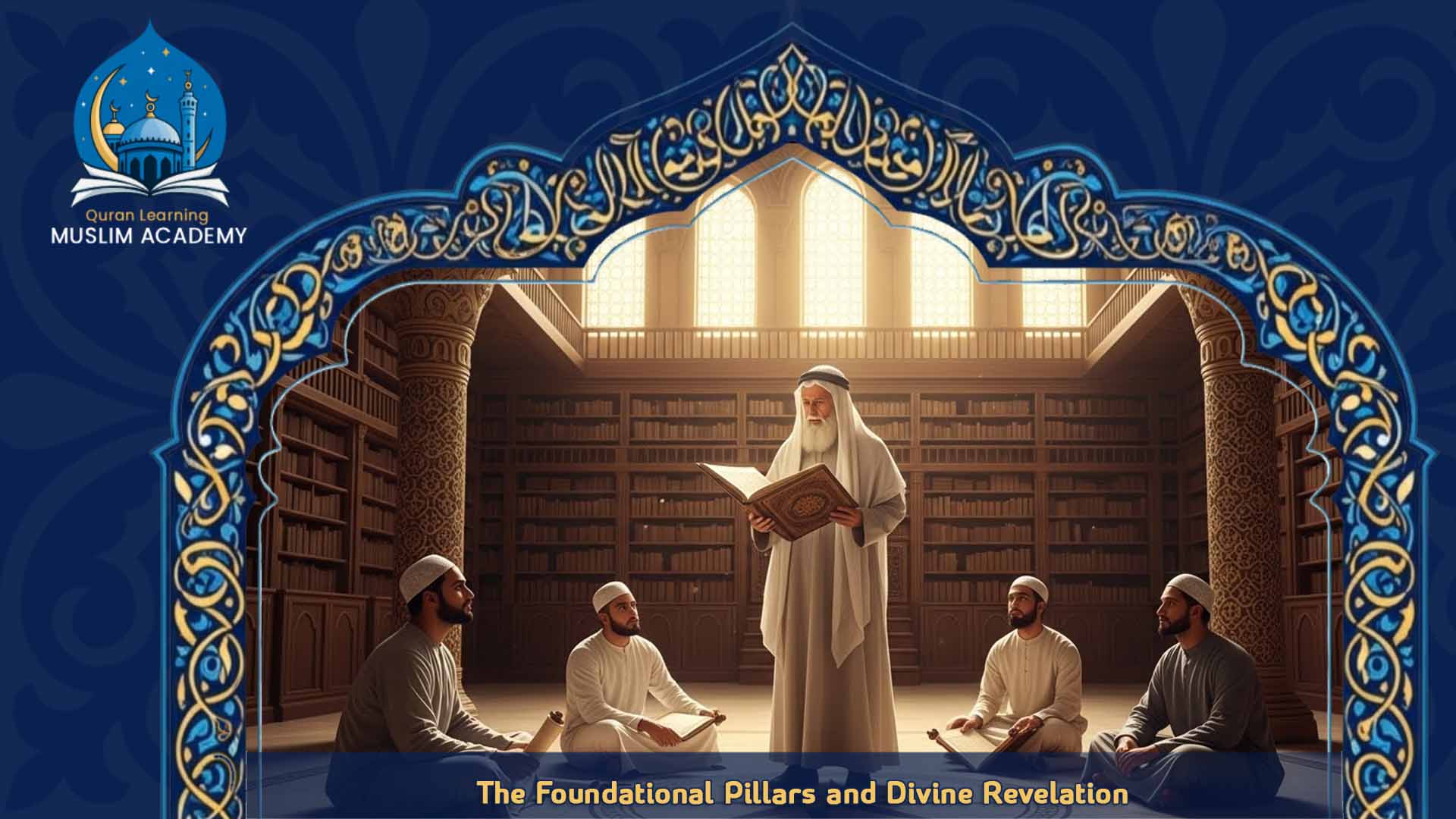
The Five Pillars are not simply traditions; they are the core beliefs and practices drawn directly from the divine revelations in the Quran. The entire framework of Muslim religious life revolves around them. Consequently, they provide a structured pathway for peace and submission to Allah SWT. Many students pair this with our the six pillars of Iman to round out their learning.
Read more: online arabic classes for adults
Shahada: the declaration of faith
The Shahada, or Profession of Faith, is the central tenet of Islam. This declaration states that “There is no god but God, and Muhammad is the Messenger of God.” Reciting this phrase with sincere conviction is the single act required to become a Muslim.
It is the absolute core belief around which everything else in the faith revolves. You will often find this powerful phrase written in Arabic prominently featured alongside the Quran in architecture and various religious objects. The Shahada serves to remind Muslims of this integral monotheistic belief, which is the starting point of the 5 pillars of islam quran.
Read more: how to learn quran at home
Secure your spiritual future: begin your journey to knowledge today
Committing to understanding the five pillars of Islam is the single most important step you can take toward practicing your faith with confidence and clarity. This decision is not just about completing rituals; it is about building a strong spiritual identity. It is also an investment in your eternal reward. We strongly encourage you to prioritize this essential journey of sacred knowledge and practice.
Therefore, choose the muslim academy to guide your disciplined, personalized path toward spiritual mastery. Explore our extensive, structured courses and find the program that perfectly matches your current goals. Register your details today and take the definitive step toward deepening your family’s relationship with the Word of Allah through our dedicated Islamic Studies platform.
The five pillars in the Quran and Sunnah
The Quran is the source of all Islamic law and practice. It confirms the necessity of these foundational acts. Each of the five pillars works in tandem with the others. Together, they bring the essence of Islam as a religion of peace and submission into the daily lifestyle of every Muslim.
Studying the five pillars should connect knowledge with practice. Learn what each act of worship involves and ask a qualified teacher about its conditions and how it applies to your circumstances.
Read more: benefits of reciting quran
Pillar two: salah (prayer) and remembrance
Salah, or ritual prayer, is the second pillar. It is the most frequent and constant act of worship required of every Muslim. This obligation provides five distinct opportunities each day for remembrance of Allah. Prayer acts as a constant spiritual compass, redirecting the Muslim’s focus back to their purpose in life: to worship God.
Performing salah: a daily connection to the Quran
Muslims pray facing the Qibla (the direction of the Ka’ba in Mecca) five times every day: at dawn, noon, mid-afternoon, sunset, and after dark. Prayer includes a recitation of the opening chapter, Surah Al-Fatiha, of the Holy Quran. This specific recitation links the daily act of worship directly to the divine text. Therefore, reciting the Shahada in prayer each day constantly reinforces the monotheistic core of five pillars of Islam.
The spiritual benefits of constant remembrance
The consistency of Salah is designed to maintain a connection to Allah throughout the day. It offers a structured moment of stillness and devotion five times a day. This frequent remembrance helps purify the soul and provides spiritual strength against worldly distractions.
Furthermore, the collective prayer, especially the Jumu’ah (Friday noonday prayer), unites the Muslim community, including those across Australia. After the Friday prayer, a sermon often focuses on a passage from the Quran, reinforcing the importance of five pillars of Islam through scholarly discussion.
Read more: best online quran academy
Pillar three: zakat (almsgiving) and social justice
Zakat, the third pillar, is the act of giving a fixed portion of a Muslim’s wealth to those in need. This is an obligatory annual duty for those who meet the financial threshold. Zakat ensures that wealth is continuously redistributed within the community, promoting economic justice and poverty alleviation. It is both a religious duty and an economic principle commanded by the Quran.
Zakat in the australian context
For Muslims living in Australia, fulfilling Zakat means actively participating in social welfare and community support. It reminds the wealthy of their responsibility toward the less fortunate, fostering a sense of shared community. This act helps secure the blessings associated with charity.
Many wealthy Muslims historically built mosques, hospitals, and schools as part of this religious duty, demonstrating its profound impact on society. The mandatory nature of Zakat confirms the deep emphasis Islam places on social responsibility, reflecting the comprehensive nature of the 5 pillars of islam quran.
Read More : egyptian quran tutor
Zakat: obligatory charity versus encouraged sadaqah
It is important to differentiate between Zakat and Sadaqah. Zakat is the obligatory portion given once a year on accumulated wealth. Conversely, Sadaqah refers to voluntary charity, which is greatly encouraged as part of everyday Muslim life. While Sadaqah is an ongoing source of reward, Zakat is a legal and spiritual obligation.
The annual offering of Zakat ensures that minimum standard of charity is maintained, fulfilling the core ethical requirements detailed in the texts surrounding the 5 pillars of islam quran.
Read more: best online quran classes for kids
Pillar four: sawm (fasting) and gratitude
Sawm, the fourth pillar, is the act of fasting during the daylight hours of Ramadan. Ramadan is the ninth month of the Islamic calendar. During this month, all healthy adult Muslims are required to abstain completely from food, drink, and sexual relations. This temporary deprivation is a powerful spiritual exercise aimed at cultivating greater piety and gratitude.
Read more: how to learn quran for beginners
Sawm and the revelation of the Quran
Ramadan holds immense significance because the Holy Quran was first revealed during this blessed month. This historical connection emphasizes the month’s sanctity and purpose. Through fasting, Muslims renew their awareness of and gratitude for all that God has provided in their lives. This pairs well with our Islamic education for kids at home.
The shared experience of hunger and thirst serves as a direct reminder of the plight of the needy. This reinforces the religious duty to help those less fortunate, linking the act of fasting directly to the purpose of five pillars of Islam.
Read more: best online quran teaching
Nurturing good conduct through deprivation
The rigorous abstention required during Sawm allows Muslims to gain control over their most basic human needs and desires. Without these daily distractions, believers can focus on nurturing good conduct, strengthening their discipline, and deepening their connection to Allah SWT. Every year, fasting offers a renewed opportunity for spiritual growth and self-mastery. The focus shifts entirely to introspection, increased prayer, and reading the Quran.
learn more: fasting in islam
Pillar five: hajj (pilgrimage) and equality
Hajj, the fifth pillar, is the sacred pilgrimage to Mecca, in Saudi Arabia. Every Muslim whose health and financial means permit it must make this journey at least once in their lifetime. This pilgrimage is the ultimate expression of devotion and unity. It brings together believers from every corner of the globe, including the diverse Muslim community residing in Australia.
Hajj: a call to equality
During the Hajj, Muslims must wear the simple, unstitched garments known as Ihram. This requirement strips away all worldly distinctions based on wealth, nationality, or status. People are reminded that all are truly equal before God, performing the same ritual acts of devotion.
They gather around the Ka’ba, the cubical structure Muslims believe Abraham (Ibrahim) built for God. This remarkable gathering embodies global Muslim unity and submission, powerfully illustrating the unifying function of five pillars of Islam.
Read more: best quran teacher
Putting the five pillars into practice
While the commitment to fulfilling five pillars of Islam must be unwavering, Islam acknowledges human limitations. Each pillar accounts for those who may be unable to fulfil one or more duties. For instance, allowances are made for those with ill health, financial inability (for Hajj and Zakat), or temporary conditions like menstruation or pregnancy (for Sawm).
This flexibility ensures that faith is a means of ease and not hardship, demonstrating the wisdom and mercy embedded within the five pillars of Islam. The ultimate goal remains sincere commitment and effort.
Studying the five pillars online
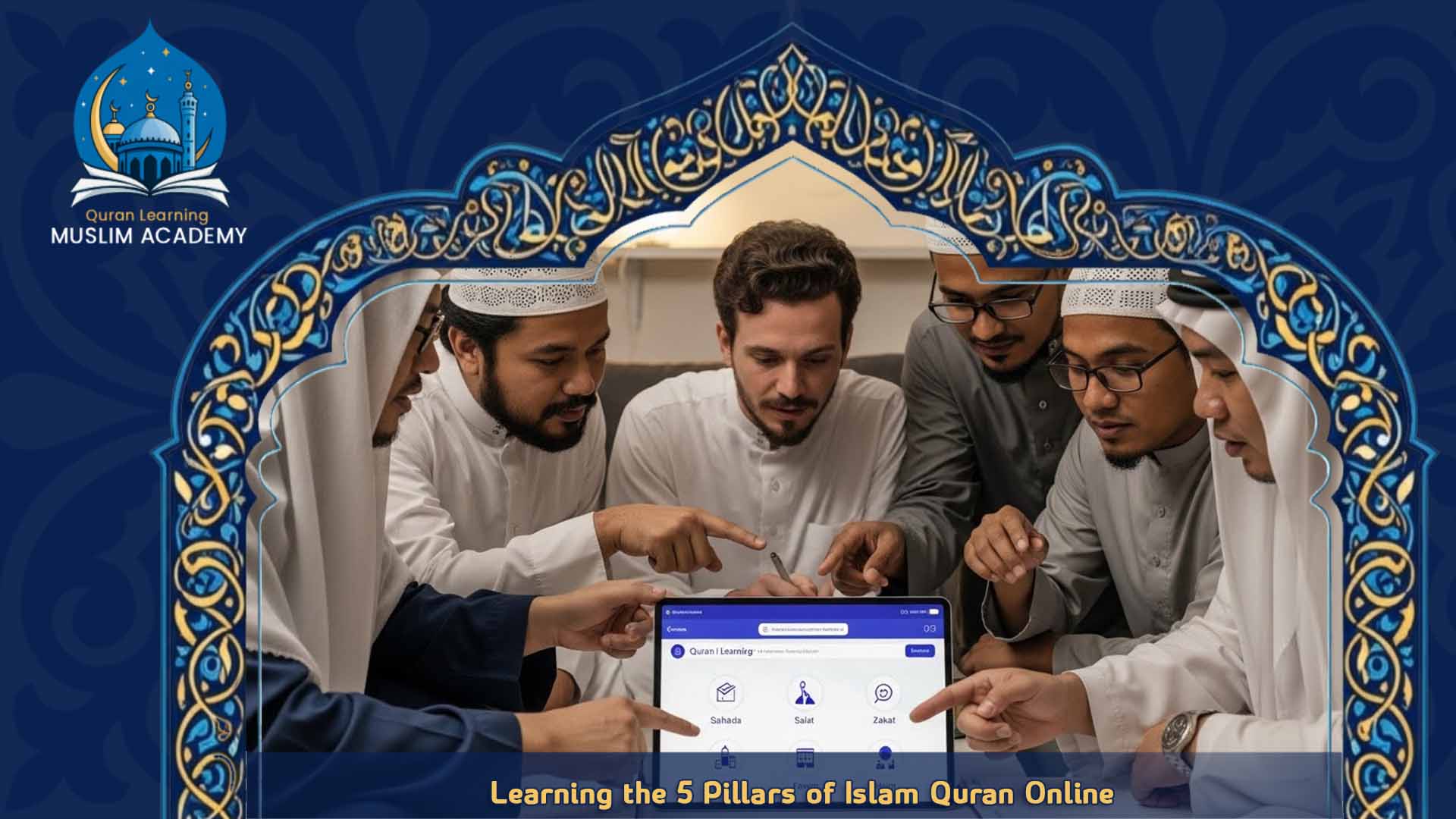
For Muslims in Australia, especially those living in vast remote areas or busy cities like Sydney, Melbourne, or Perth, accessing quality Islamic education can be a logistical challenge. The muslim academy offers a comprehensive solution through specialized online programs. These courses provide a vital opportunity to learn the five pillars of Islam in depth, along with their practical application.
Comprehensive Islamic studies at Muslim Academy
The muslim academy provides an extensive Islamic Studies program. This program includes dedicated modules focused entirely on the five pillars of Islam. Furthermore, students can access courses on related topics such as Quran Recitation, Tajweed, Tafseer (exegesis of the Quran), and the Arabic language. These integrated courses ensure a holistic understanding of Islamic faith and practice. Our online platform brings highly qualified and experienced teachers directly to your home in Australia. This eliminates geographical barriers to essential religious education.
Read more: how can i learn quran
Frequently asked questions
The Australian Muslim community often seeks clarity regarding the core practices of Islam. Here are detailed answers to the most common questions about the five pillars of Islam. These answers help provide practical guidance for daily life.
1. What makes the Quran the primary source for the five pillars of Islam?
The Quran is considered the literal word of God and the ultimate authority in Islam. The necessity of performing the five pillars—Salah, Zakat, Sawm, and Hajj—is explicitly mandated in various Surahs (chapters) and Ayat (verses) of the Quran. For instance, the Quran discusses the benefits of fasting and the obligation of charity.
2. Can non-muslims learn about the five pillars of Islam through the Muslim Academy?
Yes, the muslim academy welcomes individuals from all backgrounds who wish to learn about Islam. Our Islamic Studies programs are designed to provide accurate, scholarly-verified information on the faith. Understanding five pillars of Islam is fundamental to understanding Islam itself. These courses are excellent resources for non-Muslim Australians seeking knowledge or interfaith dialogue
3. How often should a Muslim recite the shahada after their initial conversion or birth into Islam?
The Shahada must be recited with conviction once to enter the faith. However, it is recited multiple times daily during every Salah (prayer). This constant recitation ensures the central tenet of monotheism remains at the forefront of the believer’s mind. It serves as a daily renewal of one’s fundamental belief in a five pillars of Islam.
4. Are five pillars of Islam considered equally important, or is one more important than the others?
The pillars are interdependent and form the entire foundation of the faith. Therefore, they are all essentially important. However, the Shahada is considered the single most fundamental pillar because it defines one as a Muslim. If the Shahada is absent, the other four pillars cannot be valid acts of worship. The unity of five pillars of Islam is key to a complete submission.
5. What are the key exceptions or exemptions for fulfilling the five pillars of Islam?
Islam is a religion of ease, not hardship. Key exceptions include mental incapacity or serious chronic illness (exempting one from Salah and Sawm). Those with insufficient wealth are exempted from Zakat and Hajj. Women are exempt from Salah and Sawm during menstruation or post-childbirth bleeding. These exceptions demonstrate the compassion inherent in the divine law surrounding five pillars of Islam.
6. Does the hajj have any direct connection to the Quran besides the general obligation?
Yes, the rituals of Hajj directly commemorate events involving Prophets Ibrahim (Abraham) and Ismail (Ishmael), figures mentioned prominently in the Quran. Furthermore, during the Hajj, pilgrims gather in Mecca, the very city where the Prophet Muhammad received the first revelations of the Quran. The entire pilgrimage is an embodiment of submission to the divine commands found in the holy text, reinforcing the purpose of five pillars of Islam.
7. How does salah help muslims in Australia deal with the busy pace of life?
Salah provides five fixed, non-negotiable breaks from the distractions of modern life. It mandates a moment of peace and focused devotion throughout the day. This structure acts as a spiritual anchor, preventing the believer from becoming entirely consumed by worldly concerns. It offers an essential balance, ensuring that Muslim maintains a strong spiritual core despite the demanding pace of life in Australian cities.
In conclusion, the five pillars of Islam are far more than a checklist of religious duties. They are the structured pathway to a life of peace, discipline, and profound connection with Allah SWT. Each pillar—Shahada, Salah, Zakat, Sawm, and Hajj—is divinely mandated.
They are established through the timeless wisdom contained within the Holy Quran. Furthermore, embracing these pillars with sincerity is the essence of true submission (Islam).
Therefore, secure your spiritual future by deepening your knowledge and consistent practice. The muslim academy offers the expert online guidance you need. We provide specialized Islamic Studies programs tailored for the Muslim diaspora in Australia. Start your dedicated journey to spiritual confidence today.
Learn also:
online quran classes zoom Explore our Tafsir classes online for more details.