The Six Pillars of Iman: Beliefs Explained Simply
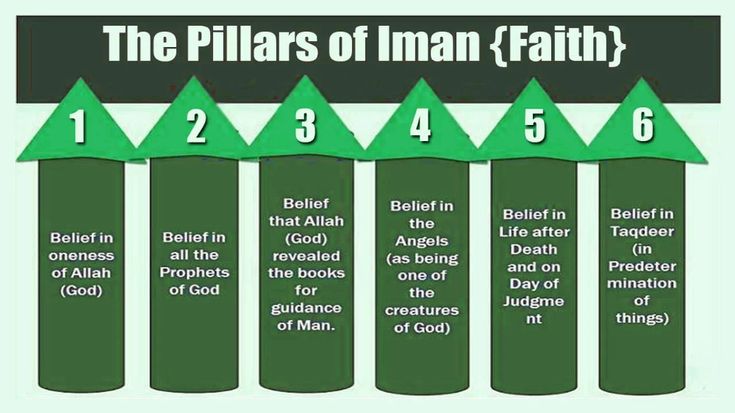
The six pillars of Iman are belief in Allah, His angels, His books, His messengers, the Last Day and divine decree (Qadar), including its good and bad. They summarise central beliefs taught in the Hadith of Gabriel.
This guide introduces each pillar and separates the six articles of faith from the five pillars of Islam. For the narration and its wider discussion of Islam and Ihsan, read the Hadith of Gabriel.
The six pillars at a glance
- Belief in Allah.
- Belief in His angels.
- Belief in His revealed books.
- Belief in His messengers.
- Belief in the Last Day.
- Belief in Qadar, divine decree.
See Sahih Muslim 8a for the sixfold explanation of Iman. Quran 4:136 also speaks of belief in Allah, His messenger, revelation, angels and the Last Day.
1. Belief in Allah
The first pillar affirms Allah as the one Creator and the One worthy of worship. For a beginner, study starts with understanding this belief clearly, then learning how it relates to worship, gratitude and responsibility.
When learning about Allah’s names and attributes, use reliable explanations and distinguish the source wording from a teacher’s example or illustration.
2. Belief in the angels
Muslims believe in angels as real beings who carry out Allah’s commands. Gabriel’s role in the narration provides a starting point for learning about them.
Knowledge of the unseen should be grounded in revelation. Avoid filling gaps with imagined appearances or stories that have no identified source.
3. Belief in the revealed books
This pillar concerns the scriptures Allah revealed to His messengers. Islamic teaching includes the Torah, Psalms, Gospel and Quran, with the Quran understood as the final revelation.
Keep belief in the original revelations distinct from questions about the transmission and contents of later texts. Those questions deserve their own careful study rather than a passing assumption.
4. Belief in the messengers
Muslims believe in the messengers Allah sent to guide humanity, including Prophet Muhammad ﷺ. Studying their accounts can connect belief with lessons about patience, worship and responsibility.
Separate a report found in the Quran or a reliable hadith from an unsourced story. Ask where a particular detail comes from before presenting it as established.
5. Belief in the Last Day
This pillar includes resurrection and accountability before Allah. It connects present choices with responsibility beyond worldly recognition or reward.
For study, begin with the meaning of accountability and the relevant source texts. Avoid turning discussion of the Hereafter into guesses about dates or specific contemporary events.
6. Belief in Qadar
Qadar means divine decree. The Hadith of Gabriel includes belief in it among the six articles of faith. Introductory study should also address how trust in Allah relates to effort and responsibility.
Questions about decree and human choice need careful explanation. Write down the particular question you have and discuss it with a knowledgeable teacher rather than relying on a slogan that seems to remove responsibility.
Six pillars of Iman versus five pillars of Islam
The six pillars of Iman concern belief. The five pillars of Islam are the testimony of faith, prayer, Zakat, Ramadan fasting and Hajj for those able. The Hadith of Gabriel discusses both, followed by Ihsan.
Learning one list should not replace the other. A useful exercise is to write each list separately and explain why the items belong under that heading.
Study and reflection questions
- Can you name each pillar without looking at the list?
- Can you explain its basic meaning in one sentence?
- Which source supports the detail you are learning?
- Which question needs a fuller explanation from a teacher?
- How does the belief relate to worship and responsible conduct?
Return to these questions as your understanding develops. Memorising the names is a useful beginning, while understanding requires reading, explanation and opportunities to ask questions.
Watch the accompanying six pillars of Iman video as supplementary material alongside the written references.
Frequently asked questions
Where are the six pillars listed together?
They are listed in the answer about Iman in the Hadith of Gabriel, including the account in Sahih Muslim 8a.
Is Ihsan a seventh pillar of Iman?
In this narration, Ihsan is addressed as a separate question after the explanations of Islam and Iman. It concerns excellence in worship.
How can children begin learning the pillars?
Start with their names and short, age-appropriate explanations. Invite questions and return to the source with a teacher when more detail is needed.