Arabic Alphabet for Kids: Fun and Easy Learning at Home 2026
The muslim academy understands the unique challenges faced by Muslim families in Canada. Consequently, we offer dedicated programs to make learning the Arabic Alphabet for Kids an exciting and effortless experience. This essential skill is the doorway to reading the Holy Quran and connecting with a rich cultural heritage. Those who found this helpful often continue with our online Arabic classes for kids in the UK.
Therefore, parents need a structured and engaging system to guide their children’s journey. We believe that with the right approach, even the youngest learners can master the complexities of the Arabic writing system quickly. This connects closely with our online Arabic lessons for kids, which many families find useful. We also cover this in our Arabic class online.
The Foundation of Learning: Understanding the Arabic Script
The Arabic language utilizes one of the most intelligent linguistic systems available. This script, however, poses a challenge to newcomers, especially for children whose mother tongue is based on a left-to-right writing system. Arabic is read from right to left, and it is also always cursive. It’s worth pairing this with our online Arabic academy for kids for a fuller picture.
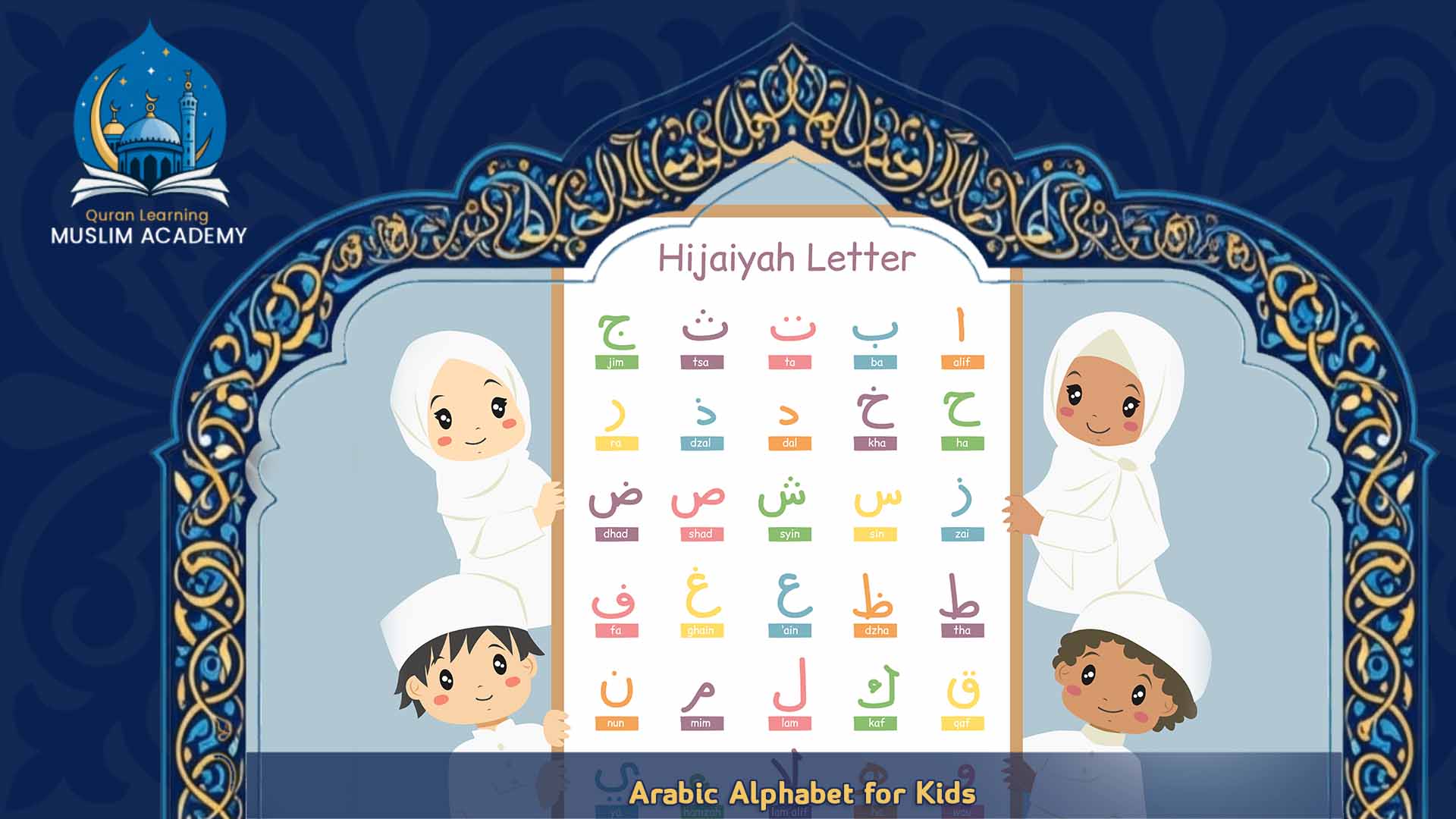
This means that letters change shape depending on their position within a word. It is widely known that there are 28 basic letters in the Arabic alphabet. Moreover, these letters hide many elements, such as short vowels and indefinite articles, which Arabs determine through context. Hence, learning these intricacies step-by-step is vital for beginners. For a deeper dive, take a look at our Arabic classes for kids.
Secure Your Spiritual Future: Begin Your Child’s Quranic Mastery Today
Committing to learning the Holy Quran is the single most important investment you can make in your child’s spiritual life. This decision brings peace and clarity to their worldly existence. It also secures immense reward in the eternal Hereafter. We strongly encourage you to prioritize this essential journey of sacred knowledge.
Therefore, choose the muslim academy to guide your child’s disciplined, personalized path toward spiritual mastery. Explore our extensive, structured courses and find the program that perfectly matches your current goals. Register your details today and take the definitive step toward deepening your family’s relationship with the Word of Allah through our dedicated program for the Arabic Alphabet for Kids platform.
Starting Slow: Grouping the Arabic Alphabet for Kids
To prevent overwhelming young minds, the most effective strategy is to introduce the letters slowly and playfully. Instead of presenting all 28 letters at once, expert teachers divide the Arabic Alphabet for Kids into smaller, manageable groups. For instance, children often begin with a small initial set.
This first group typically ranges from Alif (أ) to Khā’ (خ). Following this, subsequent groups are introduced, such as the set from Dāl (د) to Ḍād (ض). This systematic grouping allows children to focus intensely on fewer letters. It also helps them differentiate between similar-looking or similar-sounding characters, minimizing confusion from the outset.
Understanding the Unique Arabic Vowels
Once children are comfortable with the names and basic shapes of the letters, the next crucial step is introducing the short vowels, or harakat. These marks are not considered separate letters. Instead, they are diacritic signs placed above or below the letter they follow. In Arabic, there are three main short vowels: Fatḥah (a short ‘a’ sound), Ḍammah (a short ‘u’ sound), and Kasrah (a short ‘i’ sound).
These harakat are absolutely crucial for correct pronunciation and meaning. When teaching the Arabic Alphabet for Kids, teachers must use simple words and repetitive exercises to demonstrate how these vowels affect the letter sound. For example, when learning the letter Bā’ (ب), children practice ba, bi, and bu.
Read more: how to learn quran at home
Expert Teaching Strategies for Fun and Retention
Teaching the Arabic Alphabet for Kids requires more patience and creativity than teaching adults. Children learn best when the process is interactive, fun, and memorable. Therefore, educational methods must incorporate visualization, games, and repetition to cement knowledge effectively. The expert approach focuses on making each lesson an adventure.
The Power of Play and Visualization
One of the most effective strategies for the Arabic Alphabet for Kids is visualization. Teachers encourage students to see each letter as a character with its own personality. For instance, the letter Bā’ (ب) can be visualized as a boat with a single dot underneath it. This makes the letter’s shape more memorable.
Similarly, interactive activities like using flashcards with pictures that start with the respective letters bring the alphabet to life. This method transforms abstract symbols into recognizable images, making the learning process smoother and more enjoyable for children in Canada.
learn more: teaching arabic for kids
Interactive Activities to Reinforce Learning
After introducing the basic groups, interactive games are essential for reinforcing knowledge. Sound identification games, where a child picks the correct letter flashcard after hearing its sound, sharpen their listening skills. Letter matching games are also highly effective. In these activities, children match a letter to a picture of an object that begins with that letter.
Furthermore, to address the challenge of similar letters, teachers use games like “spot the difference” to help children identify subtle visual differences, such as the dot placement on Bā’ (ب), Tā’ (ت), and Thā’ (ث). This kind of active practice ensures mastery.
Read more: best online quran teaching
Mastering the Cursive Challenge: Letter Forms
A significant challenge for children used to Latin scripts is the cursive nature of Arabic. Unlike English, where letters mostly maintain one shape, Arabic letters change form depending on their position in a word. This complexity, however, can be simplified into manageable steps. The Arabic script is famously made up of nineteen basic shapes that represent twenty-eight letters with the help of dots. Therefore, understanding the four positional forms is key to fluent reading and writing.
Understanding Letter Joining for Arabic Alphabet for Kids
Each letter in the Arabic Alphabet for Kids has four sub-forms: isolated, initial, medial, and final. The isolated form is the most basic, used when presenting the alphabet. The initial form is used at the beginning of a word. The medial form is used when a letter connects from both sides. The final form appears at the end of a word. It is important to note that six specific letters (أ, د, ذ, ر, ز, و) are “one-side connectors.”
This means they can connect to a preceding letter, but never to the letter that follows them. This crucial rule explains why some letters in the middle of a word are not connected from both sides. Teachers use ample visual examples, like the letter Mīm (م), to show its transformation across the four positions, simplifying this complex concept for young students.
Read more: best quran teacher
Practicing Reading and Writing through Dictation
Once children have a firm grasp of letter shapes and vowels, reading practice becomes the cornerstone of the lesson. Reading takes up a significant portion of class time. Students begin with simple words and progress to short sentences, recognizing each letter and blending sounds into words.
To strengthen retention, dictation (al-imlā’) plays a critical role. Teachers assign short sentences or phrases for students to write. This exercise helps children develop their writing skills and forces them to recall the correct shape and positioning of the letter, reinforcing their reading comprehension in real-time. This dual practice is essential for mastery of the Arabic Alphabet for Kids.
The Cultural and Artistic Dimensions of Arabic
The Arabic alphabet is more than just a set of symbols for communication. It is deeply rooted in Islamic culture and art. Incorporating these cultural elements makes learning the language more meaningful and engaging for Muslim children in Canada. This cultural context provides powerful motivation for continued study.
Calligraphy: Seeing the Alphabet as Art
The most notable feature of the Arabic script is its calligraphy (Al-Khaṭṭ Al-‘Arabī). Ancient Muslim artists often directed their creative energy toward this art form. Calligraphy is the artistic way of writing the Arabic script beautifully. Introducing students to basic Arabic calligraphy can make learning the alphabet much more engaging. We also cover this in our Arabic classes near me.
By practicing calligraphy, children not only learn the intricate shapes of the letters but also develop a deeper appreciation for the fluidity and artistic expression of the language. Seeing the alphabet in ancient mosques or decorative texts connects the student to centuries of Islamic history.
Read more: the arabic lessons near me
Incorporating Religious Context
Integrating cultural and religious contexts makes learning the Arabic Alphabet for Kids more relevant. For example, when teaching the letter Rā’ (ر), a teacher can introduce the word “Ramadan” (رمضان). This practice teaches the sound of the letter while connecting it to something spiritually significant. Similarly, the letter Lām (ل) can be taught using the word “Allah” (الله).
This connection helps learners understand both the letter and its spiritual importance in Islamic culture. This approach creates a personal connection to the language, transforming it from an academic subject into a means of spiritual and cultural identity for Canadian Muslim children.
The muslim academy Approach to Success in Canada
The muslim academy utilizes a proven methodology that ensures success for all ages. We understand that parents in cities like Toronto, Vancouver, and Montreal are looking for reliability and quality. Our approach is based on expert insights and a structured three-part class format designed to maximize learning and long-term retention of the Arabic Alphabet for Kids. We provide a variety of high-quality resources to support students every step of the way.
Read more: best online quran classes for kids
The Three-Part Class Structure for Optimal Retention
At the muslim academy, lessons are broken down into three distinct parts to maximize learning and retention. First, the class begins with a Lesson Overview and New Information. The new letters or concepts are introduced, and interactive activities are used to reinforce this initial knowledge.
Second, the majority of the time is allocated to Reading Practice. Students are guided through passages that incorporate the letters they have learned, improving their fluency. Finally, the lesson concludes with Dictation and Writing exercises. This final step is essential for reinforcing both reading and writing skills, ensuring students can accurately reproduce what they have studied.
Read more: how to learn quran for beginners
Resources and Tools for the Arabic Alphabet for Kids
Effective teaching requires providing the right resources and tools. The muslim academy supplies students with a variety of materials to support their learning journey. This often includes specific textbooks, like the well-known Eqraa (اقرأ) book, which focuses intensely on basic reading and writing skills. Additionally, lessons are supported by clear PowerPoint presentations that incorporate visual aids, practice exercises, and interactive elements.
Students are also encouraged to maintain a dedicated notebook (daftar), which becomes a valuable resource for recording practice exercises, new vocabulary, and class notes. This resource-rich environment ensures children are immersed in the Arabic Alphabet for Kids.
Frequently Asked Questions About the Arabic Alphabet for Kids
Parents often have specific questions about enrolling their children in Arabic courses, especially when living in Canada. The muslim academy provides clear answers to help you make the best decision for your family. Understanding the curriculum and methodology is crucial for a successful educational outcome.
1. What is the ideal age to start teaching the Arabic Alphabet for Kids?
Experts generally recommend starting children as young as five years old. At this age, children’s minds are highly receptive to new sounds and patterns. Early introduction helps them build a strong, natural foundation in correct pronunciation from the beginning. However, structured, age-appropriate learning is key to maintaining their interest and avoiding burnout.
Read more: arabic lessons near me
2. How does the muslim academy ensure a Canadian child stays engaged with the Arabic Alphabet for Kids?
Engagement is prioritized through a playful and interactive curriculum. We use engaging visuals, stories where each letter has a character, and interactive games like sound identification and letter matching. Our teachers are trained to use child-friendly methods and create a positive, fun learning environment that keeps children motivated. We understand that fun leads to better learning.
For learners seeking a structured path, online arabic classes for adults can be a practical next step.
3. How long will it take for my child to master reading the Arabic Alphabet for Kids and start reading the Quran?
The timeline varies significantly based on the child’s age, consistency of practice, and weekly class frequency. However, most children who follow the structured program faithfully can master the basic alphabet and short vowels within a few months. Moving from alphabet mastery to fluent Quran recitation is a further stage that requires dedicated practice in Tajweed. Consistency is the most important factor for rapid progress.
4. Why is learning the different letter forms (initial, medial, final) so challenging for children?
The cursive nature of Arabic, where a letter changes shape based on its position in a word, is a foreign concept to those familiar with English or French. This can be challenging because a child must memorize four variations for most letters. Our curriculum simplifies this by introducing the forms gradually, using clear visuals, and emphasizing the rule of the six “one-side connector” letters. This breaks down the complexity into digestible pieces.
5. Does the muslim academy offer instruction on Tajweed along with the Arabic Alphabet for Kids?
Yes, the introduction of Tajweed begins immediately after the child masters the basic alphabet and short vowels. Proper pronunciation is crucial for reading the Quran accurately. Therefore, Tajweed is integrated early into the curriculum, starting with the correct articulation points of letters (Makharij) and the precise rules for elongation and stops. This ensures the child develops proper reading habits from the beginning of their studies.
Read more: best online quran academy
6. Are online classes as effective as in-person classes for the Arabic Alphabet for Kids in Canada?
Yes, the online format at the muslim academy is highly effective, often offering more flexibility for busy Canadian families. Our classes typically utilize one-on-one sessions, which ensures the child receives the teacher’s full attention for immediate correction. This personalized focus often leads to faster progress than a large group setting. Quality is maintained through continuous supervision and the use of interactive digital tools.
7. How does the academy address the cultural aspect of learning the Arabic Alphabet for Kids?
We deeply integrate cultural and religious context into our lessons. Teachers use examples that connect letters to Islamic concepts, like teaching the letter Khā’ (خ) through the word Khutbah (sermon) or by introducing the art of Arabic calligraphy. This makes the learning process more meaningful, helping to foster a strong sense of Islamic identity in the child. This cultural reinforcement is vital for Canadian Muslim youth.
read also: online arabic classes
In conclusion, mastering the Arabic Alphabet for Kids is the essential first step on your child’s lifelong journey with the Holy Quran. The muslim academy provides the structured, playful, and expert-led curriculum necessary for success. We focus on transforming the challenging task of learning a new script into an enjoyable, rewarding experience.
Our commitment to incorporating Tarbeyia and interactive methodologies ensures deep retention and spiritual growth. Therefore, give your child the invaluable gift of connecting directly with their faith. Start their rewarding educational journey with the muslim academy today. We also cover this in our How to speak Arabic step by step with muslim academys smart learning approach.