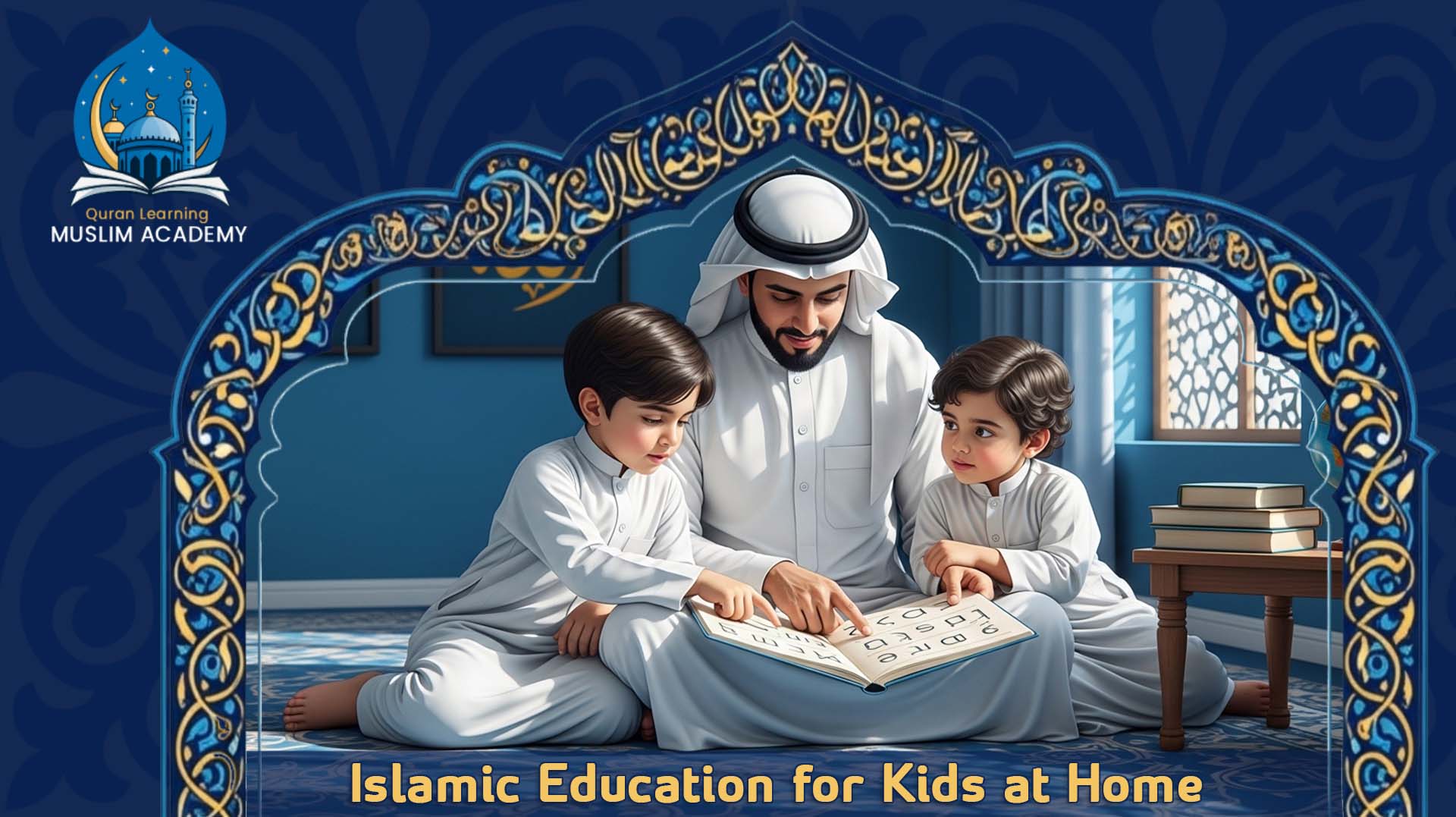
Islamic Education for Kids at Home Made Easy
Islamic Education For Kids At Home with Muslim Academy is becoming an essential choice for families who want to nurture faith, character, and knowledge in a safe and supportive environment. Teaching children at home allows parents to actively guide their spiritual growth while ensuring that learning remains consistent with authentic Islamic values. For learners who want to go further, take a look at our Islamic online Quran academy in Australia.
Through structured lessons, interactive Quran sessions, and engaging activities, children can build a strong foundation in Aqeedah, Fiqh, Seerah, and daily Islamic manners. A well-designed home program also strengthens the bond between parents and children, making learning more meaningful and personalized. If this is an area you’d like to explore in more depth, check out our online Islamic classes and education. You may also find our Hajj in Islam a modern comprehensive guide to rules rituals and requirements helpful.
With flexible schedules and qualified teachers available online, families can now combine academic excellence with spiritual development, creating a balanced approach that supports both dunya and akhirah. Many students pair this with our online Islamic studies for kids to round out their learning.
Islamic education for kids at home: a parent’s guide

A home learning routine can start with a short Quran activity, a daily dua, and one practical example of good manners. Adjust the amount to the child’s age and attention span. Keep time for questions and use a qualified teacher when a topic needs explanation beyond your own knowledge.
Through Muslim Academy, families gain access to qualified Quran tutors who specialize in Tajweed, memorization, and character development while supporting parents every step of the journey.
A well-designed home-based Islamic program allows children to grow spiritually without exposure to conflicting values that may weaken their identity. Islamic learning at home ensures that learning is not limited to memorization, but extends to understanding and applying Quranic guidance in daily life.
At Muslim Academy, the focus remains on building a strong connection with the Quran as the foundation of personality, behavior, and decision-making.
Parents benefit from structured lesson plans, progress tracking, and personalized sessions that adapt to each child’s pace. Islamic learning at home becomes more effective when supported by experienced teachers who understand child psychology and faith-based nurturing.
Through consistent guidance at Muslim Academy, children develop discipline, purpose, and spiritual confidence while studying comfortably at home.
Discuss your learning goals with Muslim Academy
Give your child the gift of strong faith and confident character through structured Islamic learning at home with Muslim Academy. Our certified Quran tutors provide personalized, engaging lessons designed to nurture Tajweed mastery, memorization, and Islamic manners in a supportive environment.
With flexible scheduling and parent progress tracking, your child can grow spiritually without leaving home. Enroll today and begin a guided Quran journey that builds knowledge, discipline, and lifelong connection to the Book of Allah.

Why teaching Islam at home builds strong character in young hearts
Teaching Islam within the home environment strengthens a child’s moral compass and emotional stability. Islamic learning at home provides a controlled and nurturing atmosphere where values are reinforced daily.
With guidance from Muslim Academy, children learn that faith is not separate from life but integrated into their thoughts, speech, and actions.
When children study the Quran regularly, they internalize lessons of honesty, patience, gratitude, and respect. These values are not presented as abstract theories but as practical principles demonstrated through Quranic stories and prophetic examples.
Islamic learning at home allows parents to model these behaviors consistently, creating harmony between instruction and action.
At Muslim Academy, structured Quran lessons encourage reflection and discussion. Children are invited to ask questions and explore meanings rather than memorize mechanically.
This approach nurtures confidence because children understand the wisdom behind what they learn. Over time, Islamic learning at home shapes resilient personalities who remain firm in their beliefs even when facing social pressures or challenges outside the home.
Core subjects every child should learn early for strong foundations
A successful program of Islamic learning at home must include essential subjects that build a balanced Muslim identity.
At Muslim Academy, the curriculum focuses on Quran recitation with proper Tajweed, memorization of selected surahs, basic Aqeedah, prophetic stories, and practical Islamic manners. A comprehensive foundation includes the following essential areas that support long-term spiritual growth and character strength in children:
-
Quran Recitation And Tajweed Mastery
-
Memorization Of Short Surahs With Understanding
-
Basic Aqeedah And Belief In Allah
-
Daily Duas And Practical Islamic Manners
Islamic learning at home becomes meaningful when these subjects are taught progressively and age-appropriately. Through Muslim Academy, lessons are customized according to each child’s ability, ensuring that learning remains encouraging rather than overwhelming. Teachers emphasize correct pronunciation, comprehension of meanings, and connection between verses and daily conduct.
By establishing strong foundations early, Islamic learning at home prevents confusion and builds clarity of belief. Children grow with a secure identity rooted in the Quran.
With the structured system provided by Online Quran Academy muslim academy, parents gain confidence that their children are receiving authentic, organized, and purpose-driven Quran education designed to last a lifetime.
Creating a structured daily learning routine that encourages consistency
A consistent routine is one of the most important pillars of successful Islamic learning at home. Children thrive when learning follows a predictable structure that balances spiritual growth with academic responsibilities.
Through Muslim Academy, families receive guidance on designing daily schedules that prioritize Quran recitation, revision, and understanding without overwhelming young learners.
Islamic learning at home becomes sustainable when lessons are divided into manageable segments. Short, focused Quran sessions improve retention and maintain enthusiasm.
Parents are encouraged to dedicate specific times for recitation practice, memorization review, and discussion of meanings. At Muslim Academy, teachers help families create realistic plans based on the child’s age, attention span, and existing commitments. To build a productive routine that strengthens faith and discipline, consider implementing the following structured habits:
-
Begin The Day With A Short Quran Recitation Session
-
Schedule Memorization Review At The Same Time Daily
-
Dedicate Weekly Time For Islamic Story Reflection
-
Allow Breaks To Maintain Energy And Focus Explore our Quran learning for more details.
Islamic learning at home is most effective when consistency replaces intensity. Rather than long irregular sessions, steady daily engagement strengthens both memory and spiritual attachment.
With continuous support from Muslim Academy, parents can maintain structure while preserving warmth and encouragement within the home environment.
How to make Quran learning fun and engaging for children?
Engagement transforms learning into a positive lifelong habit. Islamic learning at home should never feel like a burden. Instead, it should inspire curiosity and joy. At Online Quran Academy muslim academy, interactive teaching methods are used to make Quran study both meaningful and enjoyable.
Children respond positively to visual aids, storytelling techniques, and gentle encouragement. When Quran lessons include explanation of stories such as Prophet Yusuf or Prophet Musa, young learners connect emotionally with the message.
Islamic learning at home allows parents to reinforce these stories through daily conversations and practical examples.
Creative approaches strengthen motivation and participation in Quran study
-
Use Reward Charts To Celebrate Memorization Milestones
-
Encourage Children To Recite In Front Of Family Members
-
Incorporate Short Islamic Stories After Each Lesson
-
Allow Children To Lead A Dua Or Short Reflection
Through Muslim Academy, classes are designed to maintain interaction rather than passive listening. Teachers ask questions, correct Tajweed patiently as we Organises Online Tajweed courses, and celebrate small improvements.
Islamic learning at home becomes a source of pride when children feel supported and appreciated. Over time, enjoyable Quran sessions build confidence and deepen spiritual attachment naturally.
Balancing academic studies with faith-based lessons successfully
Many parents worry that Islamic learning at home may conflict with school responsibilities. However, when structured properly, faith-based learning enhances academic discipline rather than competing with it.
At Muslim Academy, schedules are designed to complement school timetables while preserving quality Quran instruction. Islamic learning at home teaches time management and focus. Children who practice regular recitation develop improved memory skills and stronger concentration.
These abilities often translate into better academic performance. Through personalized planning at Muslim Academy, families can maintain harmony between Quran study and school assignments.
Balancing responsibilities requires intentional planning and communication. Parents should observe their child’s peak focus hours and assign Quran sessions accordingly. Short daily practice sessions prevent fatigue and maintain enthusiasm. Islamic learning at home does not demand excessive hours; instead, it thrives on steady, purposeful engagement.
When supported by experienced tutors from Muslim Academy, children learn to view religious education as an essential part of their identity rather than an additional burden. This integrated approach allows them to excel academically while remaining spiritually grounded and confident in their faith.
Using interactive tools and online resources effectively for Quran mastery
Technology, when used wisely, strengthens Islamic learning at home and enhances understanding without replacing authentic teaching. Digital platforms now provide structured Quran sessions, progress tracking, and personalized lesson plans that make home learning more organized and measurable.
Through Muslim Academy, families benefit from live one-to-one classes supported by interactive tools designed to improve Tajweed accuracy and memorization retention.
Modern Quran education is no longer limited to traditional repetition alone. Visual highlighting of verses, pronunciation correction, and recorded revision sessions allow children to review lessons independently.
Islamic learning at home becomes more efficient when parents can monitor attendance, track memorization goals, and communicate directly with teachers. At Muslim Academy, technology supports the teacher rather than replacing personal guidance.
When interactive resources are combined with structured teaching, children remain engaged and motivated. Digital whiteboards, pronunciation feedback systems, and revision reminders make lessons dynamic and focused.
Islamic learning at home thrives when technology is used with intention and supervision. With proper direction from Muslim Academy, online tools become a bridge that connects discipline, accessibility, and spiritual growth within a safe home environment.
Common challenges parents face and smart solutions that work
Despite its benefits, Islamic learning at home can present challenges for busy families. Parents often struggle with maintaining consistency, managing distractions, and balancing multiple responsibilities. However, these obstacles can be addressed with thoughtful planning and professional support.
Muslim Academy assists families in overcoming these barriers through structured scheduling and teacher guidance. One common difficulty is sustaining a child’s attention in a home setting filled with distractions. Establishing a dedicated learning corner and minimizing interruptions during Quran sessions improves focus significantly.
Islamic learning at home becomes smoother when routines are predictable and expectations are clear. At Muslim Academy, teachers provide encouragement strategies that help children remain attentive and motivated.
Another challenge involves parental confidence in teaching Tajweed correctly. Many parents fear making mistakes in pronunciation. This concern is resolved through qualified tutors who ensure proper recitation while keeping parents informed about progress. Islamic learning at home does not require parents to become experts; instead, it requires commitment and guidance.
With consistent support from Muslim Academy, families transform challenges into opportunities for spiritual development and stronger family bonds.
Building Islamic manners and moral values naturally at home
Character formation is one of the greatest goals of Islamic learning at home. Beyond memorization, children must learn how Quranic teachings translate into daily behavior. At Muslim Academy, lessons emphasize practical application so that faith becomes visible in speech, actions, and decision-making.
Moral education includes nurturing honesty, gratitude, patience, and kindness. When children recite verses about compassion or accountability, teachers encourage reflection on real-life situations.
Islamic learning at home provides daily opportunities to practice these virtues within family interactions. Simple habits such as greeting respectfully, helping siblings, and expressing gratitude reinforce Quranic values consistently.
At Muslim Academy, instructors connect each lesson to character development. Children are guided to understand why manners matter and how Islamic behavior strengthens confidence.
Islamic learning at home shapes emotionally balanced individuals who respond to challenges calmly and respectfully. When faith and character grow together, children develop a strong identity rooted in the Quran, enabling them to navigate society with dignity, self-control, and spiritual awareness.

Read more :
Benefit of Reading Quran Daily We also cover this in our The first hadith in imam nawawis collection actions are judged by intentions.