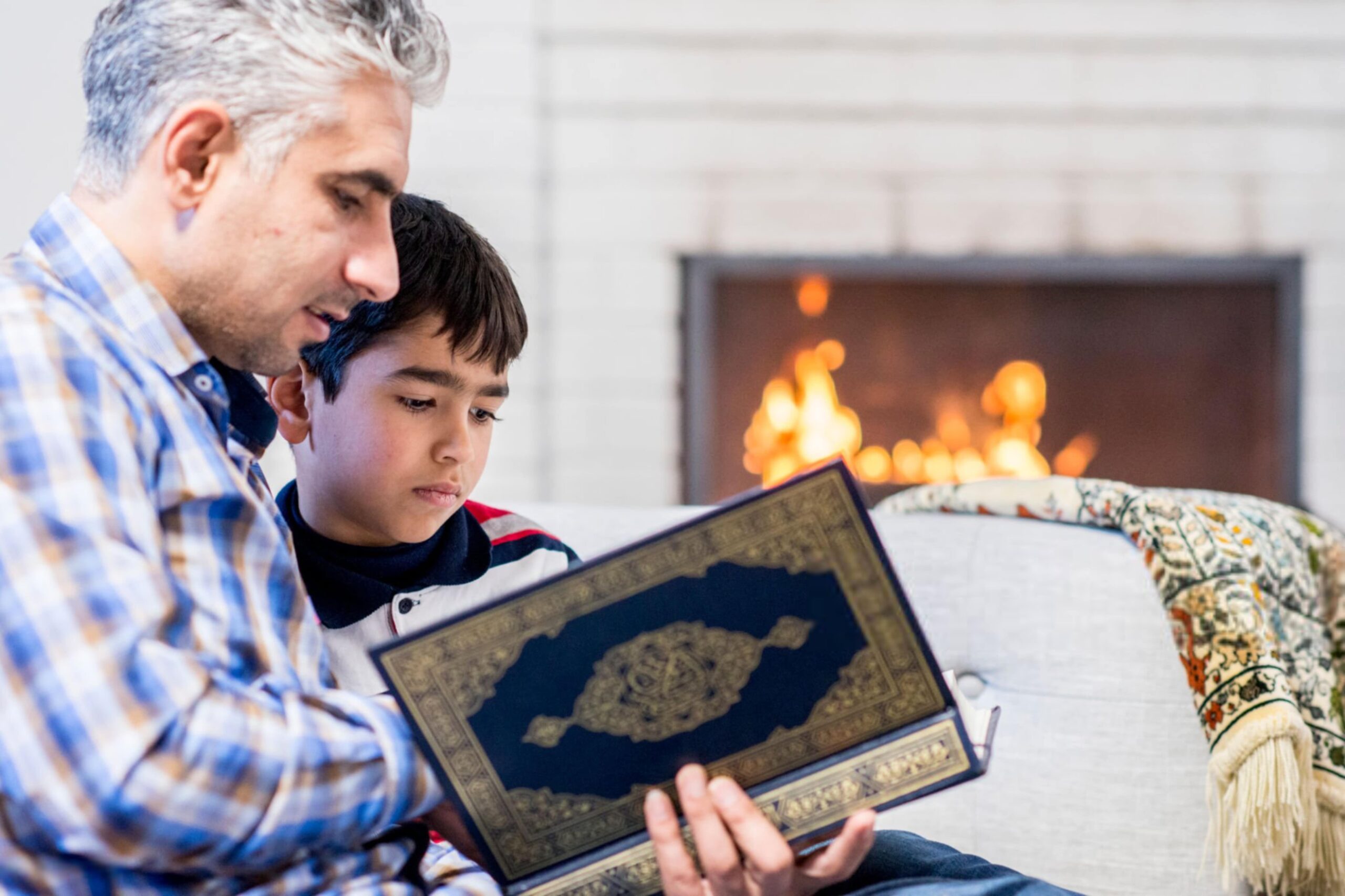
Learning Made for Kids
Children learn best when they feel loved and engaged. That’s why our Islamic Classes for Kids combine Quran, Arabic, stories, and character-building in a fun and interactive way. Let your child grow up with a strong connection to Islam, in a way they’ll truly enjoy.
What Your Child Will Learn in Our Islamic Classes for Kids
Our approach draws on established principles of Islamic education, adapted for a modern, child-friendly classroom.
Every lesson in our Islamic Classes for Kids is built around four pillars: Quran reading, Arabic language basics, Islamic stories, and everyday manners (akhlaq). Younger children usually start with letter recognition and short surahs, while older kids move into Tajweed rules and simple Arabic conversation. Teachers adjust the pace to each child rather than pushing every student through the same script, which is one of the biggest differences parents notice compared to a crowded weekend class.
A Teaching Approach Built Around How Children Actually Learn
Kids rarely sit still for a lecture, so our Islamic Classes for Kids lean on short activities instead: call-and-response recitation, drawing and coloring tied to a story’s lesson, simple games that reinforce Arabic letters, and frequent praise for small wins. Sessions are kept short enough to hold attention, usually 30 to 45 minutes, with a five-minute warm-up and a quick recap at the end so children leave remembering at least one new thing.
Who Our Kids Islamic Program Is For
Families join us for different reasons. Some want a structured alternative to an overcrowded local Islamic school. Others are raising children outside a Muslim-majority country and want consistent exposure to Quran and Arabic at home. We also work well for children who felt shy or fell behind in a group class and need a patient, one-on-one pace instead. Classes are available for ages 4 and up, with siblings often placed in adjoining time slots so parents can manage school pickup and homework around them.
Meet the Teachers Guiding Your Child
Our teachers are chosen specifically for their experience with children, not just their qualifications on paper. Beyond certified Quran and Tajweed training, each teacher goes through a short trial period with real students so we can see how they handle a distracted six-year-old or a shy new learner before they join a family’s regular schedule. Parents can sit in on any class, and we welcome feedback after the first few sessions to make sure the teacher and child are a good match.
What a Typical Class Looks Like
A class usually opens with a short dua and a quick review of what was covered last time. From there, the teacher moves between Quran recitation, a few new Arabic words, and a short story or manners lesson, switching activities every 10 to 15 minutes to match a child’s attention span. Parents receive a short note after each class describing what was covered and what to practice before the next session, so progress doesn’t depend only on what happens during the lesson itself.
Making Learning Fun for Young Students
Children learn best when lessons feel engaging rather than like a chore, and this is something teachers at Muslim Academy pay close attention to when working with younger students. Sessions often include a mix of repetition games, storytelling connected to the lesson, and small rewards for reaching short-term goals, like finishing a page or correctly reciting a new Surah from memory. Keeping sessions relatively short and lively, especially for younger children, helps maintain focus and makes each class something a child looks forward to rather than dreads.
Teachers also pay attention to a child’s individual personality. Some children respond well to a bit of friendly competition or tracking their own progress on a simple chart, while others prefer a calmer, more consistent routine with the same gentle structure every session. Because classes are one-on-one, teachers can adjust their approach to match what actually keeps a specific child engaged, rather than using a single method for every student.
How Parents Can Support Learning at Home
Parents play an important role in helping young learners build strong habits outside of class time. Simple steps, like setting a consistent time each day for a short review, listening to a child recite what they learned that week, or playing recordings of correct recitation in the background at home, can reinforce what is taught in lessons without requiring parents to have any Arabic knowledge themselves. Even a few minutes of positive attention and encouragement after a lesson can make a noticeable difference in how motivated a child feels to keep learning.
Teachers are also happy to give parents simple, practical suggestions tailored to their child’s current level, so home practice stays useful without becoming overwhelming for either the parent or the child.
Building Confidence Alongside Knowledge
For many children, the biggest obstacle is not ability but confidence, especially if they have struggled with reading or memorization before. Teachers focus on celebrating small wins along the way, gently correcting mistakes without discouraging effort, and giving children plenty of chances to succeed at a level that matches where they currently are. Over time, this steady, encouraging approach tends to help children see themselves as capable learners, which often carries over into how they approach other subjects and challenges as well.
Choosing the Right Starting Point for Your Child
Not every child needs to start in the same place. Some begin with the Arabic alphabet and basic letter recognition, while others who already read comfortably move directly into memorization or Tajweed practice. Teachers begin with a relaxed introductory session to understand where a child currently stands, then build a simple learning plan from there. This individualized starting point helps avoid the common problem of a child feeling either bored because material is too easy or discouraged because it feels too far out of reach.
As children grow more comfortable, the pace and content can be adjusted naturally, keeping the experience matched to their evolving abilities rather than locking them into a fixed track from day one.
Whatever level your child is starting from, patient, consistent teaching combined with a bit of encouragement at home can turn Quran and Islamic learning into a positive, lasting part of their childhood.
Reach out today to find the right starting point for your child and begin building that foundation together.
Frequently Asked Questions
What age should my child start? Most children start comfortably around age 4 or 5, once they can sit and focus for short stretches. There is no strict cutoff on the older end either, since many pre-teens join to catch up on Quran memorization.
Do classes include Arabic, or only Quran recitation? Both. Arabic vocabulary and basic grammar are woven into the same sessions as Quran and Tajweed, since the two reinforce each other rather than working as separate subjects.
Can siblings share a class? Siblings close in age can sometimes share a session, but most families prefer separate slots so each child gets full attention and a pace suited to their own level.
Give your child the gift of faith, every day. If you’d like to go deeper, see our Quran academy. We also cover this in our Learn the Quran basics. You may also find our Learn Quran Arabic UK helpful.