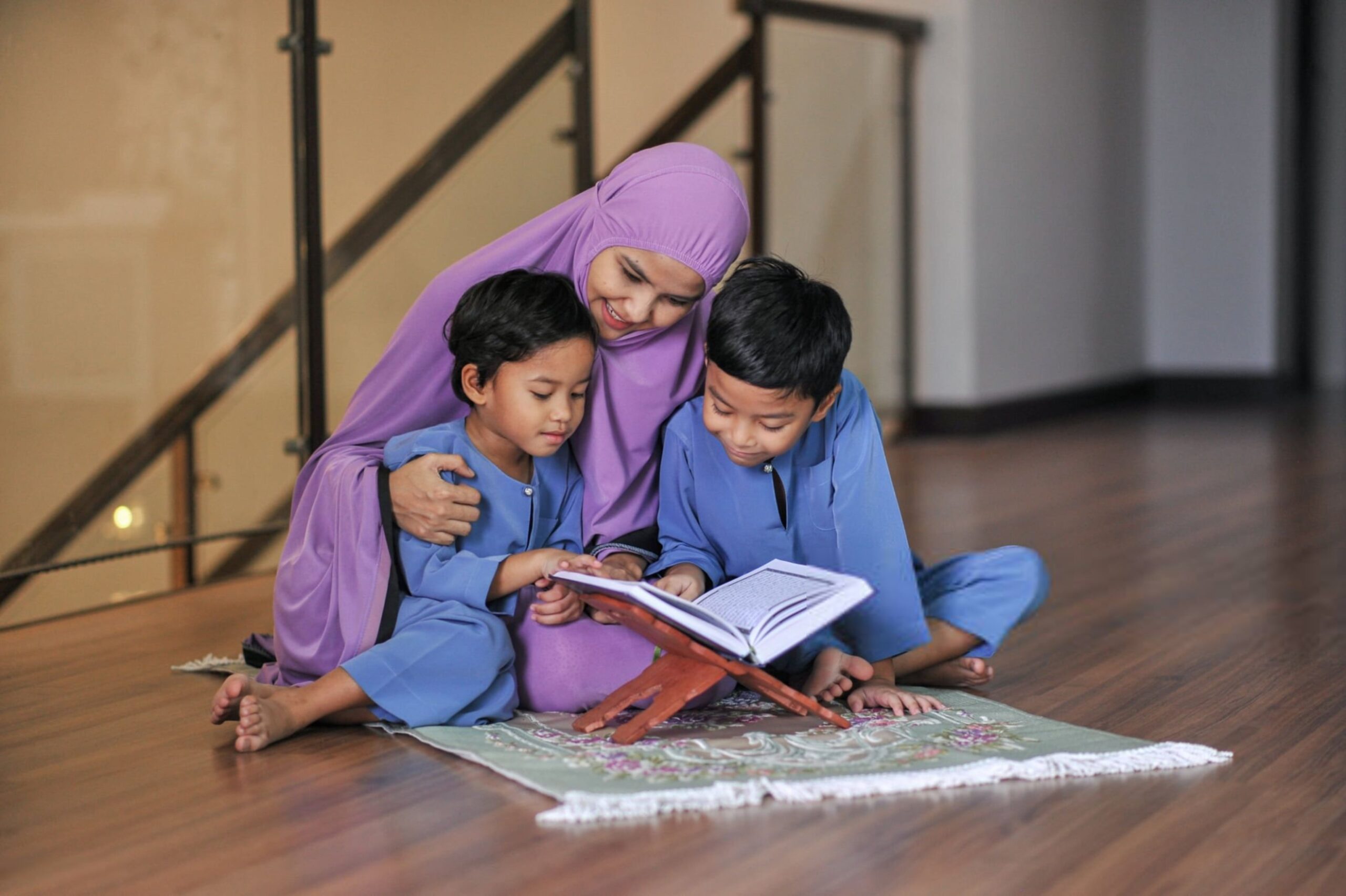
Islamic Studies for a Stronger Faith
Islamic Studies isn’t just for scholars, it’s for everyone. Our Islamic Studies program covers the basics of Aqeedah, Fiqh, Seerah, and more, so you and your family can live Islam with confidence and understanding. Fun, structured, and authentic learning for kids, teens, and adults alike. Our online Islamic classes and education can be a good complement for anyone following this path.
What Our Islamic Studies Program Covers
Our Islamic Studies curriculum introduces core topics gradually: Aqeedah (belief), Fiqh (practical rulings), Seerah (the life of the Prophet), and Islamic manners. Each topic is taught in a structured order so students build a solid foundation before moving to more advanced material, rather than jumping between unrelated subjects.
How Classes Are Taught
Islamic Studies classes are one-on-one, allowing the teacher to adjust explanations to the student’s age, background, and pace. Younger students learn through simple stories and examples, while teens and adults engage with more detailed discussion and questions as they progress.
Who This Program Is For
This program suits families who want a structured, guided way to learn Islamic knowledge together, as well as individual students who want a clearer understanding of their faith. No prior study is required, and lessons are designed to meet each student wherever they’re starting from.
Why Structured Learning Matters
Piecing together Islamic knowledge from scattered sources can leave gaps or lead to confusion. According to general principles found in Islamic studies as an academic field, structured, sequential learning helps students build a more complete and connected understanding of their subject, which is the approach our program follows.
What Students Gain Over Time
Students who complete our Islamic Studies program come away with a clearer, more confident understanding of their beliefs and daily practice. Many describe feeling better equipped to answer questions about their faith and to explain it to others, both inside and outside the family.
Frequently Asked Questions
Is this program suitable for young children?
Yes, lessons are adapted to each student’s age, including simplified content for younger learners.
Do I need any prior Islamic knowledge to start?
No, the program is structured to start from the basics and build up gradually.
Can adults join this program too?
Yes, we teach Islamic Studies to students of all ages, including adults.
Strengthen your Deen through knowledge. This pairs well with our Reviews. For more guidance, check out our Hajj in Islam a modern comprehensive guide to rules rituals and requirements. If you’d like to go deeper, see our Islamic academy UK.
Aqeedah, Fiqh, Seerah, and Manners: What Each Subject Actually Covers
Each of the four core subjects in our Islamic Studies program plays a distinct role in building a complete picture of the faith, and students see how the pieces connect rather than studying them as separate, unrelated topics.
- Aqeedah covers the foundations of Islamic belief: the oneness of Allah, the role of the angels, the revealed books, the prophets, the Day of Judgment, and divine decree. Students learn not just what to believe, but why these beliefs form the foundation everything else is built on.
- Fiqh translates belief into daily practice: how to pray correctly, what breaks a fast, how purification works, and how to handle everyday questions about halal and haram. This is the subject students often say feels the most immediately useful.
- Seerah is the life of the Prophet Muhammad, taught in order so students understand the reasoning and character behind events, not just the events themselves. Teachers connect Seerah lessons to situations students actually face, rather than treating it as distant history.
- Islamic manners (Adab) rounds out the program with the everyday character and etiquette Islam calls for: honesty, patience, kindness to parents, and fair dealing with others. Many families find this is the subject that shows up most visibly in a child’s day-to-day behavior.
Who This Program Is Built For
Islamic Studies at Muslim Academy is designed for a wide range of learners, and the pace and depth adjust depending on who is sitting in the seat.
- Children who are just starting to learn about their faith and need simple, story-based lessons
- Teenagers who are asking harder questions and want real answers, not just rules to memorize
- Adults reconnecting with their faith after years away, or building a foundation they never had growing up
- New Muslims who want a structured introduction to core beliefs and practice, taught from the ground up
- Parents who want to be able to answer their children’s questions about Islam accurately and with confidence
What a Typical Lesson Looks Like
Every student is paired one-on-one with a qualified teacher, and lessons are built around real conversation rather than a one-way lecture. A typical session opens with a short review of the previous lesson, moves into new material explained with examples relevant to the student’s actual life, and closes with a few questions the student can think about before the next class. Younger students spend more time on stories and repetition, while older students and adults spend more time on discussion and application. Because sessions are one-on-one, a teacher can slow down on a topic that needs more time or move faster through material a student already understands, instead of following a fixed pace set for a whole classroom.
A Few Real Questions Students Bring to Class
The questions that come up in Islamic Studies lessons are rarely abstract. A teenager wants to know why scholars sometimes differ on certain rulings, and this program helps them understand there is room for that difference. A parent wants to know how to explain divine decree to a curious eight-year-old without confusing them. A new Muslim wants a clear, non-overwhelming starting point that does not assume years of prior background. These are the actual conversations that shape each lesson, which is part of why the program stays practical rather than purely theoretical.
Why Families Choose Muslim Academy for Islamic Studies
A lot of Islamic Studies material online is either too academic for a general audience or too simplified to build real understanding. Our teachers are trained to sit in the middle: accurate and rooted in authentic sources, but explained in a way a child or a busy adult can actually follow and remember. Classes are scheduled around your timezone and routine, progress is tracked stage by stage, and students receive a certificate of completion as they finish each part of the program. Whether the goal is helping a child build a foundation early, helping a teenager work through real questions, or helping an adult fill in gaps left from childhood, the program adjusts to meet that goal rather than asking the student to fit a fixed mold.
Staying Consistent With Your Islamic Studies Journey
One of the biggest challenges learners face is not starting, but continuing. Life gets busy, motivation naturally rises and falls, and it is easy for a subject as important as Islamic Studies to get pushed aside by other commitments. At Muslim Academy, teachers work with students to build a realistic, sustainable pace rather than an overwhelming one, because steady, consistent learning over months and years produces far deeper understanding than short bursts of intense study followed by long breaks.
Regular one-on-one sessions also mean a student is never left to figure things out alone. When a concept from Aqeedah feels abstract, or a ruling in Fiqh seems confusing, the teacher is right there to explain it again in a different way, using examples that fit the student’s own life and background. This kind of steady support is often what turns Islamic Studies from a subject a person feels obligated to learn into one they genuinely look forward to each week, because they can see their own understanding growing session by session.
Ultimately, the goal of this program is not just to transfer information, but to help each student build a lasting, personal relationship with their faith, one grounded in real understanding rather than memorized facts alone.