Arabic Classes for Kids | Fun & Engaging Learning Online 2026
Arabic Classes For Kids at Muslim Academy are designed to help children develop strong Arabic language skills in a fun and supportive environment. Learning Arabic at an early age enhances communication abilities, boosts cognitive development, and builds a solid foundation for understanding Islamic studies and cultural identity. Those who found this helpful often continue with our online Arabic classes for kids in the UK.
Through interactive lessons, engaging activities, and age-appropriate teaching methods, children remain motivated and confident throughout their learning journey. Qualified teachers focus on pronunciation, vocabulary, reading, and basic grammar while adapting lessons to each child’s learning pace. This connects closely with our online Arabic academy for kids, which many families find useful. We also cover this in our Arabic classes near me.
With flexible online schedules, parents can easily integrate Arabic learning into their children’s daily routine, ensuring consistent progress and a positive educational experience. It’s worth pairing this with our Arabic classes for beginners for a fuller picture.
Understanding the importance of Arabic learning for children
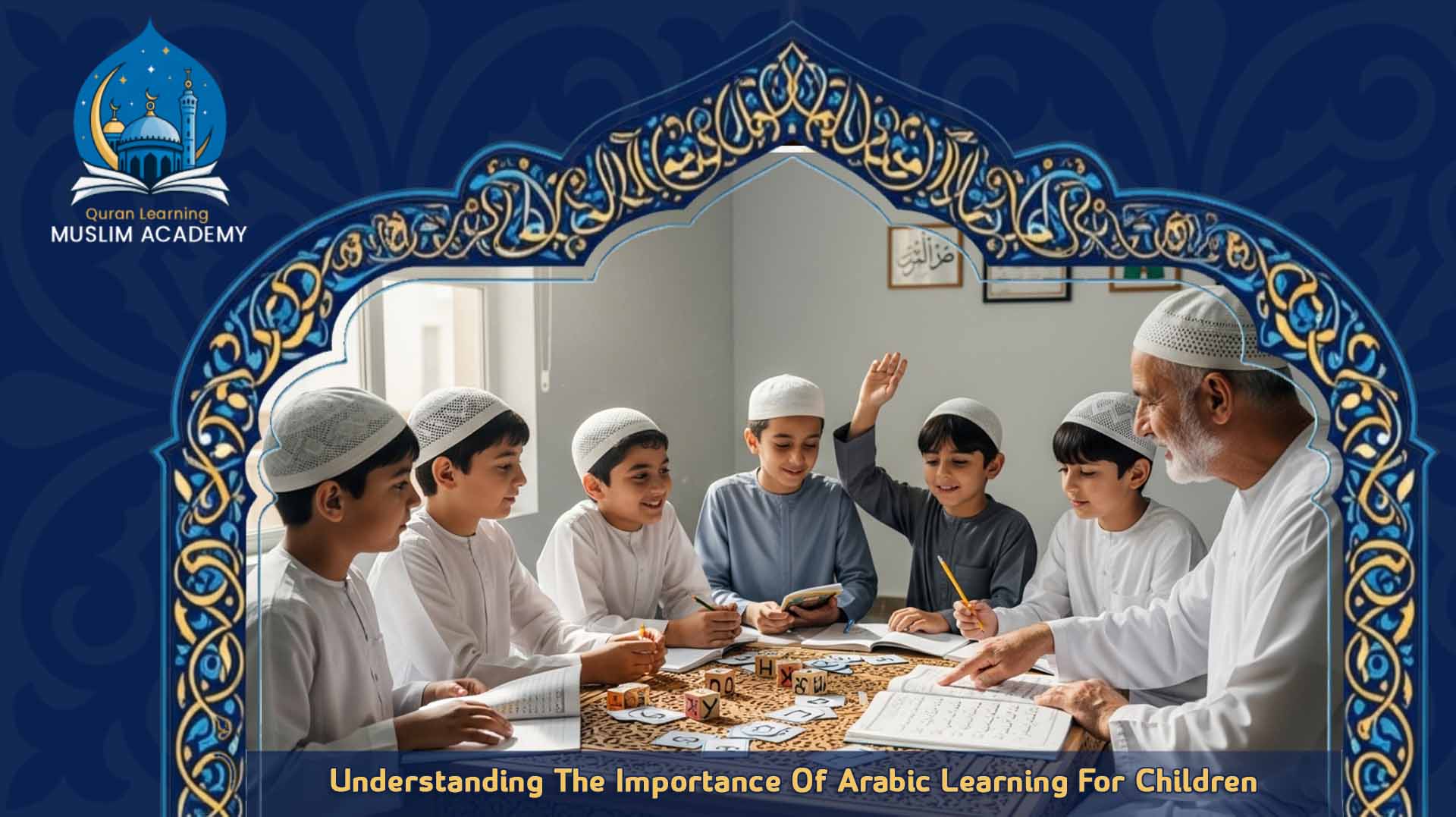
Children’s Arabic classes play a vital role in shaping a child’s linguistic, cultural, and intellectual development from an early age. Learning Arabic helps children connect with a rich language that carries historical, religious, and social value.
When children are exposed to Arabic early, they develop familiarity with sounds, letters, and sentence structures naturally, which makes future learning smoother and more enjoyable. Muslim Academy focuses on creating a positive first experience that builds confidence and curiosity rather than pressure.
Children’s Arabic classes also support identity formation, especially for families who value Arabic as part of their heritage or religious practice. Children who learn Arabic early often feel a stronger sense of belonging and pride in their language skills. Through structured lessons and interactive activities, kids begin to see Arabic not as a difficult subject, but as a living language they can use and enjoy daily.
By enrolling children in children’s Arabic classes at the right age, parents give them a long-term advantage in language acquisition. These classes help improve listening, speaking, and reading abilities while laying the foundation for advanced learning later on. Muslim Academy ensures that every lesson aligns with children’s cognitive abilities, keeping learning meaningful and engaging.
Discuss your learning goals with Muslim Academy
Enroll your child today in professional children’s Arabic classes at Muslim Academy and give them a strong foundation in the Arabic language. Our engaging lessons are designed to build confidence, improve communication skills, and make learning enjoyable.
With experienced teachers and flexible online schedules, your child can learn comfortably from home. Join Online Quran Academy now and start your child’s successful Arabic learning journey.

How Arabic language skills support early childhood development?
Children’s Arabic classes contribute significantly to early childhood development by strengthening memory, concentration, and problem-solving skills. Learning a new language activates different areas of the brain, helping children become more flexible thinkers. As kids learn Arabic letters, sounds, and basic vocabulary, they also improve their ability to recognize patterns and process information efficiently.
Arabic language learning also enhances communication skills. Children who attend children’s Arabic classes become better listeners and speakers, not only in Arabic but in their primary language as well. This bilingual exposure encourages clearer expression of thoughts and emotions. Muslim Academy integrates storytelling, dialogue, and interactive exercises to make communication practice natural and enjoyable.
Social development is another key benefit. Group-based children’s Arabic classes teach children how to interact, cooperate, and build confidence when speaking in front of others. These experiences help reduce shyness and promote self-expression, creating well-rounded learners who are comfortable engaging with their peers.
Choosing the right Arabic class for kids successfully
Selecting the right children’s Arabic classes requires careful consideration of teaching style, curriculum quality, and instructor experience. Parents should look for programs that understand children’s learning needs and use age-appropriate methods. Muslim Academy designs lessons that balance structure with creativity, ensuring children stay motivated and focused.
Another important factor is flexibility. Children learn at different speeds, so children’s Arabic classes should adapt to individual progress levels. Programs that offer personalized feedback and gradual skill building tend to produce better results. A supportive environment encourages children to ask questions and practice without fear of making mistakes.
Parents should also consider the learning environment. Whether online or in-person, children’s Arabic classes must feel safe, engaging, and interactive. Muslim Academy emphasizes clear communication with parents and consistent progress tracking, helping families feel confident in their choice.
Key features that make children’s Arabic classes effective
Effective children’s Arabic classes share common features that support consistent learning outcomes. A well-structured curriculum that progresses from basic to advanced concepts is essential. Muslim Academy ensures lessons build upon previous knowledge, helping children gain confidence step by step.
Qualified instructors are another critical element. Teachers who specialize in teaching children understand how to explain complex ideas simply. In children’s Arabic classes, instructors must use clear pronunciation, visual aids, and repetition to reinforce learning effectively.
Engagement is equally important. Interactive activities, games, and storytelling keep children interested and active during lessons. These features transform children’s Arabic classes into an enjoyable experience rather than a routine task, leading to better retention and enthusiasm.
Benefits of enrolling children in Arabic classes near me
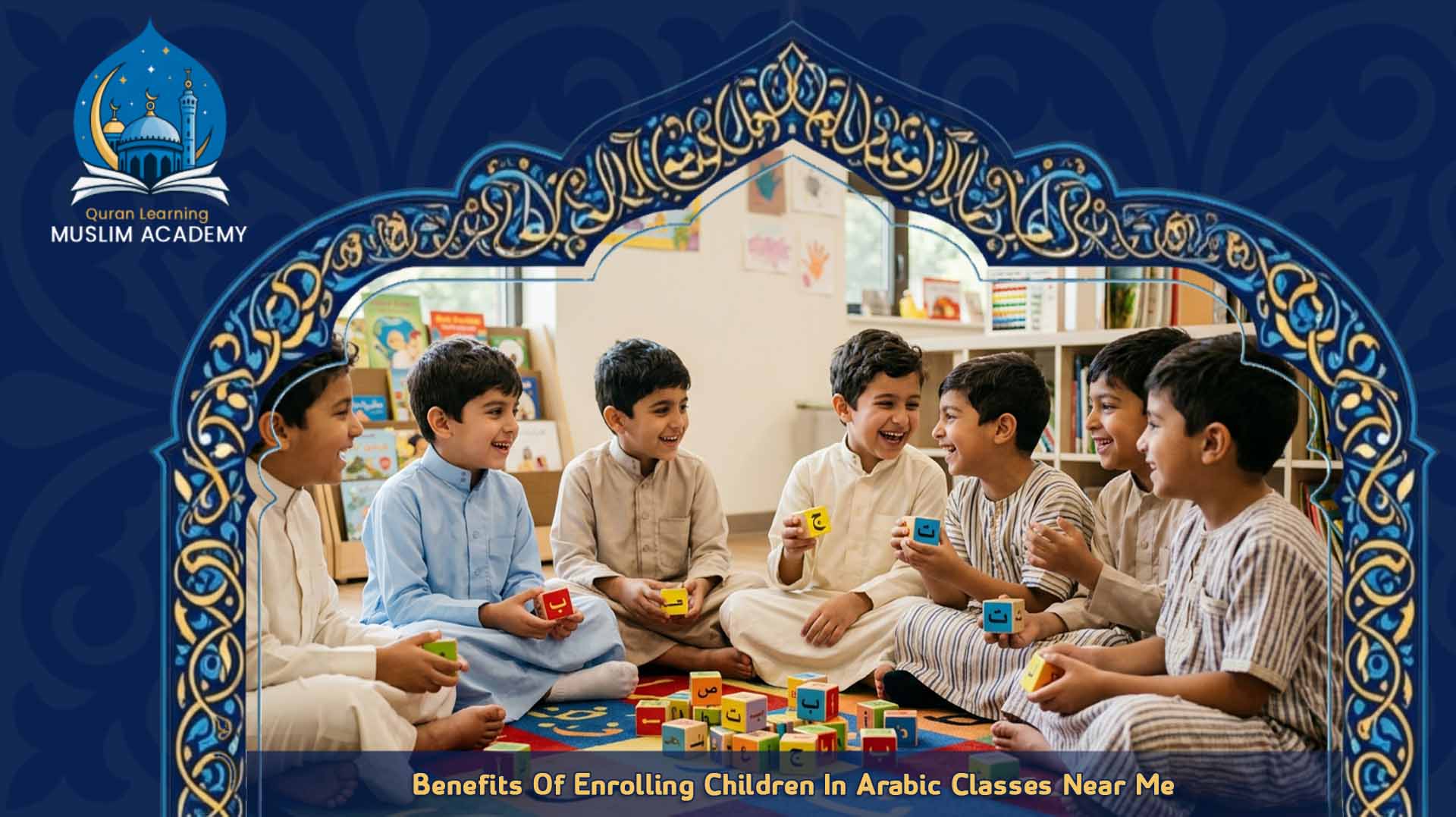
Parents often search for children’s Arabic classes near me to provide direct interaction and community involvement. Local classes offer face-to-face communication, which can be beneficial for children who thrive in social settings. These classes help kids build friendships while learning together.
Children’s Arabic classes near me also provide structured routines that support discipline and time management. Attending regular sessions outside the home helps children associate learning with responsibility and consistency. Muslim Academy recognizes the value of structure and incorporates it into both online and offline learning approaches.
Another advantage is parental involvement. Local children’s Arabic classes allow parents to communicate directly with instructors, attend progress meetings, and better understand their child’s learning journey. This partnership strengthens educational outcomes and builds trust.
Why online children’s Arabic classes are highly convenient?
Online children’s Arabic classes offer unmatched convenience for modern families who seek quality education without added stress. Flexible scheduling allows children to learn from the comfort of their homes, eliminating the need for daily commuting and saving valuable time for both parents and children.
This flexibility makes it easier to maintain consistency, even with busy routines. Muslim Academy designs its online lessons to fit seamlessly into family schedules while maintaining high educational standards.
Another major advantage of online children’s Arabic classes is access to qualified and experienced teachers regardless of geographical location. Families are no longer limited by nearby options, as professional instruction becomes available from anywhere.
Interactive learning platforms support real-time communication, screen sharing, and engaging activities that keep children attentive and involved throughout each lesson, ensuring an effective learning experience.
Parents also value the transparency that comes with online children’s Arabic classes. Ask whether recordings are available and confirm consent, access, and retention arrangements.
This level of involvement helps families provide consistent encouragement and support, strengthening the overall impact of Arabic learning and ensuring steady progress over time.
Comparing traditional learning with children’s Arabic classes online
Traditional learning environments have long been valued for their face-to-face interaction, allowing children to communicate directly with teachers and classmates. This setting can help some learners feel more connected and supported, especially those who benefit from physical presence and structured classroom routines.
On the other hand, children’s Arabic classes offered online provide greater flexibility and accessibility, making it easier for families to fit learning into their daily schedules. Muslim Academy combines the strengths of both approaches to ensure children receive effective and balanced instruction.
Children’s Arabic classes online offer personalized pacing that adapts to each child’s learning speed. Children can revisit lessons, practice pronunciation, and review materials without pressure, which is often difficult to achieve in traditional classrooms.
Digital platforms also enhance engagement through interactive exercises, visual aids, and real-time feedback, helping children stay focused and motivated throughout their learning journey.
Despite these advantages, traditional learning environments may still be ideal for children who thrive on physical interaction and in-person communication. The key to success lies in choosing children’s Arabic classes that align with a child’s individual learning style and personality.
Muslim Academy carefully evaluates each learner’s needs and preferences, guiding families toward the most suitable learning approach to achieve consistent progress and confidence in Arabic language skills.
Interactive teaching methods used in modern Arabic learning
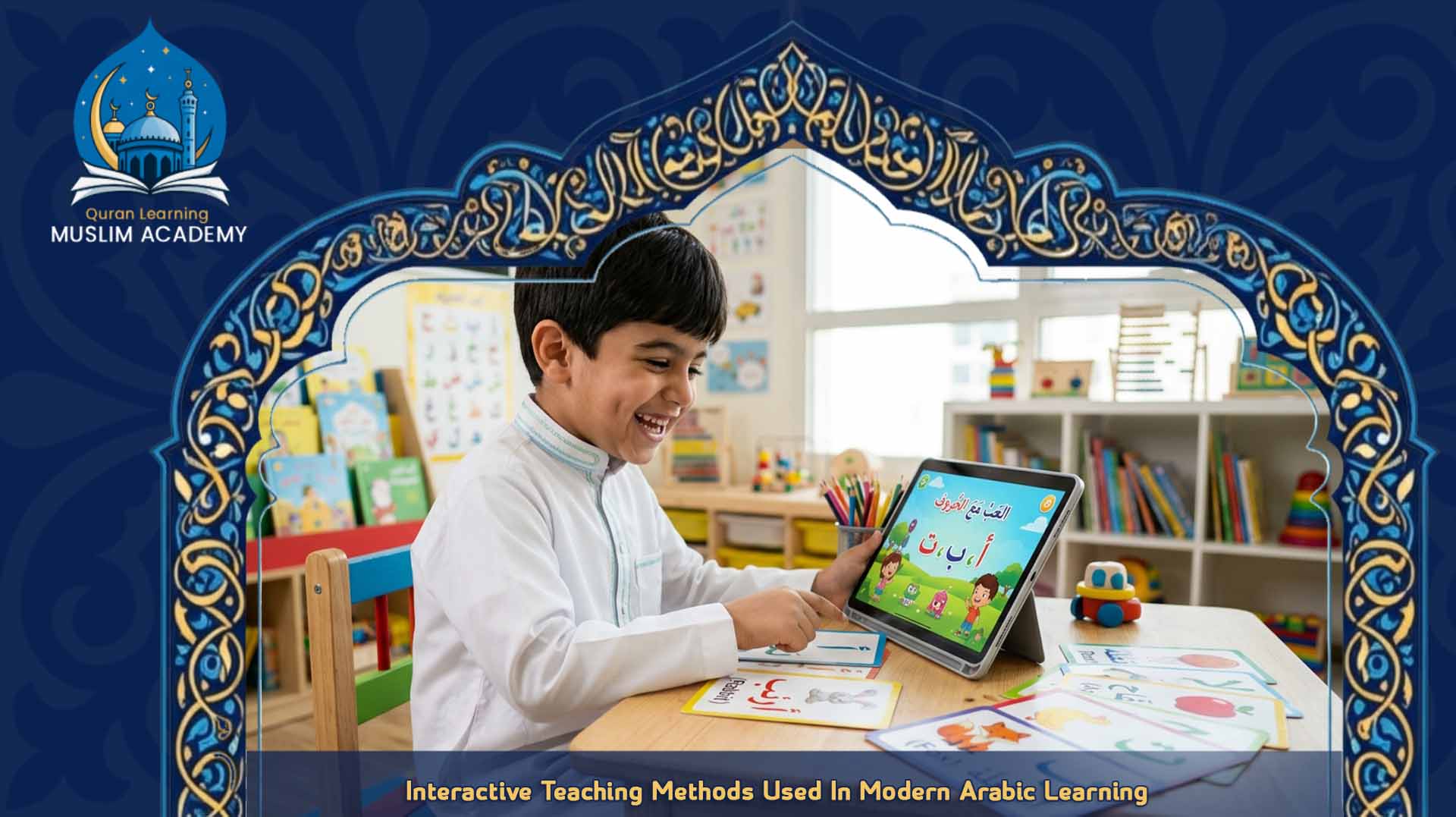
Modern children’s Arabic classes rely heavily on interactive teaching methods that enhance understanding, engagement, and long-term retention. These methods include educational games, quizzes, storytelling, role-playing, and visual learning tools that simplify complex language concepts.
By turning lessons into interactive experiences, children become active participants rather than passive listeners. Muslim Academy carefully designs its lessons to involve children at every stage, encouraging curiosity, participation, and confidence in using the Arabic language.
Interactive approaches play a key role in keeping children focused and motivated during children’s Arabic classes. When children are encouraged to speak, listen, respond, and interact, they develop stronger language skills more quickly.
Activities such as question-and-answer sessions, pronunciation practice, and guided conversations help reinforce vocabulary and sentence structure. This active participation allows children to absorb information naturally and apply what they learn with greater ease.
Technology also plays a major role in supporting interactive Arabic instruction. Digital whiteboards, animated videos, audio tools, and screen-sharing features enrich children’s Arabic classes and accommodate different learning styles.
Visual learners benefit from images and videos, while auditory learners gain from listening exercises and pronunciation practice. By combining technology with interactive teaching strategies, Muslim Academy ensures that every child receives an engaging and effective Arabic learning experience.
How parents can support their kids Arabic learning journey?
Parents play a vital role in reinforcing what children learn during children’s Arabic classes, as home support greatly influences progress and confidence. Creating a positive and encouraging learning environment helps children feel comfortable practicing Arabic without fear of mistakes.
Simple daily activities, such as reading short Arabic words together, watching age-appropriate Arabic videos, or listening to Arabic songs, can transform learning into an enjoyable part of everyday life rather than a formal task.
Helpful ways parents can support their children’s Arabic learning include:
-
Encouraging daily exposure to Arabic through casual conversations, stories, educational apps, or child-friendly media to strengthen familiarity with the language
-
Praising effort, participation, and improvement rather than focusing on perfection, which helps build confidence and motivation
-
Establishing a consistent study routine at home so children associate Arabic learning with regular practice and discipline
-
Creating a calm and distraction-free space that allows children to focus during practice sessions
-
Setting small, achievable goals that make progress visible and rewarding for young learners
Communication with instructors is equally important for maximizing the benefits of children’s Arabic classes. Muslim Academy encourages parents to stay actively involved by asking questions, sharing observations, and following up on feedback.
This strong partnership between parents and teachers ensures that children receive consistent guidance, emotional support, and long-term success in their Arabic learning journey.
Common challenges children face while learning Arabic
Children often face several challenges when they begin children’s Arabic classes, especially if Arabic is not spoken regularly at home. One of the most common difficulties is adjusting to unfamiliar sounds, letters, and writing patterns that differ from other languages.
Arabic pronunciation and letter shapes may seem complex at first, which can cause hesitation or confusion. These challenges are completely natural and are best addressed through patience, repetition, and gradual learning. Muslim Academy focuses on step-by-step instruction and positive reinforcement to help children feel comfortable and supported from the very beginning.
Maintaining motivation is another challenge many children experience during children’s Arabic classes. Young learners can lose interest if lessons feel repetitive or overly demanding. To overcome this, lessons must remain interactive and enjoyable.
Engaging activities, storytelling, visual aids, and varied lesson formats play a key role in keeping children attentive and enthusiastic. Muslim Academy carefully designs its classes to balance learning with fun, ensuring children stay motivated and eager to participate.
Consistency is also essential for success in children’s Arabic classes, yet irregular practice can slow progress and reduce confidence. Busy schedules or lack of routine may interrupt learning continuity. Establishing a regular study routine and encouraging small daily practice can make a significant difference.
With proper guidance, encouragement, and a supportive learning environment, children gradually overcome these challenges and develop stronger confidence in their Arabic language abilities.
Why an online Quran academy is a trusted choice for families?

Muslim Academy is widely recognized for delivering high-quality children’s Arabic classes through carefully structured programs and highly experienced instructors.
The academy adopts a child-centered learning approach that focuses on building understanding, confidence, and genuine interest in the Arabic language. Lessons are designed to suit different age groups and learning levels, ensuring that each child progresses comfortably without feeling overwhelmed or rushed.
Families trust Muslim Academy because of its strong commitment to safety, professionalism, and educational excellence. The academy provides a secure and supportive learning environment where children feel encouraged to participate and express themselves freely.
Children’s Arabic classes are taught by qualified teachers who understand how to simplify concepts, motivate young learners, and adapt teaching methods to match individual learning styles and abilities.
By combining effective teaching strategies with flexible learning options, Muslim Academy offers families a reliable solution for Arabic education. Whether parents prefer structured schedules or adaptable online sessions, children’s Arabic classes at Muslim Academy deliver consistent quality and measurable progress.
This balance between flexibility, academic standards, and child-friendly instruction makes the academy a trusted choice for families seeking engaging and long-term Arabic learning for their children.
Frequently asked questions
Some readers ask many questions about the topic children’s Arabic classes. Here are some of those frequently asked questions:
What age is best to start children’s Arabic classes?
Children can start as early as preschool age, depending on readiness and interest.
Are online children’s Arabic classes effective?
Yes, when structured properly, online classes offer flexibility and high engagement.
How often should children attend children’s Arabic classes?
Consistency is key, with regular weekly sessions recommended.
Do children’s Arabic classes require parental involvement?
Parental support enhances progress but lessons are designed for independent learning.
Why choose Muslim Academy for Arabic learning?
Muslim Academy offers experienced teachers, flexible programs, and child-focused instruction.
Choose a children’s Arabic course by looking at what the child will practise: recognizing sounds, reading words, listening, and speaking. Ask how games support those skills and how the teacher adapts activities when a child finds the work too easy or too difficult.
By focusing on both language skills and confidence building, children gain the ability to read, speak, and understand Arabic naturally over time. Parents can rely on experienced instructors and a safe online environment that supports continuous improvement.
Choosing professional Arabic classes helps children grow academically and culturally, while developing a lifelong connection with the Arabic language in a supportive and inspiring setting.
Read more :
The best Way for learning Quran Online
Best Online Quran Classes for Girls This pairs well with our Learn Arabic for children.