
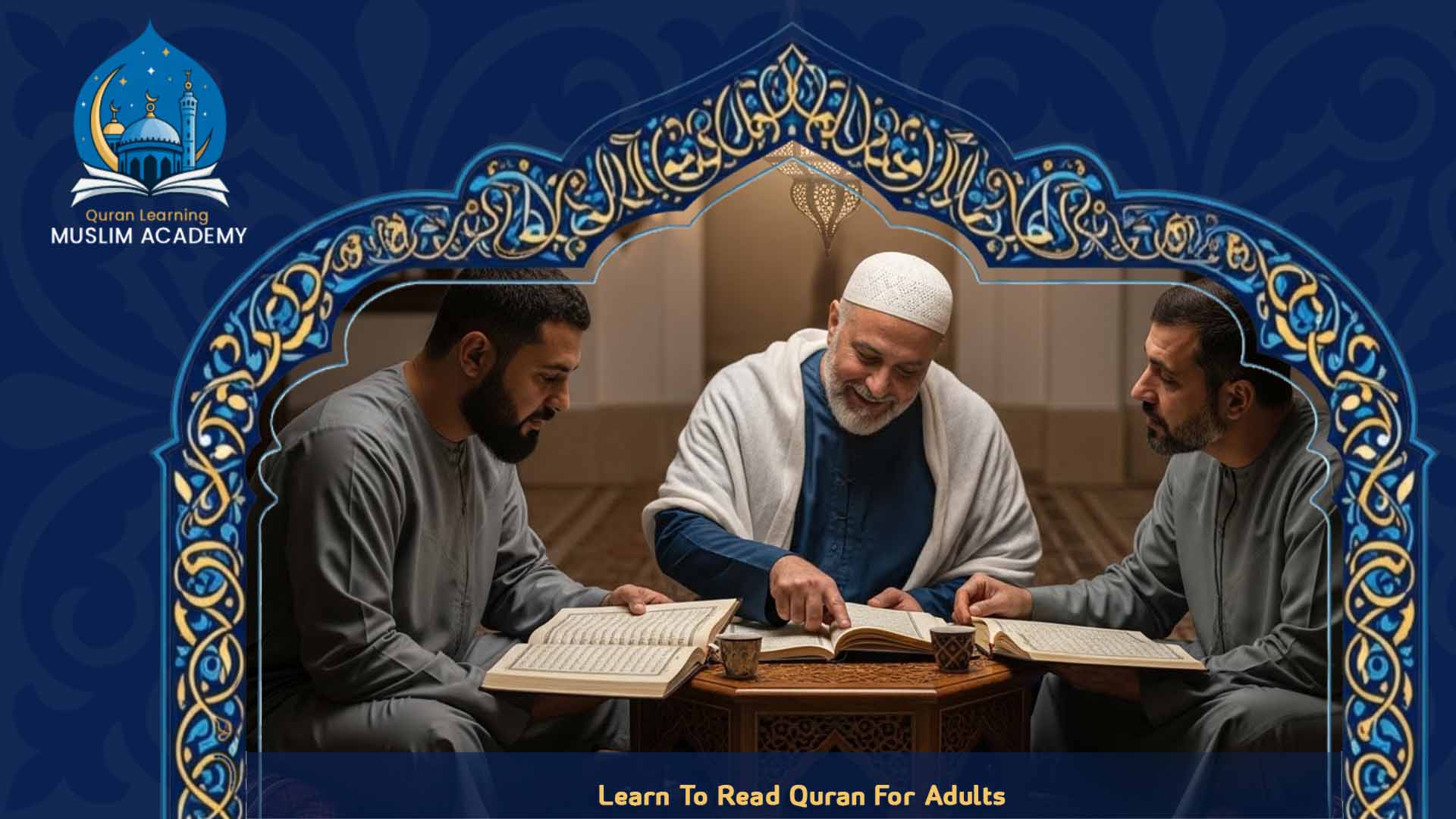
Learn to Read Quran for Adults: Letters to Short Passages
To learn to read Quran as an adult, begin with the part of reading that currently needs attention. You might recognise individual letters but struggle with joined words, or read familiar verses while hesitating over new ones. A teacher can help you identify that starting point and choose a manageable first exercise.
Check letter recognition and sound separately
Ask the instructor to hear you read rather than relying only on naming letters. Recognising a shape does not always mean you can pronounce it confidently in a word. Practise the examples the teacher selects and note sounds that need another demonstration.
If you confuse letters in connected text, return to examples in different positions. Our Arabic alphabet guide can support study, while the teacher checks your actual reading.

Practise vowel marks in short examples
Work through the marked examples in your learning text. Read slowly enough to follow each sign rather than guessing from a familiar word. Ask the teacher to explain an unfamiliar mark and demonstrate its effect before you practise it independently.
The Noorani Qaida course provides a route for discussing foundational reading. Your instructor should decide which exercises you need, especially if you are returning after earlier lessons.
Move from words to a short passage
Once you can read the assigned examples, practise a short passage chosen for your level. Keep accuracy as the immediate goal. If you repeatedly lose your place or omit a word, reduce the amount and identify the difficulty before trying to read faster.
Familiar surahs can support practice, but ask the teacher to check unfamiliar text too. This helps distinguish reading from recalling words you already know by heart.

Use correction as part of the practice
- Identify the exact word or sound that caused difficulty.
- Listen to the teacher’s model and ask for clarification.
- Try the example again with feedback.
- Read it within the surrounding phrase.
- Return to it in a later lesson to check consistency.
Keep a brief correction note. A reminder such as “read better” is too broad to guide practice. Our reading error checklist can help you organise the questions you bring to class.
Keep listening and understanding in their proper roles
A recommended recording provides a model to listen to; it cannot assess your own pronunciation. Ask the teacher to hear recurring difficulties rather than deciding that sounding similar is enough.
Studying a reliable translation or explanation can support understanding, but it does not replace learning to read the Arabic text. If understanding is a separate goal, discuss suitable materials and time for that study.
Frequently asked questions
Do I need to memorise before I can read?
Reading and memorization are different skills. Explain both your current abilities and your goals so the teacher can choose suitable assignments.
What if progress feels slow?
Ask which specific skill is causing difficulty and whether the exercise is too large. Compare similar tasks over time, including the prompts and corrections you need.
Can I learn only from transliteration?
Discuss learning the Arabic script and receiving pronunciation feedback. Do not treat a transliteration as a complete substitute for reading the original text with guidance.
How long will fluent reading take?
There is no single timeline for every adult. Start with an assessment, agree on a small goal and review it against your practice and correction needs.