

Benefits of Reading Quran Daily: Building a Steady Routine
The benefit of reading Quran is closely connected with how we make room for it in daily life. Regular reading offers time to reflect, revisit what we learn, and build a habit of returning to the Quran with attention.
This guide focuses on Quran reading itself: its place in a personal routine, the relationship between recitation and understanding, and practical ways to remain consistent.

Make Time for Reflection
A regular reading routine creates a pause in a busy day. You can use that time to focus on a passage, consider its meaning with a reliable explanation, and think about how it relates to your conduct.
Reading many pages is not the only way to take a session seriously. Choose an amount that allows you to pay attention. If a passage raises a question, note it and seek guidance from a qualified teacher rather than guessing at its meaning.
Build a Consistent Relationship with the Quran
Consistency turns reading from an occasional activity into part of your routine. Start with an amount that fits your current ability and responsibilities. A small session you can repeat is a more practical starting point than a plan you cannot maintain.
Choose a time that already has a place in your day. Keep your reading material ready and decide what you will read before you begin. If you miss a session, return to the routine and adjust the plan where necessary.

Connect Recitation with Understanding
Recitation and understanding can support each other. A translation can help a reader who does not know Arabic follow the broad meaning, while a suitable Tafsir introduces explanation and context.
Translations and explanations have different purposes. Use resources appropriate to your level and ask a knowledgeable teacher about passages you do not understand. Avoid building a conclusion around an isolated sentence without considering its context.
Improve Accuracy Through Guided Practice
If you are learning to read, regular practice helps you revisit letters, vowel marks, and pronunciation. A teacher who listens can identify a recurring error that you may not notice yourself.
Focus on the correction you have been given and practise it in a manageable passage. If your goal is more accurate recitation, explore our guide to Tajweed lessons online and discuss the right starting level.
Use Reading as a Prompt for Everyday Conduct
As you study, consider the practical lessons you are learning about honesty, patience, responsibility, and treatment of others. Reflection can include choosing one action you want to work on rather than only recording how much you have read.
This does not mean every passage can be interpreted without guidance. Where a verse involves a ruling or a question beyond your understanding, seek a reliable explanation and ask a qualified person.

Create a Routine for Your Current Reading Level
A complete beginner may spend a session recognising letters and reading a few connected words. A more confident reader might focus on a passage, revise a pronunciation rule, and then study a short explanation.
Your routine should respond to your ability. If you often guess at words, ask for a reading assessment. If you read comfortably but rush, practise slowing down enough to apply the corrections you know.
Combine New Reading with Review
Return to familiar passages as well as moving forward. Review can help you notice recurring pronunciation problems and apply a teacher’s feedback more carefully.
If you are also memorising, discuss a revision plan with your tutor. Reading, memorising new material, and maintaining previously learned passages are related activities, but each needs suitable time and attention.
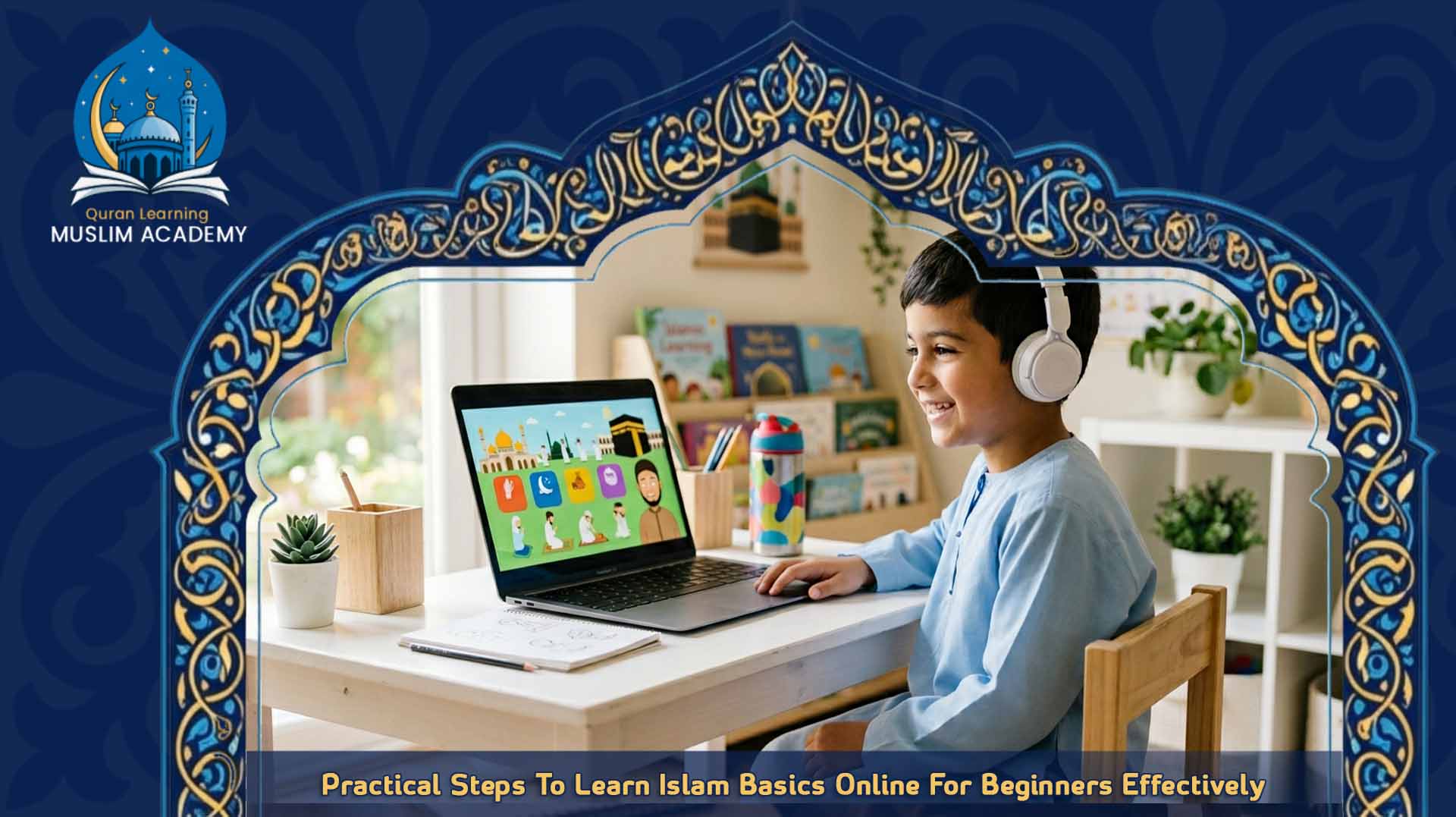
Support Quran Reading as a Family
Families can help by setting aside a calm time and encouraging each learner at an appropriate level. A child should not be expected to match an adult’s pace or compare progress with a sibling.
Ask the teacher how to support a child’s current task. Listening, helping prepare for class, and recognising effort can be more useful than assigning extra pages without knowing what the child is working on.
Choose Useful Tools Without Losing Focus
A Mushaf, suitable reading material, and a quiet place may be enough to start. Audio can support listening, and a teacher can explain how to use it alongside your own recitation practice.
For online lessons, check that the tutor can hear you clearly. A resource that displays a rule cannot assess your pronunciation, so ask for live feedback where correction is needed.
Keep Expectations Realistic
A reading habit develops through practice and attention. Avoid judging your learning only by speed, the number of completed pages, or a promise of instant transformation.

A Simple Plan to Start
- Choose a manageable passage or reading task.
- Set a regular time with few distractions.
- Read carefully and apply the corrections you know.
- Review a reliable explanation suitable to your level.
- Note one question or practice goal for your next lesson.
Frequently Asked Questions
How much Quran should I read each day?
Choose an amount appropriate to your ability and schedule. Begin with a manageable routine and adjust it as your reading becomes more comfortable. Ask your teacher for guidance if you are following a study plan.
Can I begin if my Arabic reading is weak?
Yes, you can begin by learning the reading foundations. A suitable tutor can identify your level and help you practise letters, sounds, and joined reading before advanced material.
Should I read a translation as well?
A translation can support understanding for a reader who does not know Arabic. Use it alongside appropriate explanations and seek help with passages that need context.
How can I stay consistent on busy days?
Keep a smaller version of your usual practice available. A realistic reading task helps you maintain a routine without pretending that every day provides the same time and energy.
Build Your Next Step Around Your Needs
If you need help with reading, pronunciation, or understanding, review Muslim Academy’s course options and ask which program fits your level. The next useful step is a clear, manageable learning plan.