

Quran Reading Course: A Beginner’s Guide for Canadian Learners
A Quran reading course should begin with what you can read today. Some learners need help recognizing Arabic letters. Others can read familiar surahs but hesitate with a new passage. For Canadian families, the right starting point matters more than joining a class described simply as beginner or advanced.
This guide focuses on the move from letters to independent reading. If you already read comfortably and mainly need correction of recitation rules, compare the requirements of a Tajweed course instead.

What a Beginner Quran Reading Course Should Assess
Ask the tutor to check letter recognition, short vowels, joined forms, and a few simple words. Explain whether you learned through a Qaida book, family practice, or previous classes. Recognizing a memorized passage does not necessarily show how confidently you can read unfamiliar text.
- Can you identify a letter when its position changes?
- Can you distinguish similar sounds with correction?
- Can you read vowelled words without guessing?
- Can you follow the text while listening to feedback?
Move Through Skills Rather Than Racing Through Pages
A practical sequence is to recognize letters, practise vowel combinations, join sounds into words, and then read short passages. Ask how the teacher decides when a skill is secure enough to move forward. A learner who finishes a page quickly may still need to revisit recurring errors.
Keep a notebook with the sound or pattern corrected in each lesson. Practise the assigned examples, then ask the tutor to check a new example of the same skill. This helps you see whether you understand the correction rather than remember only one word.

Choose an Arrangement That Works in Canada
Confirm the timetable in your own Canadian time zone. Ask how seasonal clock changes affect the arrangement and what happens when a lesson conflicts with work or school. For a child, agree on how a parent can observe and receive updates.
Before booking, check the lesson length, recurring fee, cancellation terms, and materials required. Review the academy’s current prices and ask which plan matches the proposed timetable.
Practise Between Lessons Without Guessing
Start with the last correction, read the assigned material slowly, and mark anything you cannot resolve. Bring the question to the next class. If the text remains difficult, reduce the amount and ask for another demonstration instead of repeatedly practising an uncertain sound.
Adults can choose private practice that fits their routine; children may need shorter tasks and more parent support. Our guide to learning Quran from home covers study space, audio, and lesson preparation.
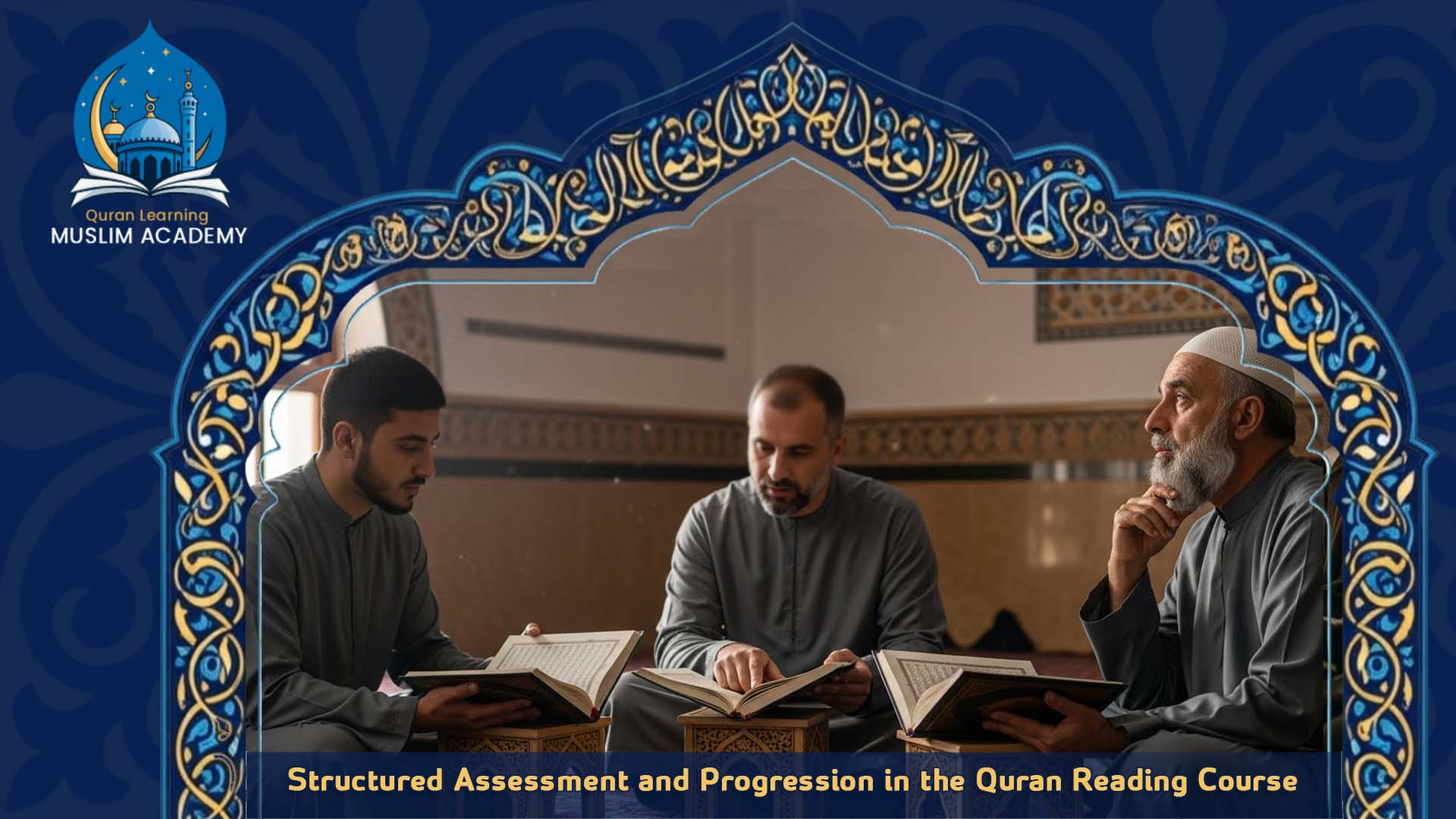
Review Progress Before Changing Levels
Ask the teacher to compare your reading on a similar unfamiliar passage after several lessons. Look at recognition, accuracy, and the amount of prompting needed. Discuss the next level when you can apply corrections consistently. There is no single completion time that suits every learner.
Frequently Asked Questions
Can an adult start without knowing Arabic letters?
Yes. Tell the tutor you need an initial letter and sound assessment so the starting material matches your ability.
Is memorization the same as learning to read?
No. A reading assessment should include unfamiliar text as well as any passages you already know by heart.
What should I ask before enrolling?
Confirm the teacher, level, class time, materials, fees, supervision arrangements, and the process for reviewing progress.