
Quran Online for Beginners Learn Easily & Start Today
Starting your journey to learn the Holy Quran is a meaningful step, but knowing where to begin can sometimes feel challenging. If you are searching for quran online for beginners, online learning offers a convenient and flexible way to get started from home. With qualified teachers, structured lessons, and flexible schedules, you can learn at your own pace and build your Quranic skills with confidence. In this guide, we will explain how to choose the right online Quran course, find a qualified teacher, and create a simple daily routine for effective learning.
Why Choose to Learn Quran Online for Beginners?
Years ago, learning to read the Quran meant walking or driving to a local mosque or Islamic center. While traditional learning holds immense value, it does not always fit into modern lifestyles. Today, online education opens up amazing opportunities for everyone. Here is why exploring quran online for beginners is the absolute best choice for modern learners.
Complete Flexibility and Convenience
Life gets busy. Between work, school, and family duties, finding a spare hour can feel impossible. Online classes remove the travel time completely. You can open your laptop or tablet in your living room and start your lesson. Most academies operate around the clock, meaning you can schedule your classes early in the morning before work, during a lunch break, or late at night when the house is quiet.
Access to Qualified Native Tutors
Depending on where you live, you might struggle to find a teacher who truly understands the science of Tajweed (the rules of Quranic recitation). When you look for online Quran classes, you gain instant access to highly qualified teachers from all around the world. These native Arabic speakers possess deep knowledge, proper pronunciation, and recognized certifications (Ijazah) that ensure you learn everything correctly from day one.
Customized and Personalized Pacing
In a traditional classroom, the teacher must move at the speed of the average student. If you need extra time to pronounce a difficult letter, you might feel left behind. Conversely, if you learn quickly, you might feel bored waiting for others. Online platforms usually offer one-on-one sessions. Your tutor focuses completely on you. If you need to spend three days mastering the letter “Kha” (خ), your tutor will patiently guide you without any pressure.
“The beauty of online learning is that it adapts to your life, rather than forcing your life to adapt to it.”
Step-by-Step: How to Start Learning the Quran from Scratch
Many people think they need to know some Arabic before they sign up for a class. This is a common myth. You can start with absolutely zero knowledge. Here is the realistic, step-by-step path you will take when you begin your online lessons.
Step 1: Master the Noorani Qaida
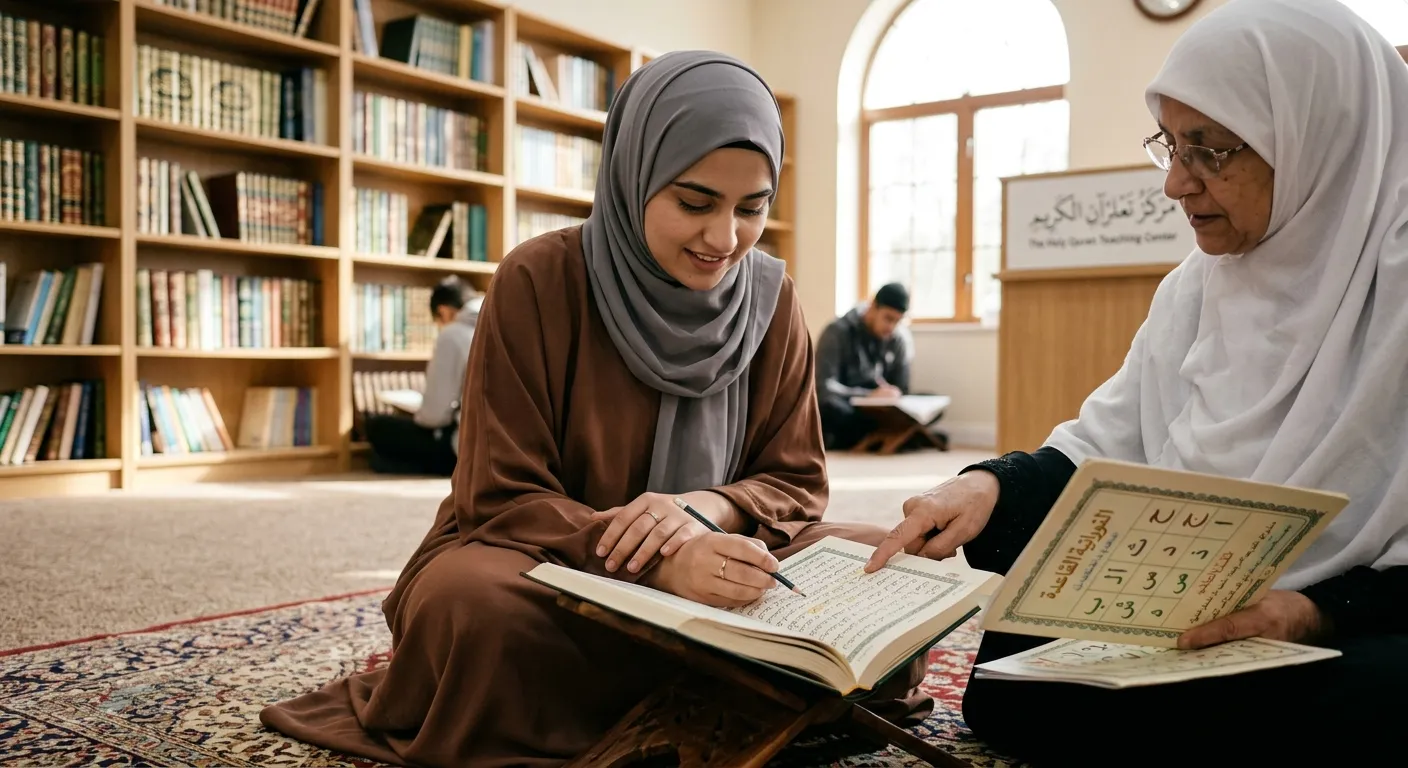
You cannot run before you learn to walk. In the world of Quranic reading, the Noorani Qaida is your first walking step. This brilliant, time-tested booklet breaks down the Arabic language into small, digestible pieces.
- The Alphabet: You will first learn the 28 independent Arabic letters.
- Connecting Letters: You will learn how letters change their shapes when they join together at the beginning, middle, and end of a word.
- Vowels (Harakat): You will understand how to make the “a,” “i,” and “u” sounds (Fatha, Kasra, and Damma).
Most beginners complete a solid Noorani Qaida course in just a few months, setting a flawless foundation for everything that follows.
Step 2: Perfect Your Pronunciation (Makharij)
Arabic contains several sounds that do not exist in the English language. For example, the deep “Qaf” (ق) or the sharp “Ayn” (ع). A core part of quran online for beginners involves learning the Makharij—the exact points of articulation in your mouth and throat. A good online tutor will turn on their camera, show you exactly how to shape your mouth, and listen closely to correct your mistakes until you sound like a native speaker.
Step 3: Transition to the Holy Quran
Once you finish the Qaida, you will open the actual Quran for the first time. This is a very emotional and rewarding milestone. Tutors usually start beginners at the very end of the Quran, in Juz 30 (Juz Amma). This section contains short, rhythmic Surahs that are easy to read and deeply familiar to most Muslims. You will slowly spell out the words just like you did in the Qaida until reading becomes a natural habit.
Step 4: Introduce Basic Tajweed Rules
As your reading speed improves, your teacher will gently introduce Tajweed rules. You do not need to memorize complex Arabic terminology right away. Instead, you will learn practical skills. You will learn how to stretch certain vowels (Madd), how to merge letters smoothly (Idgham), and how to make a beautiful nasal sound (Ghunnah). Taking a step-by-step Tajweed for beginners program ensures you never feel overwhelmed by these rules.
Finding the Right Online Quran Academy
Because online learning is so popular, hundreds of academies currently exist on the internet. How do you choose the right one? Finding a reliable platform is crucial for your long-term success. Look for these specific features when making your decision.
Certified and Experienced Tutors
Anyone can read Arabic, but not everyone can teach it effectively. You need a tutor who understands how to break down complex ideas into simple English. When browsing an academy, check if their teachers hold an Ijazah (a formal chain of certification linking back to the Prophet Muhammad, peace be upon him). Furthermore, the teachers should undergo background checks and rigorous training in online teaching methods.
Interactive and Engaging Methods
A good online class should never feel like a boring lecture. The best academies use interactive whiteboards, screen sharing, and digital Quran copies that the teacher can highlight in real time. If you struggle with a specific word, the teacher can circle it in red on your screen. This visual aid makes learning significantly easier for beginners.
Free Trial Classes
Never commit to a long-term payment plan without trying the service first. High-quality academies always offer a free, no-obligation trial class. Use this opportunity to test the waters.
- Did the teacher show up on time?
- Was the audio clear?
- Did you feel comfortable with the teacher’s style?
- Did the academy assess your current level accurately?
Clear Communication and Support
Sometimes you need to reschedule a class, or maybe you experience technical difficulties. You need an academy with a responsive support team. Look for websites that offer 24/7 customer service via WhatsApp or live chat. This ensures you never miss a lesson due to a simple scheduling error.
You can get a free trial here.
Essential Equipment: What Do You Need to Start?
One of the best things about studying quran online for beginners is the low barrier to entry. You do not need expensive equipment or complicated software. You likely already own everything you need.
1. A Reliable Device
You can use a desktop computer, a laptop, a tablet, or even a smartphone. However, a laptop or a large tablet works best. The larger screen allows you to see the digital Quran clearly, preventing eye strain.
2. A Good Headset with a Microphone
While you can use your device’s built-in microphone, a dedicated headset significantly improves the experience. Arabic pronunciation requires precision. Your teacher needs to hear the subtle difference between a “Sin” (س) and a “Sad” (ص). A headset with a noise-canceling microphone blocks out background noise in your home, ensuring clear communication.
3. A Stable Internet Connection
Video calls require a decent internet speed. A standard home broadband or a strong 4G/5G mobile connection works perfectly. If your Wi-Fi often drops, try sitting closer to your router during your lesson to avoid frustrating disconnections.
4. Video Call Software
Most academies use standard, free software like Zoom, Skype, or Google Meet. You simply click a link sent by your teacher, and the classroom opens instantly. You do not need any advanced computer skills to join a class.
Building a Simple and Effective Learning Routine at Home
Signing up for a class represents only the first step. To see real progress, you must build a sustainable routine. Many beginners make the mistake of starting with too much enthusiasm, studying for two hours a day, only to burn out a week later. Follow these realistic tips to maintain your momentum.
Choose Quality Over Quantity
Consistency matters much more than duration. Studying for 20 to 30 minutes every single day yields far better results than studying for two hours once a week. Short, frequent sessions keep the Arabic letters fresh in your memory. The brain absorbs new languages much better through daily repetition.
Set a Dedicated “Quran Time”
Treat your online lesson like an important doctor’s appointment. Do not try to fit it in “whenever you have free time,” because free time rarely appears magically. Pick a specific time slot and stick to it. Many successful students prefer the early morning right after Fajr prayer. The house remains quiet, the mind feels fresh, and you start your day with immense spiritual blessings.
Create a Distraction-Free Zone
When it is time for your lesson, eliminate distractions.
- Turn off your phone notifications.
- Close unnecessary tabs on your computer browser.
- Tell your family members that you need quiet time.
- Sit at a clean desk or table rather than lying in bed.
Creating a physical environment dedicated to learning signals to your brain that it is time to focus.
Important Note: Always keep a physical notebook and pen beside your computer. Writing down tough words or new rules helps reinforce your memory significantly.
Tips for Parents: Online Quran Classes for Kids
While this guide applies to adults, many people searching for quran online for beginners are actually parents looking to educate their children. Teaching a child online requires a slightly different approach.
Make It Fun and Engaging
Children have much shorter attention spans than adults. A standard 45-minute lecture will quickly bore a seven-year-old. When exploring Quran for kids, ensure the academy uses specialized teachers who know how to keep children smiling. These teachers often use games, colorful slides, and a system of stars and rewards to keep kids motivated.
Supervise the Initial Classes
Do not just hand an iPad to your child and walk away. For the first few weeks, sit near them. You do not need to hover over their shoulder, but stay in the room. Make sure they log in properly, pay attention, and respect the teacher. Once they build a habit, you can step back and let them learn independently.
Praise Effort, Not Just Results
Learning Arabic challenges a child’s young brain. If they struggle with a specific page for a whole week, do not show frustration. Praise their effort, their patience, and their willingness to try. Positive reinforcement builds a deep, lifelong love for the Quran.
Common Challenges for Beginners and How to Overcome Them
Every beginner faces hurdles. Recognizing these challenges before they happen helps you push through them without losing hope.
Challenge 1: The “Plateau” Phase
In the first few weeks, you will learn the alphabet quickly, and you will feel amazing. However, when you start joining words together, your progress might suddenly feel very slow. This represents a normal learning plateau. Do not quit. Every student goes through this phase. Trust your teacher, review your previous lessons, and accept that slow progress is still progress.
Challenge 2: Feeling Shy or Embarrassed
Many adults feel embarrassed when they make mistakes in front of a teacher. You might feel silly trying to make unfamiliar throat sounds. Remember this beautiful reality: your teacher respects you immensely for trying. They teach beginners all day long. They have heard every mistake possible. Leave your ego at the door, laugh at your own mistakes, and enjoy the learning process.
“The Prophet Muhammad (PBUH) said: ‘The one who is proficient in the recitation of the Quran will be with the honorable and obedient scribes (angels), and he who recites the Quran and finds it difficult to recite, doing his best to recite it in the best way possible, will have two rewards.'” (Sahih al-Bukhari)
This Hadith proves that your struggle carries massive spiritual value. You earn rewards simply by trying your best.
Challenge 3: Balancing a Busy Schedule
When work gets heavy, or family emergencies happen, your Quran class often becomes the first thing you cancel. To avoid this, communicate with your academy. The beauty of learning online is flexibility. If you cannot manage three days a week, ask your administration to drop your schedule to two days a week temporarily. It is always better to reduce your hours than to stop entirely.
Preparing for Your Very First Lesson
If you finally decided to book your free trial, congratulations! You just took a massive step forward. Here is a simple checklist to ensure your first session goes smoothly.
- Test Your Tech: Open your camera and microphone ten minutes before the class starts. Check your internet connection.
- Find a Quiet Spot: Lock the door if necessary to keep pets or kids from interrupting.
- Prepare Your Mind: Take a few deep breaths. Remind yourself of your intentions. You are doing this to connect with the words of your Creator.
- Ask Questions: Do not stay silent. Tell your teacher about your goals, your fears, and your preferred learning style. The more they know about you, the better they can help you.
Exploring Advanced Steps After the Basics
Once you conquer the beginner phase, a whole new world of Islamic education opens up for you. The journey never truly ends; it only gets more beautiful.
After you master basic reading, you might decide to memorize parts of the Quran. Online teachers offer fantastic memorization (Hifz) programs that break pages down into simple, repeatable lines. Alternatively, you might want to understand the profound meanings behind the words you read. In that case, you can transition into a learning Arabic Online Course to grasp the vocabulary and grammar of the quran text.
By establishing a solid relationship with a reputable online academy, you build an educational home. You can seamlessly move from beginner reading to advanced Tajweed, and eventually to Arabic language mastery, all under one trusted digital roof.
Conclusion
Starting your Quran journey no longer needs to feel stressful or complicated. With quran online for beginners, you can learn from the comfort of your home with qualified teachers, flexible lessons, and a learning plan that suits your pace. Remember, every confident Quran reader was once a beginner. You may find the Arabic letters or pronunciation difficult at first, but with regular practice and proper guidance, your reading will gradually improve. Do not wait for the perfect time to begin. Choose a trusted online Quran academy, book a free trial class, and take your first step toward reading the Quran with confidence.
FAQ About Learning Quran Online
Am I too old to start learning the Quran from scratch?
No one is ever too old to learn the words of Allah. Many adults start their journey in their 40s, 50s, or even later in life. Online tutors specialize in teaching adult beginners with immense patience and respect. Because the classes are private, you will learn comfortably at your own pace without any classroom pressure or embarrassment.
How long does it take to learn how to read?
Every student learns at a different speed, and your progress depends on how often you practice. However, most beginners finish the basic Noorani Qaida in about three to six months. After that, you will start reading directly from the Quran. Remember that consistency brings the best results. Taking regular online Quran classes ensures you make steady, noticeable progress every single week.
Do I need to know how to speak Arabic first?
Not at all! You can start with absolutely zero knowledge of the Arabic language. Your tutor will teach you the alphabet one simple letter at a time. The focus remains completely on reading and pronunciation first. Once you feel confident reading the Quran, you can always take a step further and learn Arabic to understand the deep meanings behind the words you recite.
Can young children really focus during online lessons?
Yes, they absolutely can. However, teaching kids requires a very different approach than teaching adults. Top academies offer specialized online Quran classes for kids. These programs use fun interactive screens, digital rewards, and enthusiastic teachers who know exactly how to keep a child’s attention. Short, 30-minute sessions usually work best for younger minds.
What happens if I miss a class due to a busy schedule?
The greatest benefit of online learning is flexibility. If you have an emergency, a busy day at work, or simply feel unwell, you can usually reschedule your lesson. Most reputable academies provide simple ways to contact their support team or your teacher directly to arrange a makeup class.
Do I need to buy expensive software or books?
No, you do not need to buy anything extra. Your online academy will provide all the digital materials, including PDF versions of the Qaida and the Quran. Your teacher will share these books on your screen during the lesson. You only need a reliable computer or tablet, a good headset with a microphone, and a stable internet connection.