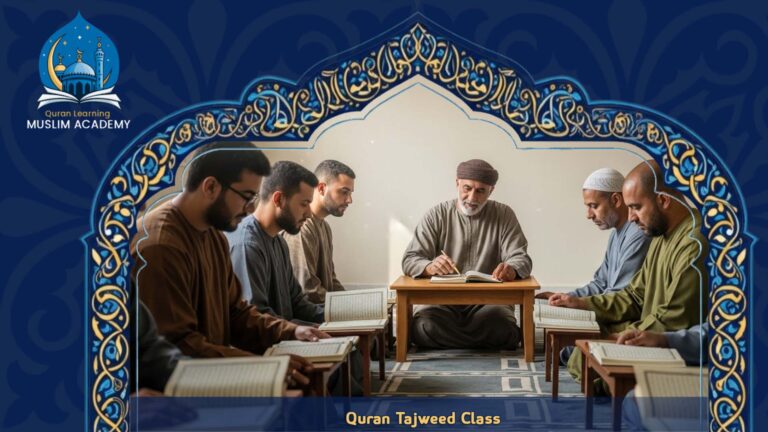
Virtues and Etiquettes of Quran Recitation – Learn with Muslim Academy
Introduction: The Light of the Quran in Our Lives
The Quran is not just a book of guidance—it is a divine companion that transforms hearts, refines character, and elevates the soul. At Muslim Academy, we believe that learning to recite the Quran properly is one of the most rewarding journeys a Muslim can embark on. This article explores the virtues of Quran recitation, the etiquettes of reciting the Quran, and the importance of Tajweed rules, all while highlighting how you can learn Quran online with ease and excellence. Those who found this helpful often continue with our learn and memorize Quran.
1. Virtues of Quran Recitation (فضائل التلاوة)
1.1 A Path to Elevation in the Hereafter
The Prophet Muhammad ﷺ said: For more guidance, check out our Benefits of reading Quran with Tajweed.
“The one who was devoted to the Quran will be told on the Day of Resurrection: ‘Recite and ascend as you used to recite in the world. Your rank will be at the last verse you recite.’”
— Abu Dawud & At-Tirmidhi This connects closely with our Quran recitation for beginners, which many families find useful.
This hadith beautifully illustrates the Quran recitation rewards that await believers in the Hereafter. At Muslim Academy, we help students build a lifelong relationship with the Quran that continues to benefit them in the next life. It’s worth pairing this with our online Quran recitation for a fuller picture.
1.2 The People of the Quran Are Allah’s Chosen Ones
“The people of the Quran are the people of Allah and His special ones.”
— Sunan Ibn Majah
By joining Muslim Academy Quran courses, you become part of a community that is spiritually connected and honored by Allah.
1.3 Double Reward for Struggling Reciters
“The one who recites the Quran and finds it difficult will have a double reward.”
— Al-Bukhari & Muslim
Whether you’re fluent or just starting, our Quran learning for beginners ensures that every effort is rewarded.
2. Etiquettes of Quran Recitation (آداب تلاوة القرآن الكريم)
2.1 Sincerity (الإخلاص)
Recite the Quran with the intention of seeking Allah’s pleasure. As the Quran says:
“And they were commanded not, but that they should worship Allah, and worship none but Him.”
— Surah Al-Bayyinah: 5
2.2 Cleanliness and Preparation
- Perform wudu (ablution).
- Sit in a clean place.
- Use siwak if available.
“Which none can touch but the purified.”
— Surah Al-Waqi’ah: 79
2.3 Seeking Refuge from Shaytan
“So when you want to recite the Quran, seek refuge with Allah from Satan.”
— Surah An-Nahl: 98
2.4 Beautifying the Voice
“Allah listens more attentively to a Prophet who recites the Quran in a beautiful voice.”
— Al-Bukhari & Muslim
Our instructors at Muslim Academy teach you how to recite Quran properly with a melodious and respectful tone.
3. Rulings of Quran Recitation (حكم تلاوة القرآن)
3.1 Recitation Is an Obligation
“And (it is) a Quran which We have divided… that you might recite it to people at intervals.”
— Surah Al-Isra’: 106
3.2 Recite What You Can
“So recite what is easy for you of the Quran.”
— Surah Al-Muzzammil: 20
3.3 The Quran as an Intercessor
“Read the Quran, for it will come as an intercessor for its reciters on the Day of Resurrection.”
— Muslim
These rulings emphasize the Quran recitation benefits and the importance of making it a daily habit.
4. The Importance of Tajweed Rules (أهمية التجويد)
4.1 Is Tajweed Obligatory?
Tajweed is a Sunnah and a recommended etiquette of recitation. While not obligatory, it enhances the beauty and correctness of your recitation.
“The one who has learned the rules should teach others.”
At Muslim Academy, we offer structured tajweed rules courses that are accessible and easy to follow.
5. How to Recite the Quran Properly (كيفية التلاوة)
5.1 Recite with Tarteel
“And recite the Quran in a slow, pleasant tone.”
— Surah Al-Muzzammil: 4
This method, known as Quran recitation with Tarteel, is ideal for both beginners and advanced learners.
5.2 Learn from the Best
The Prophet ﷺ said: Learn more through our Learn Quran with Tajweed mastering Quran recitation.
“Learn the Quran from four: Abdullah bin Mas’ud, Salim, Ubayy ibn Ka’b, and Mu’adh bin Jabal.”
— Al-Bukhari
Our teachers follow authentic chains of narration, ensuring you receive the most accurate Quran education online.
6. Types of Recitation and Common Errors (مراتب القراءة واللحن)
6.1 Types of Recitation
- Tarteel: Slow and clear.
- Tahqeeq: Slower, for beginners.
- Hadr: Fast, for revision.
- Tadweer: Moderate pace.
6.2 Types of Errors
- Clear Error (اللحن الجلي): Changes the meaning.
- Hidden Error (اللحن الخفي): Mistakes in tajweed.
Avoiding these errors is part of our Muslim Academy Quran courses, designed to help you recite with precision and confidence.
7. Key Concepts in Quran Learning
- Tajweed: Giving each letter its due right.
- Ghunna (غنة): Nasal sound from the nose passage.
- Sheda (شدة): Emphasis on a letter.
- Hafs from ‘Asim: The most common recitation style taught at Muslim Academy.
These concepts are essential for Quran memorization online and mastering the art of recitation.
8. The Etiquettes of Listening to Quran Recitation
Etiquette in Quran recitation is not limited to the reciter alone; listeners share responsibilities too. When the Quran is being recited nearby, it is recommended to stay silent, give full attention, and avoid speaking or engaging in unrelated conversation, since listening attentively is itself considered an act of worship. Many scholars note that a listener who reflects on the meaning while staying quiet can gain reward comparable to active recitation, which is why gatherings for listening to Quran recitation, whether in person or through recordings, have remained a valued tradition across Muslim communities.
9. Practical Steps to Build a Daily Recitation Habit
Turning recitation into a lasting habit rather than an occasional activity usually comes down to a few practical choices. Setting a fixed time each day, even if brief, removes the need to decide when to recite and reduces the chance of skipping it. Starting with a small, realistic portion, such as one page a day, builds consistency before attempting longer sessions. Keeping a simple log of which surah or juz was last read helps maintain steady progress through the entire Quran rather than repeatedly returning to familiar sections. Reciting after a specific daily prayer, such as Fajr or after Isha, anchors the habit to an existing routine that is already fixed in the day.
10. Common Barriers and How to Overcome Them
Many Muslims struggle to maintain regular recitation due to unfamiliarity with Arabic script, self-consciousness about mistakes, or simply a busy schedule that crowds out quiet time. These barriers are addressed most effectively through structured lessons with a patient teacher rather than through willpower alone, since a teacher can adjust pacing to the learner’s actual level and provide encouragement rather than judgment. Recording short voice notes of one’s own recitation and reviewing them can also help learners notice their own progress over weeks and months, which is often more motivating than it initially seems.
11. The Difference Between Tilawah, Tarteel, and Tajweed
These three terms are often used interchangeably but carry distinct meanings. Tilawah refers broadly to the act of reciting the Quran. Tarteel refers to reciting slowly, clearly, and thoughtfully rather than rushing through the words. Tajweed refers specifically to the technical rules of correct pronunciation applied while reciting. A reciter can aim for all three together: performing Tilawah with the pace of Tarteel and the accuracy of Tajweed, which together produce the calm, dignified style of recitation associated with experienced reciters.
12. Frequently Asked Questions
Is it necessary to recite in Arabic, or can translations be used instead?
The Quran, as an act of recitation and worship, must be read in its original Arabic text, since translations are considered explanations of meaning rather than the Quran itself. Reading a translation alongside the Arabic is encouraged for understanding, but it does not replace the obligation and reward tied to reciting the Arabic text directly.
How much should a beginner recite each day?
There is no fixed universal amount, and beginners are encouraged to start with whatever is sustainable, even a few verses a day, rather than setting an ambitious target that leads to burnout. Gradually increasing the amount as fluency improves is far more effective than starting too aggressively and abandoning the habit within weeks.
Does reciting quietly count the same as reciting aloud?
Both quiet and audible recitation are valid and rewarded, and the choice often depends on the setting, such as reciting quietly in a shared space or a library versus reciting aloud during personal study time. Some scholars note that reciting aloud can help with memorization and correcting one’s own pronunciation, since mistakes are easier to notice when spoken clearly.
13. Recitation Across Different Life Stages
A person’s relationship with Quran recitation naturally shifts across life stages. Children often begin with short, simple surahs memorized through repetition and gentle correction, building confidence before tackling longer chapters. Young adults juggling study or early careers benefit most from fixed, protected time slots, since recitation easily gets crowded out by competing demands if left unscheduled. Parents frequently find that reciting alongside their children, rather than only assigning it as a task, strengthens both the child’s motivation and the parent’s own consistency. Older adults revisiting the Quran after years away from regular practice often discover that patience and reduced pressure to move quickly make the experience deeper and more reflective than it was in their younger years.
14. Recitation in Congregational Prayer
Recitation takes on an additional dimension during congregational prayer, where an imam recites aloud on behalf of the entire group in certain prayers. Followers are expected to listen attentively and refrain from reciting audibly along with the imam during those portions, reserving their own recitation for the silent portions of the prayer. This shared, synchronized form of recitation reinforces unity within the congregation and gives less experienced reciters regular exposure to correct, fluent Quranic recitation from an imam.
15. Building Long-Term Motivation
Sustaining a recitation habit over years rather than weeks usually depends less on discipline alone and more on connecting recitation to a genuine sense of meaning. Reflecting on how a particular verse applies to a real situation in one’s life, discussing insights with family or classmates, and tracking gradual progress through the Quran all help recitation feel like an ongoing relationship rather than a repetitive chore. Many long-term reciters describe specific verses or surahs that became personally significant to them over time, which kept their motivation alive well beyond the initial excitement of starting.
16. Choosing Between Group Classes and One-on-One Sessions
Both group and private recitation classes offer real benefits, and the right choice depends on the learner’s personality and goals. Group classes bring accountability, friendly competition, and a sense of shared community, which can be especially motivating for children and teenagers. Private one-on-one sessions allow a teacher to focus entirely on an individual’s specific pronunciation errors and pace lessons according to personal progress, which often suits adult learners correcting long-standing habits. Our available courses at Muslim Academy include both formats, allowing students to choose or combine the two as their confidence grows.
Ultimately, recitation is a personal journey measured in years, not weeks, and small consistent steps taken today build toward genuine mastery over time.
Should recitation practice be recorded and reviewed regularly?
Recording occasional recitation sessions and comparing them over a few months is a simple, low-cost way to notice genuine improvement in fluency and pronunciation, and many teachers use this method to show students concrete evidence of their own progress.
Conclusion: Begin Your Quran Journey with Muslim Academy
The virtues of Quran recitation are countless, and the journey to mastering it is filled with blessings. At Muslim Academy, we make it easy for you to:
- Learn Quran online at your own pace.
- Master tajweed rules with expert teachers.
- Understand the etiquettes of Quran recitation.
- Earn the Quran recitation rewards promised by Allah and His Messenger ﷺ.
“Indeed, this Quran guides to that which is most just and right.”
— Surah Al-Isra’: 9
The Virtues of Learning and Reciting the Quran with Tajweed
For more guidance, check out our How to read Quran easily.